

Budapest was stop four on our Epic Europe 2.0 family road trip, and after eleven straight days of city-hopping, I’ll admit we weren’t sure how much gas we had left in the tank. Budapest, Hungary changed that fast. If you’re building a Budapest Hungary itinerary, three days is exactly the right amount of time — long enough to cross the Danube in both directions, soak in a century-old thermal bath, wander a Gothic castle by torchlight, and still have an afternoon left over to rent a ridiculous vintage golf cart on a river island. We did all of that. We also left with a traffic ticket, the memory of a bottle of Hungarian herbal liqueur we’ll never finish, and a serious craving to come back.
Budapest, Hungary Itinerary – 3 Days
- Day 1: St. Stephen’s Basilica, Váci Street, the Danube promenade, Castle Hill funicular, Matthias Church & Fisherman’s Bastion, Vampires & Myths Night Tour
- Day 2: Széchenyi Thermal Baths, Budapest Zoo, The-Unicum-Incident
- Day 3: Szimpla Sunday Market, Shoes on the Danube, Hungarian Parliament Building, Margaret Island, Pozsonyi Kisvendéglő, Flipper Museum, 360 Bar
Day 1 — Pest: Basilica, Statues & Vampires
Arriving in Budapest
We drove in from Bratislava — just over two hours — and pulled into our Airbnb penthouse with a rooftop terrace around 1 pm. The apartment was in the heart of Pest, which turned out to be a great base. First order of business, as it always is after a morning in the car: lunch.
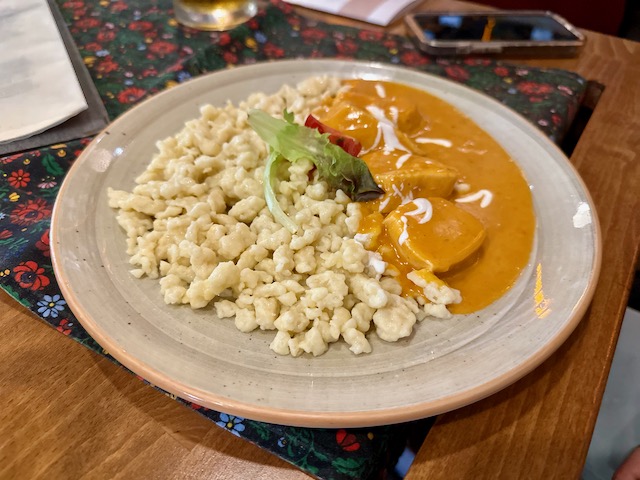
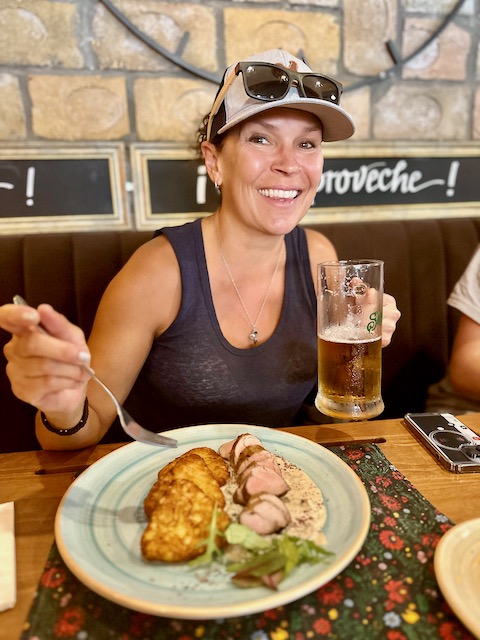
We walked toward St. Stephen’s Basilica and stopped at Belvarosi Lugas for our first taste of Hungarian food. I had a pork dish; Haven went straight for the chicken paprikash with nokedli — the little hand-rolled dumplings that somehow manage to be both rustic and perfect. Everything we ordered was excellent. Traditional Hungarian cuisine did not disappoint on the opening round.
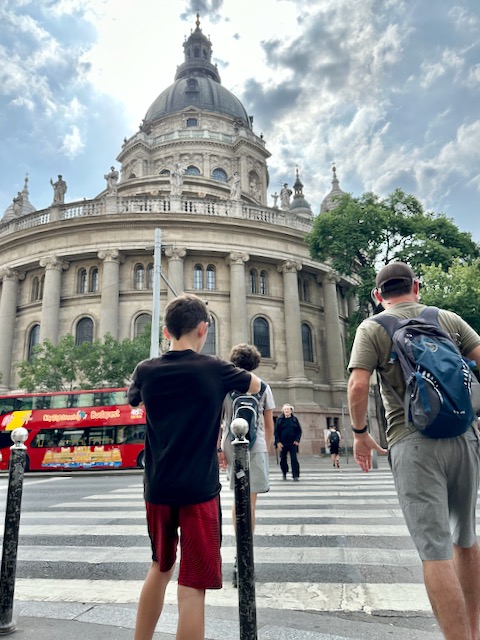
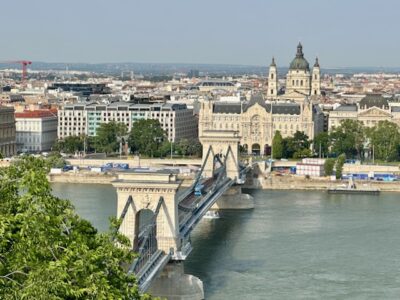
Our first glimpse of the Chain Bridge and the Danube — Budapest announced itself immediately.
St. Stephen’s Basilica
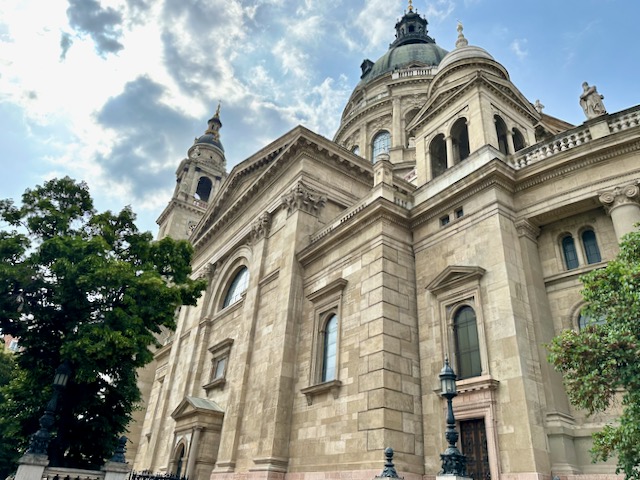
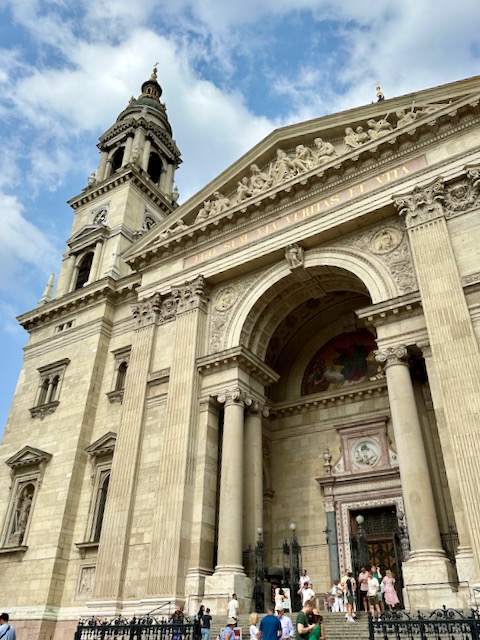
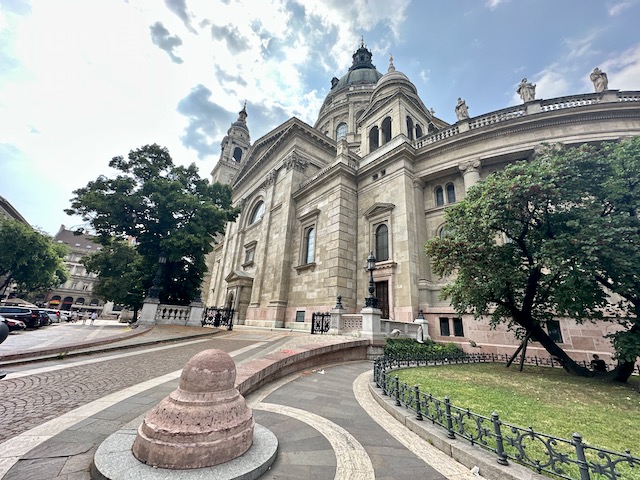
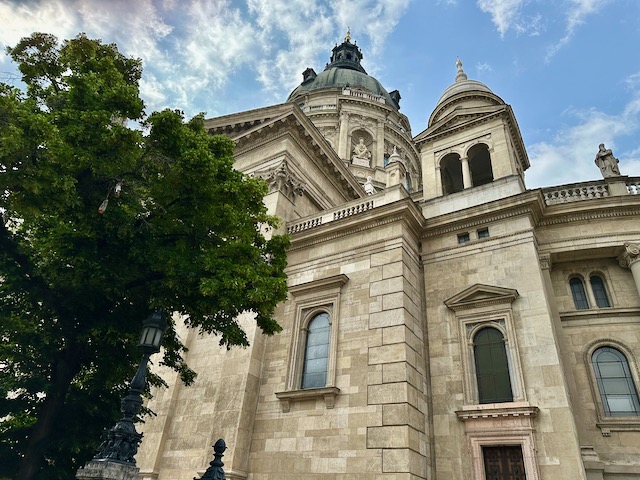
After lunch, we made our way toward the Basilica. You can’t miss it — the dome rises above the surrounding streets and announces itself from several blocks out. St. Stephen’s is Hungary’s most sacred Catholic church, built over fifty years and completed in 1905. We didn’t go inside, but we spent a good stretch of time circling it and taking in the neoclassical facade from every angle.
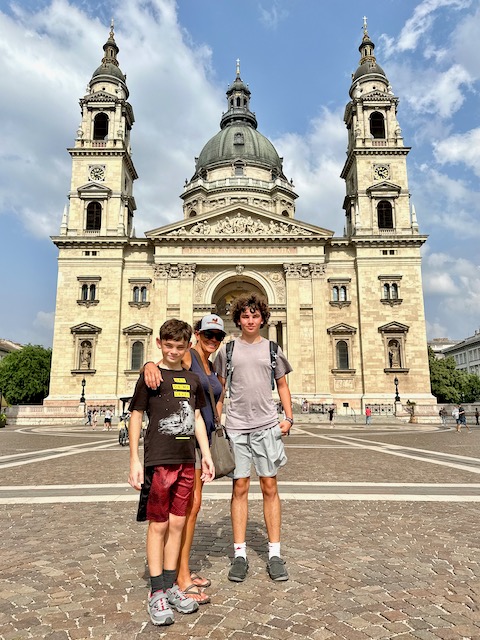
Váci Street & the Fat Policeman
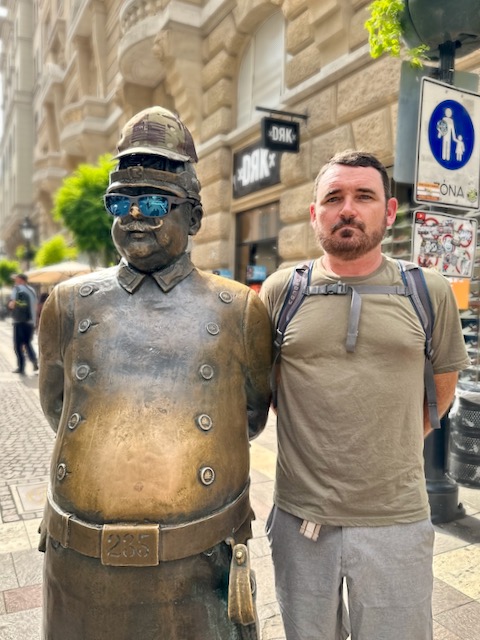
From the Basilica, we wandered south toward the Danube along Zrínyi Street, which is where we stumbled on Uncle Karl — the Fat Policeman. The bronze statue has stood on this corner since 2008, depicting an early 20th-century officer with a spectacular belly, a curled mustache, and a very laid-back posture. Local legend says rubbing his golden stomach brings good luck and immunity from weight gain, which is very convenient given the nokedli situation. Naturally, we stopped for a photo — though I skipped the belly rub. We had enough luck.
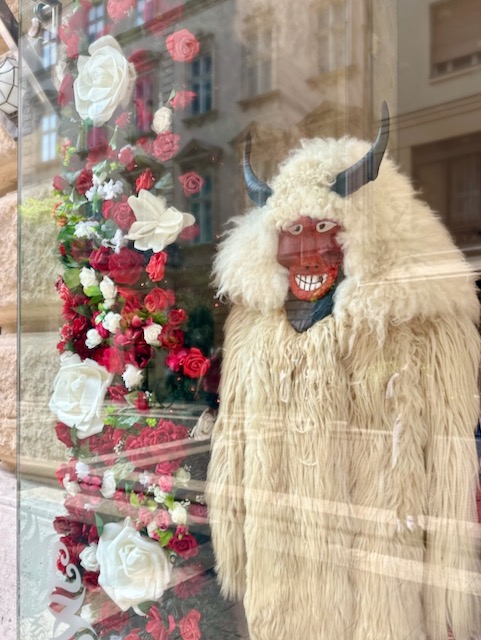

A little further along, we passed a shop window with a full Busójárás costume staring back at us — the horned, shaggy white folk figure used in Hungarian carnival tradition. Unsettling in a window display at noon. Probably terrifying at night. And then, in the next shop, a rack of “BUDAFUCKKINGPEST” t-shirts that stopped us dead in our tracks. I should have bought one. I still think about it.
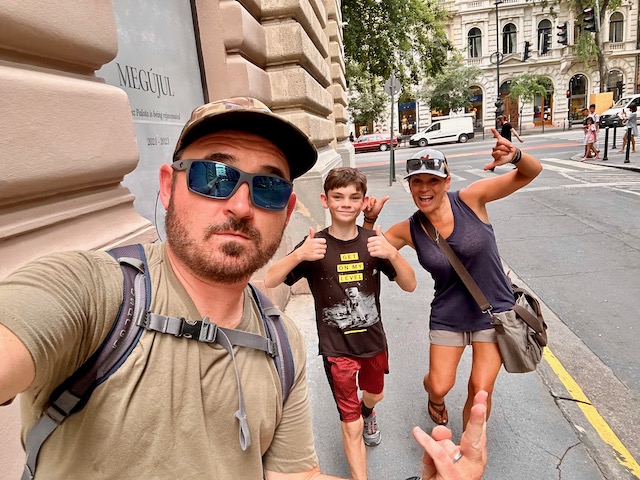
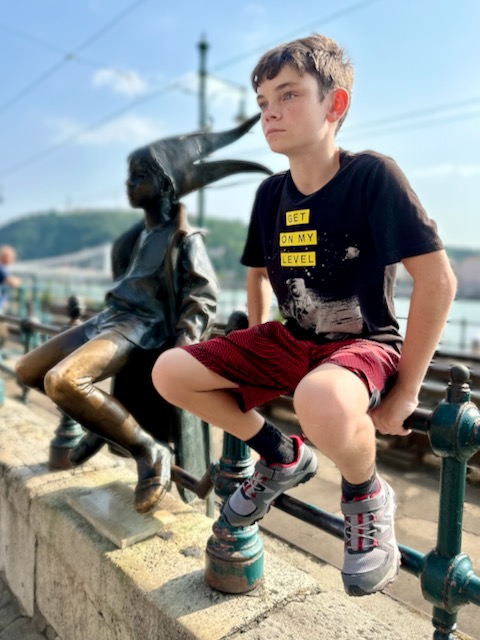
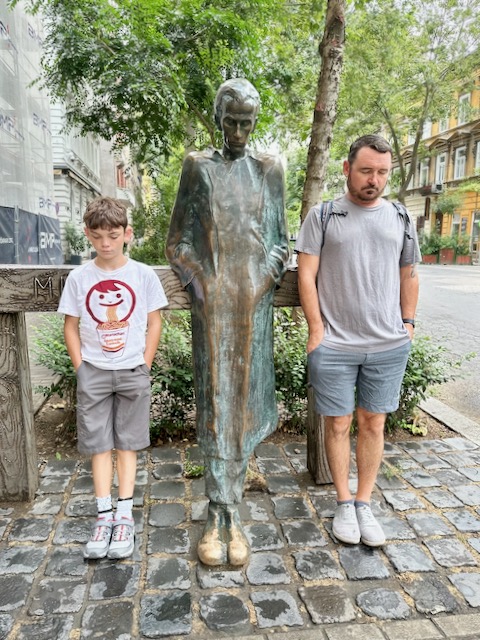
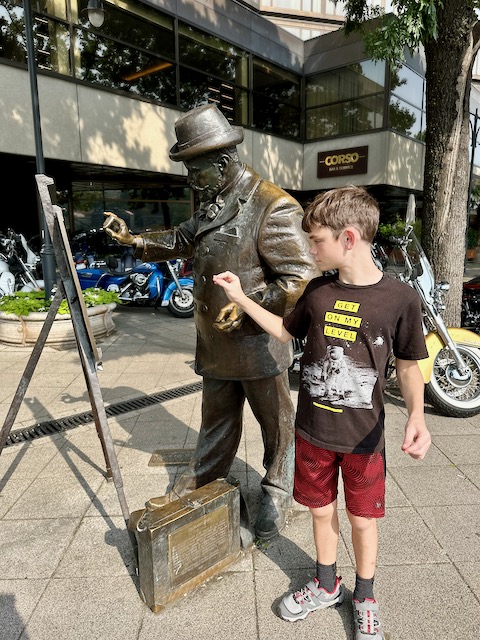
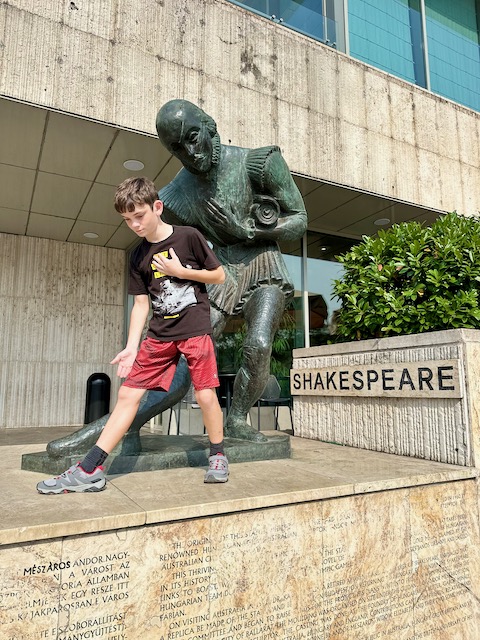
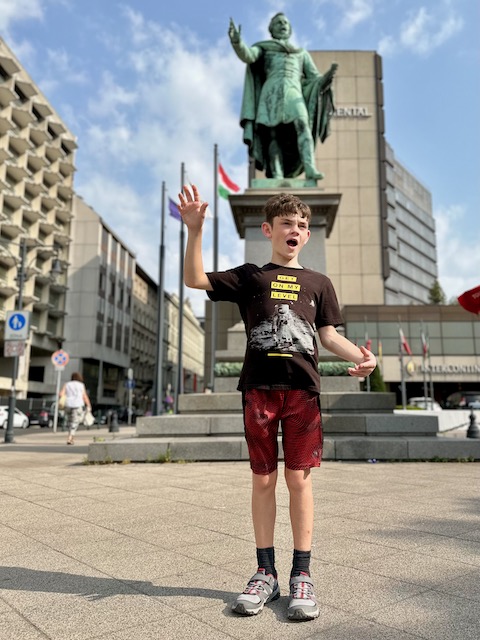
I’m not exactly sure where or why it started, but taking photos with statues has become a family travel tradition — the sillier, the better. Phoenix is especially talented at mimicking their posture and expression, and Budapest was a goldmine. Day one in particular.
The Danube Promenade & Crossing to Buda
We walked along the Danube embankment heading south before crossing to the Buda side. The promenade gives you sweeping views of the Chain Bridge and the Buda hills — a view so good it almost doesn’t feel real. A long row of Harley-Davidson motorcycles lined the riverbank that day, a side effect of Budapest hosting the 100-year Harley celebration. It was incredibly loud, and the roads were blocked. We don’t have anything against bikers, but the sheer volume reminded us of a particular South Park episode. If you know, you know.
We crossed to Buda via Liberty Bridge, walking against a surprisingly strong wind (I almost lost my hat), with the hills rising ahead of us. On the far bank, the Castle Garden Bazaar (Várkert Bazár) greeted us — an elaborate terraced complex of arched gateways and ivy-covered walls leading up toward the castle. From there, we had one goal: the funicular.
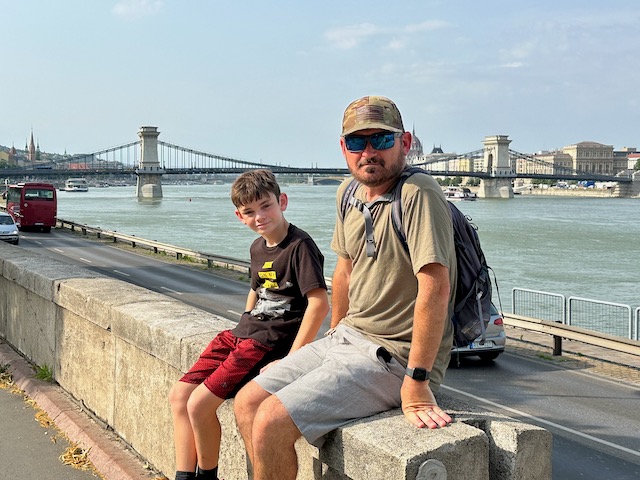
Chain Bridge behind them.
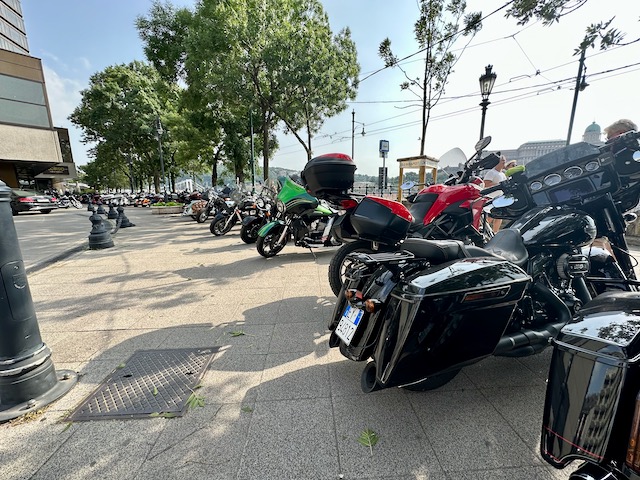
all parked on our walking route.
Buda Castle Hill & the Views
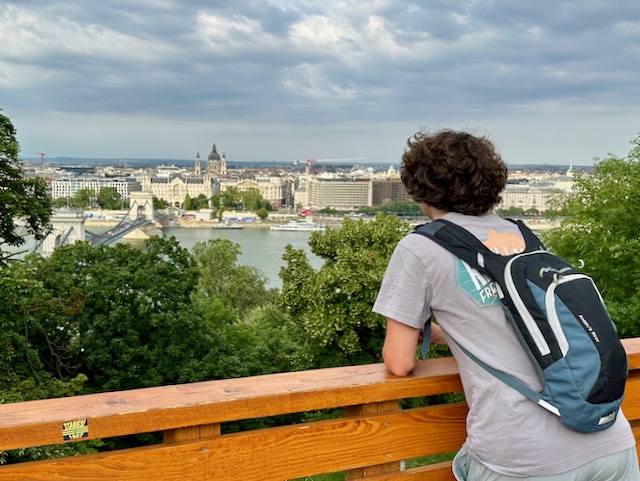
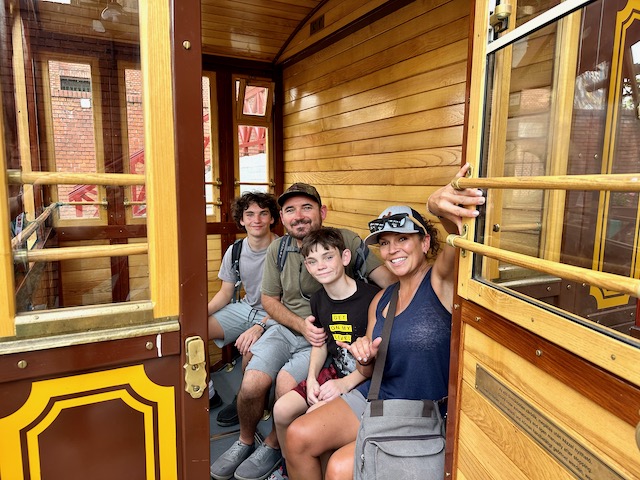
The Buda Castle Hill Funicular departs from Adam Clark Square, right at the Buda end of the Chain Bridge. It’s a short, steep ride up the hillside in a beautifully restored wooden car, and it saves your legs the climb while giving you a great view on the way up. The boys were into it immediately. It costs next to nothing and takes only a few minutes — one of the better value-per-experience moments in Budapest.
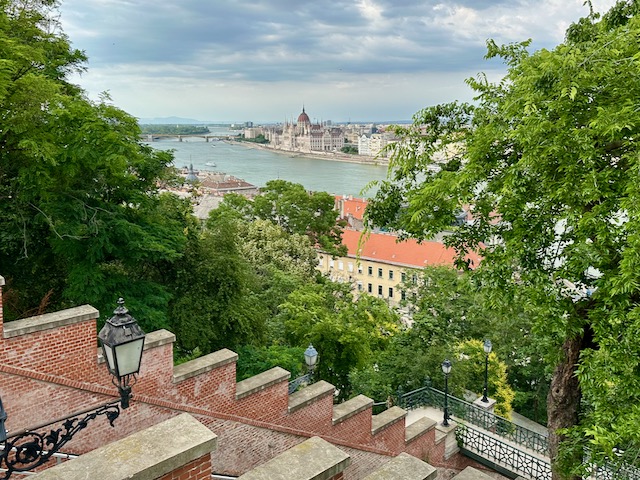
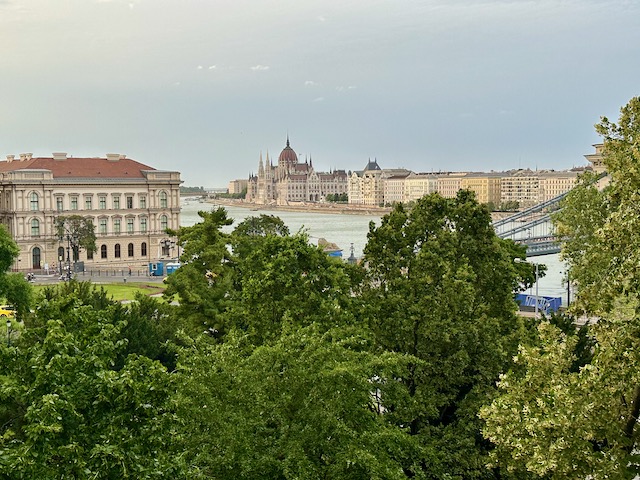
At the top, the views open up and don’t stop. The Chain Bridge stretches across the Danube below you, with the Pest skyline spreading out on the other bank — St. Stephen’s dome rising above the rooftops, the Parliament visible further north. We spent a long time up here just walking and looking. There’s a UNESCO World Heritage plaque near the top that feels almost understated given the scale of what you’re looking at.
PRO TIP: The funicular runs from Adam Clark Square at the Buda end of the Chain Bridge. It operates daily from approximately 7:30 AM to 10 PM. Tickets are inexpensive and can be purchased at the bottom station — no advance booking needed.
Matthias Church & Fisherman’s Bastion
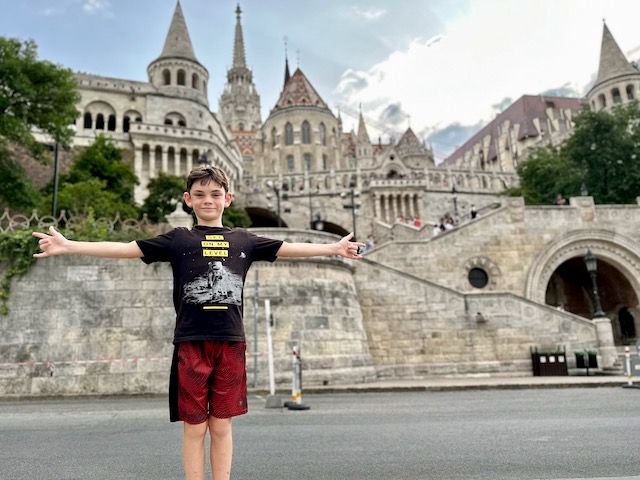
From the castle grounds, we walked north through the cobblestone streets of the Castle District toward Matthias Church. Haven spotted the spire from half a block away and stopped to take it in. The church looks like something out of a Brothers Grimm story — a soaring Gothic tower, ornate stonework, and a roof covered in the colorful diamond-patterned Zsolnay tiles that catch the light from every angle. It was built in the 14th century and has been rebuilt, converted to a mosque, and restored more times than it probably cares to remember.
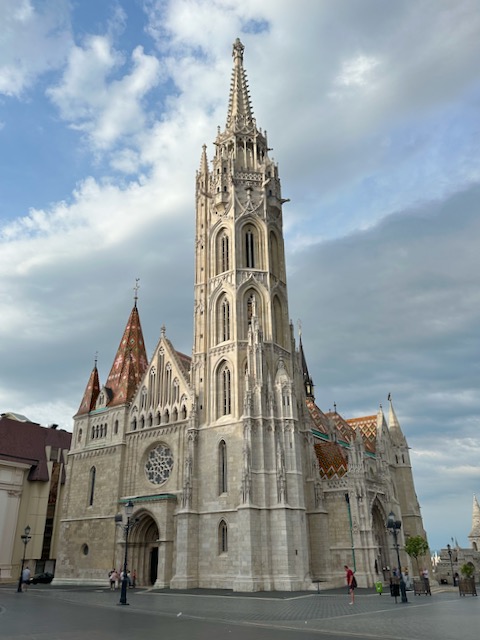
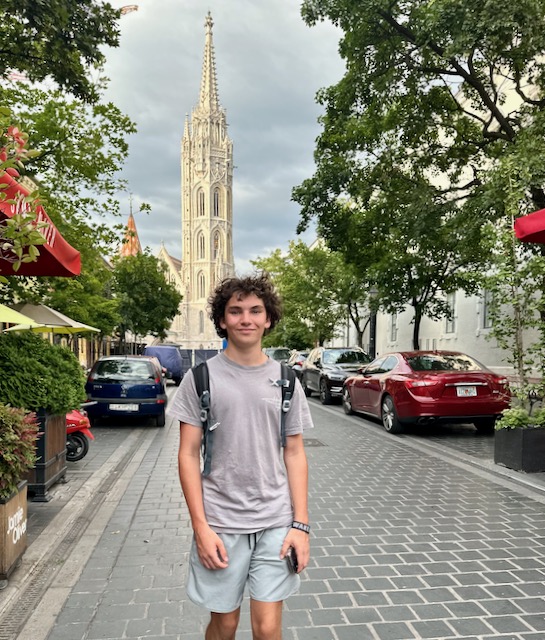
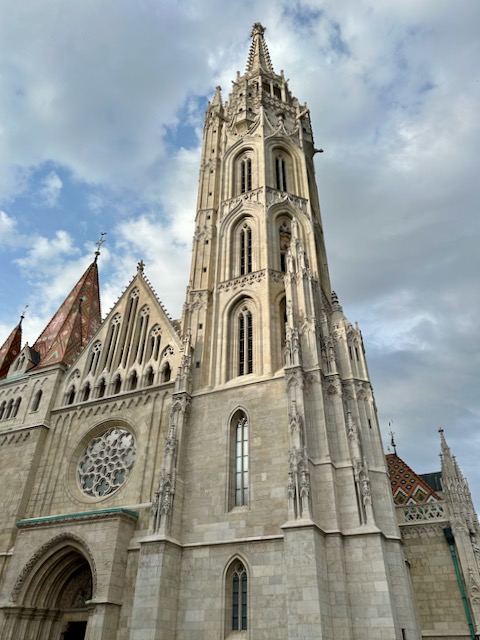
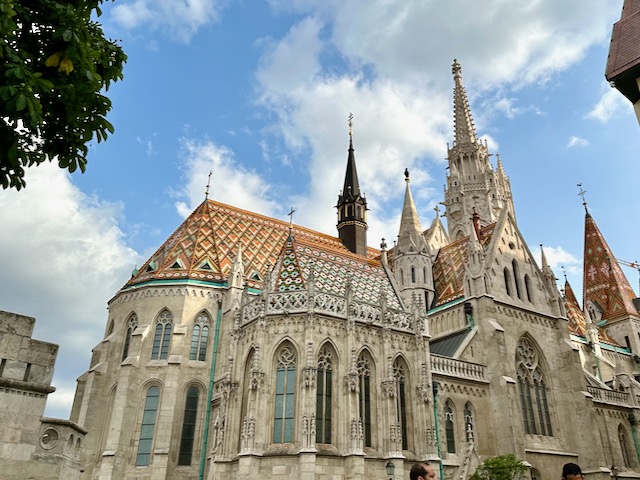
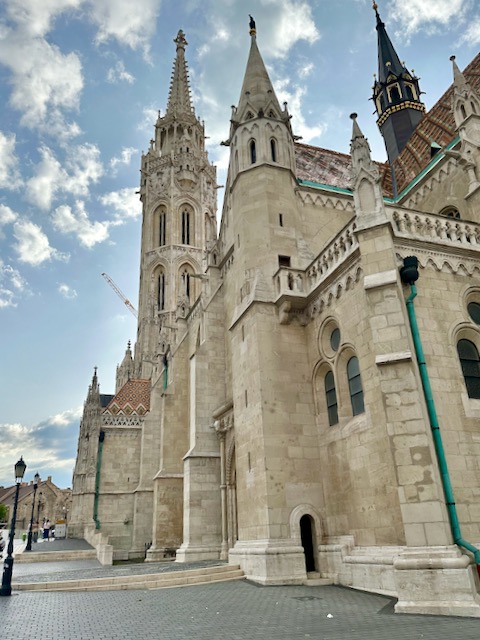
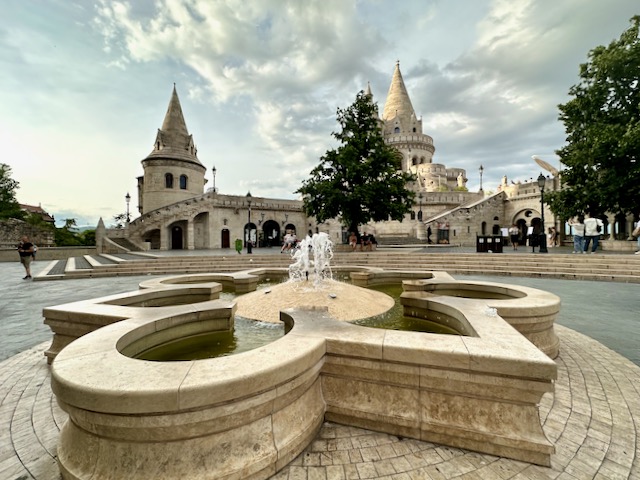
Just past the church, Fisherman’s Bastion opens up — seven fairytale turrets built along the castle walls in the late 19th century, with some of the best panoramic views in the city. Budapest’s Parliament building sits directly across the river. Phoenix found a kürtőskalács vendor nearby, grabbed a chimney cake, and posed in front of the towers with the look of someone who had earned it. Honestly, he had.
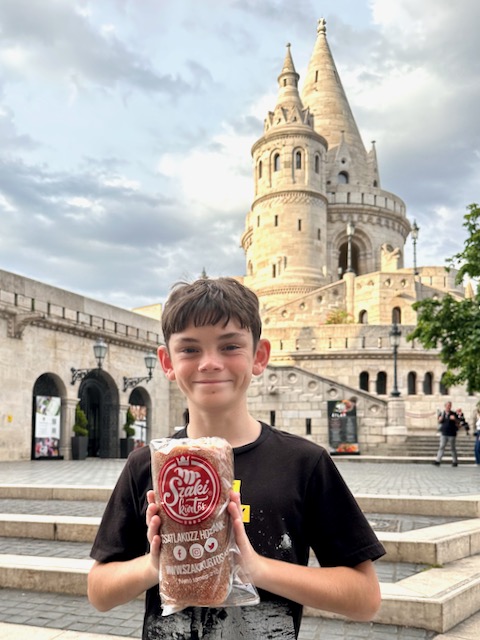
priorities sorted.
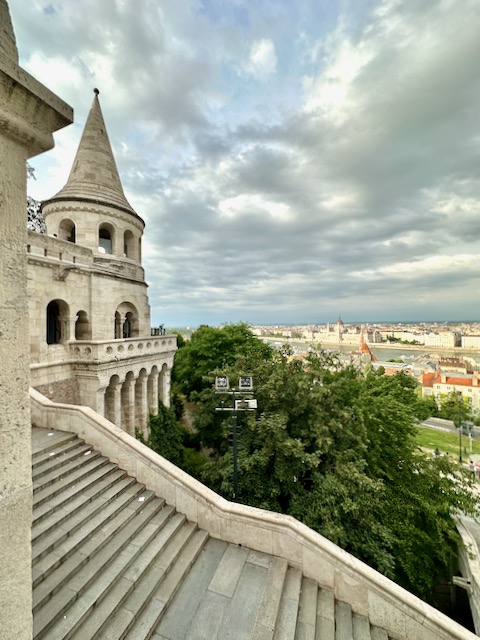
We also made a loop through the Buda Castle grounds, stopping at the Matthias Fountain — a dramatic bronze hunting scene spread across the castle’s west wing facade.
PRO TIP: The upper terraces of Fisherman’s Bastion require a ticket, but you can get virtually the same views from the free lower level near the Bastion Café. The towers are open daily and most beautiful in the early morning before the crowds arrive.
Buda Castle Vampires & Myths Night Tour
The highlight of Day 1 — and honestly one of the highlights of our time in Budapest — was the Buda Castle Vampires & Myths Evening Walking Tour. I added it to the itinerary with the boys in mind, but we were all equally hooked by the end. The guide met us in full period costume at the Zero Kilometre Stone at the base of Castle Hill — bowler hat, fitted waistcoat, oil lantern in hand — and set the mood immediately.
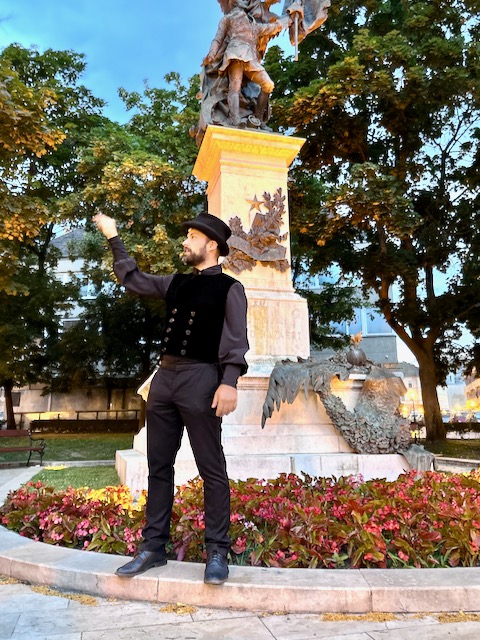
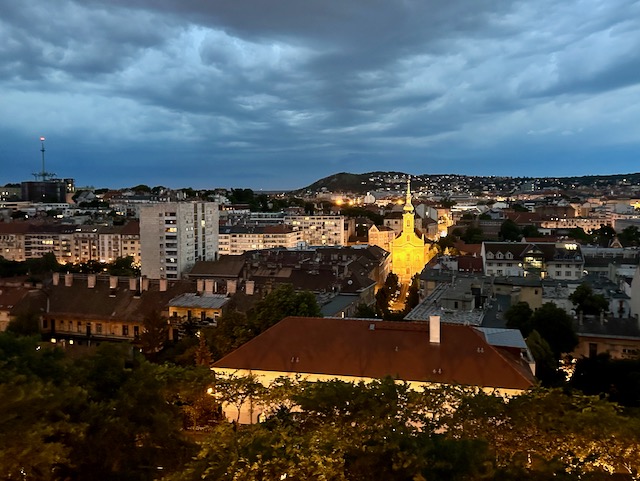
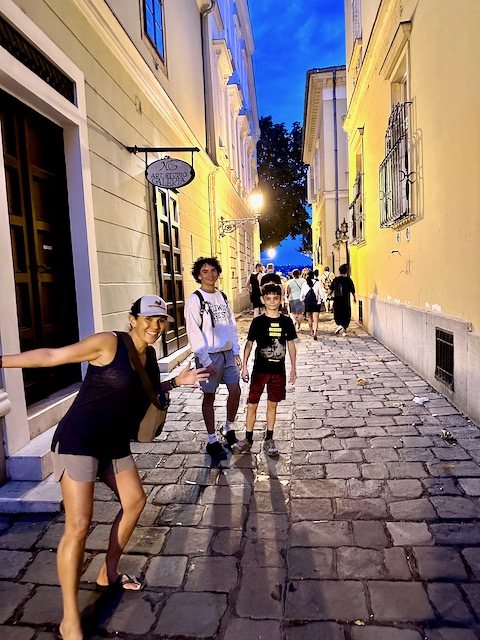
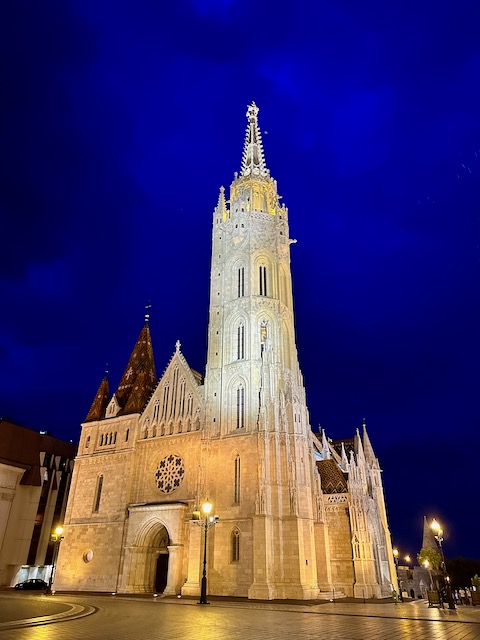
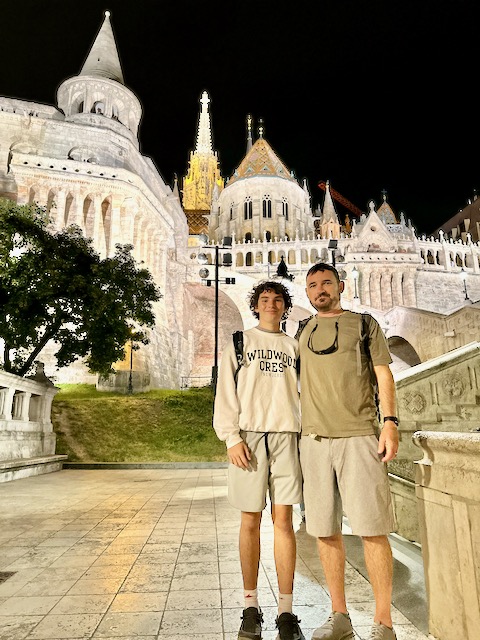
The two-hour tour wound through the castle district’s cobblestone squares and dark corners, covering the stories of Vlad the Impaler (who was actually imprisoned in Buda Castle), Elizabeth Báthory, and centuries of Hungarian vampire folklore. The guide was personable, theatrical without being over the top, and genuinely brought the castle’s history to life. Seeing it all lit up against a dark sky made everything feel even more dramatic — and it was already pretty dramatic.
Just as the tour was ending, a storm rolled in and sent the entire tour group running for cover in a narrow alley. Our guide concluded our tour as we huddled in an alcove. A damp ending to a very long and very good first day.
PRO TIP: Book the Vampires & Myths Night Tour in advance — it fills up quickly, especially on weekends in summer. It runs rain or shine and costs around $85 for two adults and two youth. Worth every forint.
Day 2 — Thermal Baths & the Zoo
Széchenyi Thermal Baths
Craig and I had been talking about visiting the Széchenyi Thermal Baths for years. They were the most anticipated item on the entire Budapest Hungary itinerary, so it was fitting that they delivered. We booked tickets in advance — all-day pass, fast-track entry, private changing cubicle — because it was a Saturday in June and we weren’t taking any chances.
Getting there was something else entirely. The walk from our Airbnb took us straight into the middle of a massive Harley-Davidson 100th anniversary rally. The roads were blocked, motorcycles were everywhere, and the noise was extraordinary. It was the South Park biker episode made real. We eventually got through and arrived at the baths, which sit inside a stunning Neo-Baroque palace in City Park — all yellow stone and arched windows surrounding enormous outdoor pools of turquoise thermal water. Inside the Széchenyi Baths main building, we passed through an ornate Baroque alcove housing a marble statue set in a yellow-and-white plasterwork niche. Even the hallways are worth stopping for in this city.
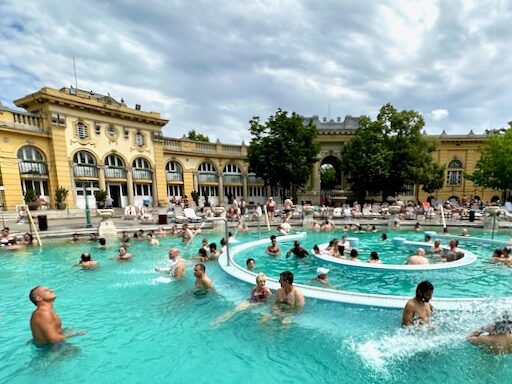
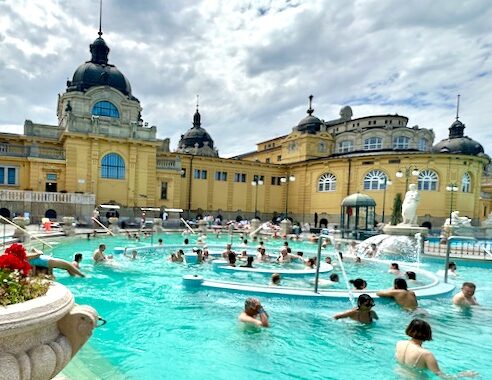
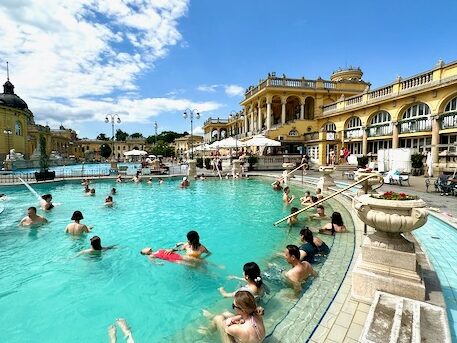
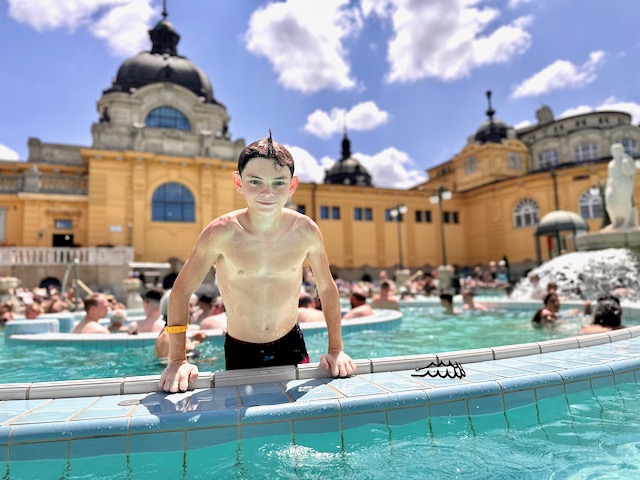
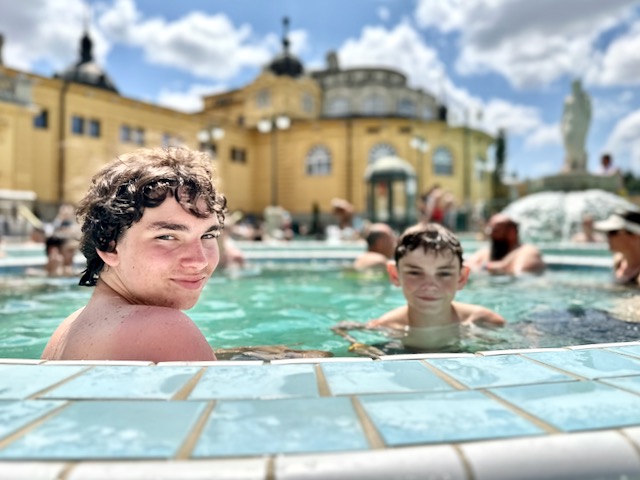
The water temperature was perfect. The sun was out and shining. It was also very crowded — this is not a hidden spot — but we settled in and the boys made the most of the different pool options, both inside and out. We had lunch poolside with cold beers, which is the correct way to do it. I had assumed we’d spend most of the day there, but the boys were sufficiently waterlogged after a few hours and ready to move on.
PRO TIP: Book Széchenyi Baths tickets in advance at szechenyibath.com, especially on summer weekends. The all-day pass with fast-track entry and a private changing cubicle is worth the upgrade — the locker room queues can be long.
Budapest Zoo
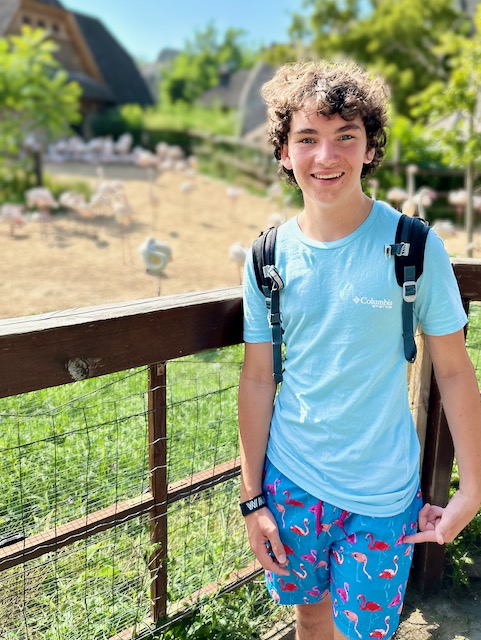
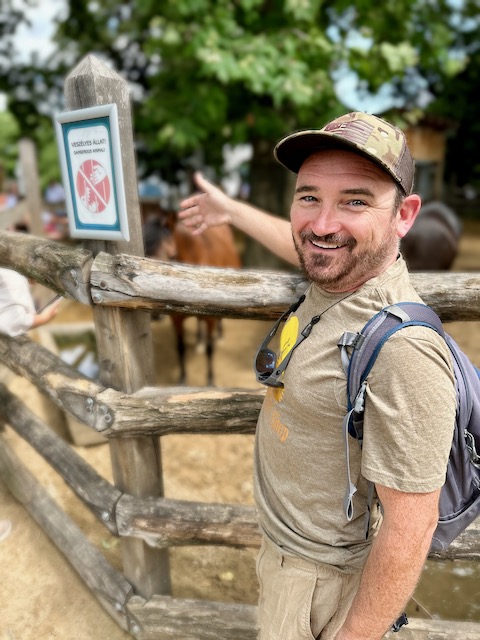
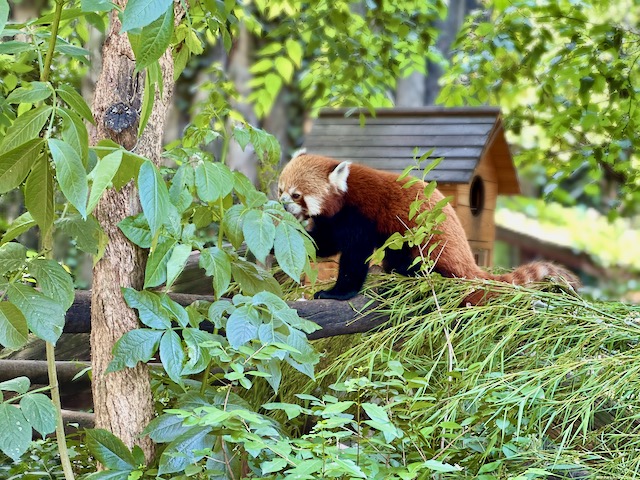
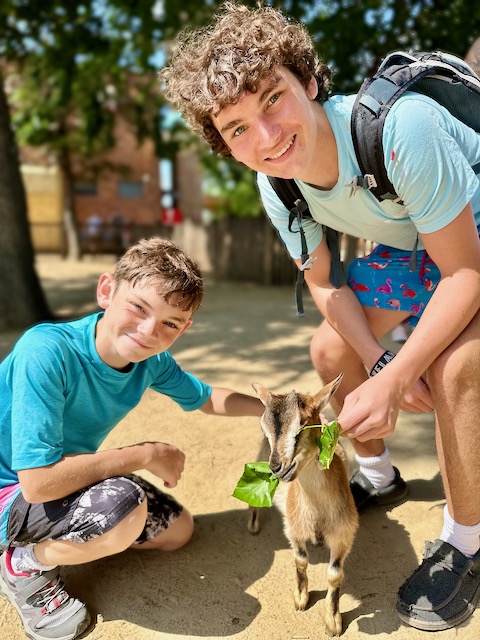
We hadn’t planned on the zoo, but when we finished at the baths and saw it right there in City Park, we asked the boys if they wanted to stop. They said yes before we finished the question. The Budapest Zoo is compact but genuinely well done, with a petting area that was an immediate hit. The boys fed baby goats, and Craig got uncomfortably close to a “Dangerous Animal” enclosure housing miniature horses, though it was clearly marked with warning signs (we found the warning signs funnier than they probably were). The boys spotted a red panda doing exactly what red pandas do — moving slowly through the foliage, effortlessly photogenic, and easily their favorite sighting.
The Unicum Incident
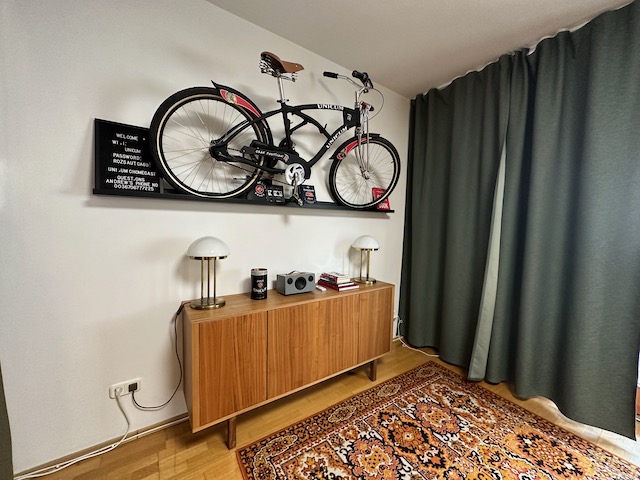
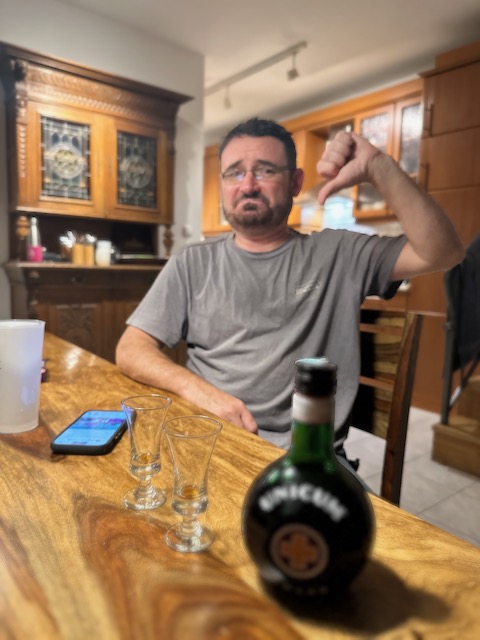
Back at the Airbnb that evening, our host had left a recommendation that his guests try Unicum, Hungary’s national herbal liqueur. A dense, dark, medicinal-tasting spirit that has been produced since 1790 and is considered a local tradition. Trusting our host to have refined taste based on his creative design skills and polished decor, we picked up a bottle on the way home from the zoo. We tried it. We looked at each other, almost spit it out, and laughingly texted our host that we would be leaving it for him as a parting gift. Some traditions are better appreciated from a respectful distance.
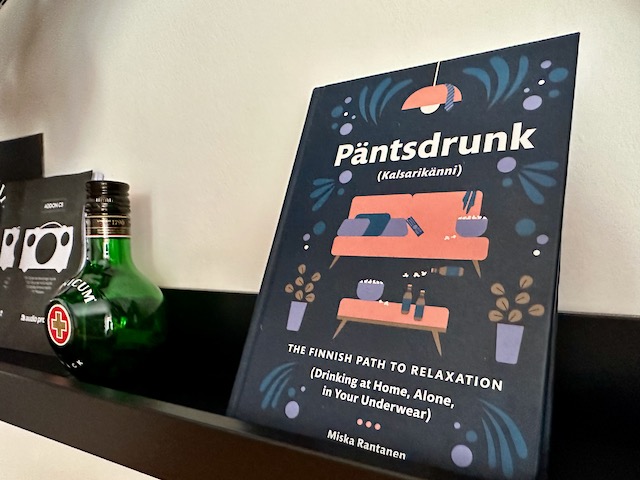
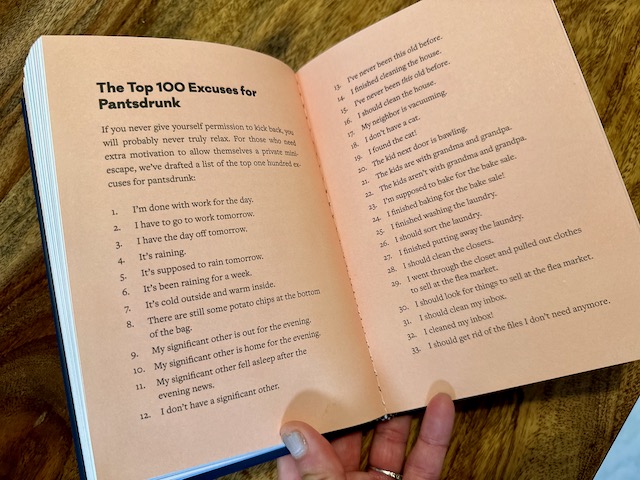
On the other hand, we did find a small decorative book in the living room. Artfully tucked beneath a bicycle, “Pantsdrunk – The Finnish Path to Relaxation” (Drinking at Home, Alone, in Your Underwear) provided nearly an hour of endless laughter. A worthwhile trade-off.

Day 3 — Ruin Bar, Shoes, an Island & a View
Szimpla Kert Ruin Bar
I had been looking forward to Szimpla Kert since I first read about Budapest’s ruin bar scene. After World War II and the Cold War, Budapest’s old Jewish Quarter was left largely in decay — and in the early 2000s, creative entrepreneurs started transforming the abandoned buildings and courtyards into bars. The result is something that doesn’t exist anywhere else in the world. Szimpla Kert is the original and still the best.
We timed our visit for the Sunday Farmers Market, which runs from 9 AM to 2 PM and fills the courtyard with local producers selling fruit, vegetables, bread, cheese, and handmade goods. The combination of eclectic art installation and farmers market shouldn’t work as well as it does. But it does. The boys wandered around amazed by all the old retro stuff — vintage bathtubs used as seating, traffic signs repurposed as décor, a whole corridor of mismatched furniture and hanging sculptures. Craig and I had a beer at the colorful painted bar and took our time.
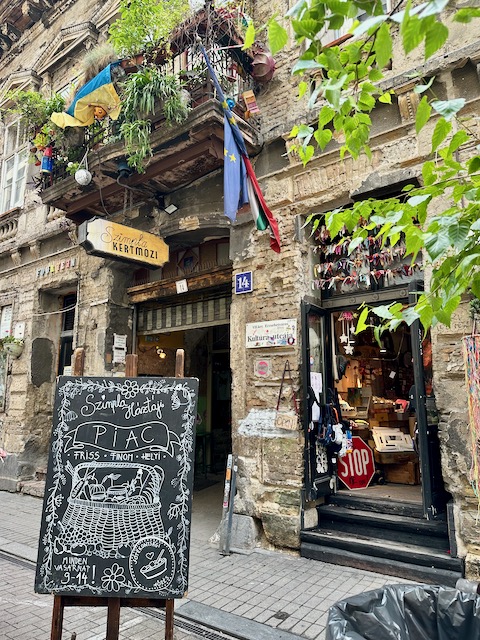
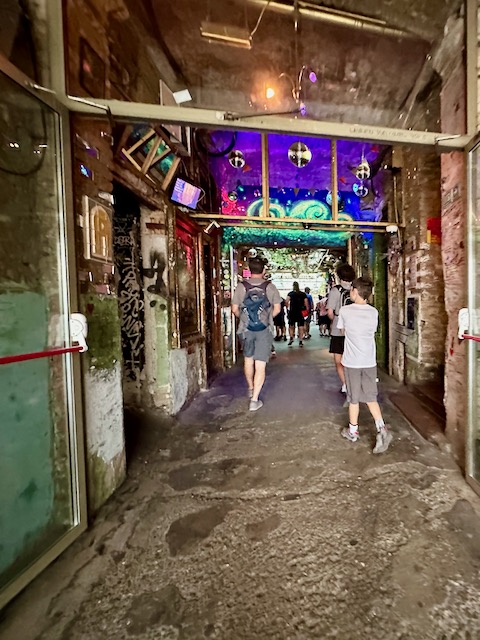
Sunday Market
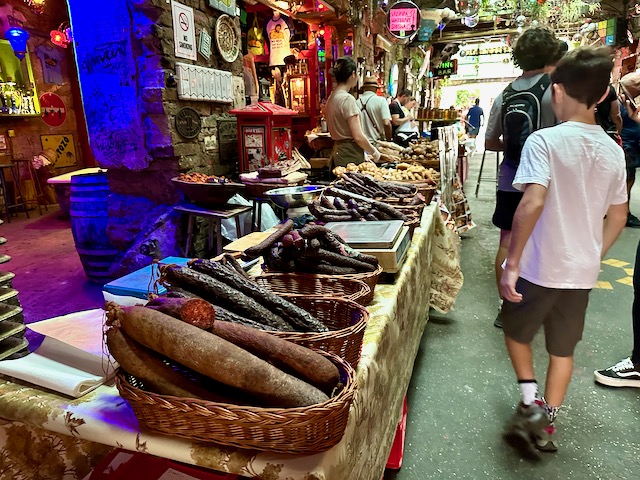
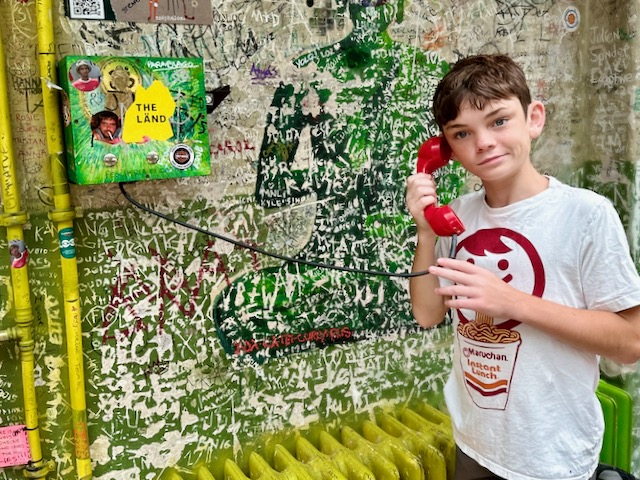
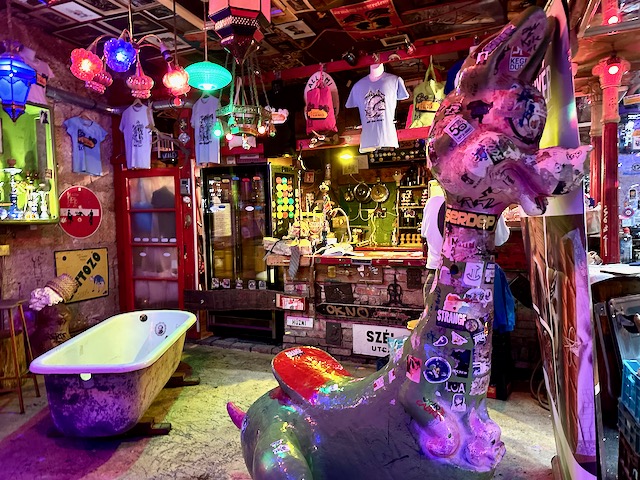
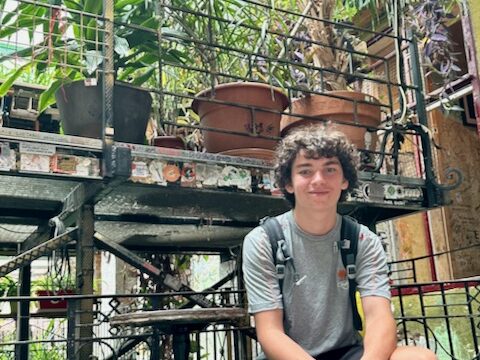
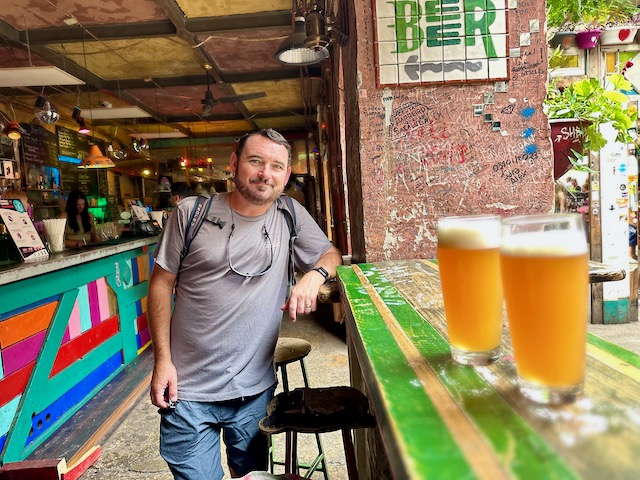
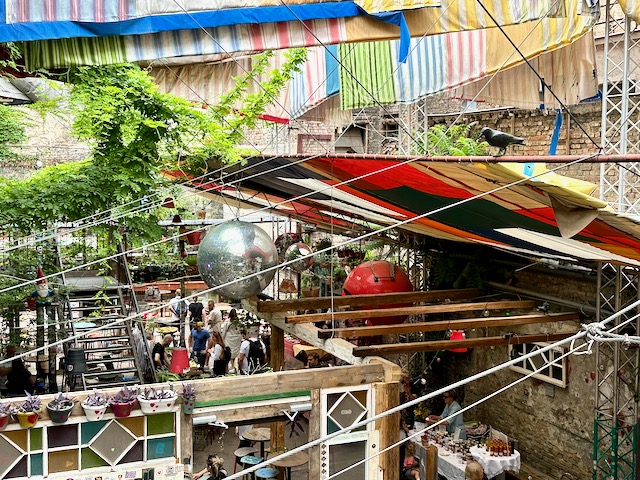
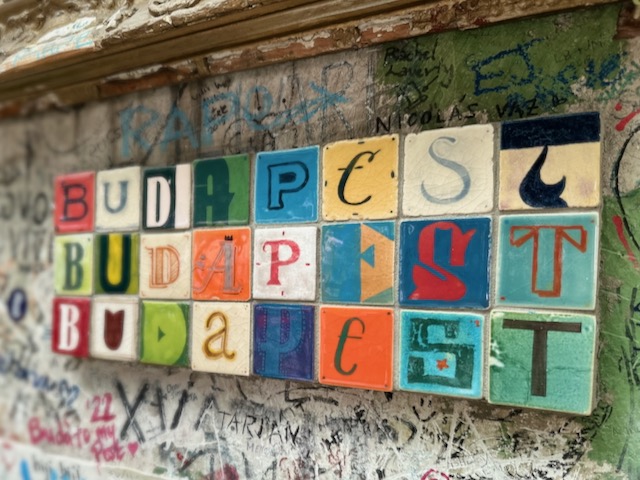
PRO TIP: Szimpla Kert’s Sunday Farmers Market runs from 9 AM to 2 PM — it’s a great way to experience the ruin bar in daylight with a completely different crowd than the nighttime bar scene. The market features local produce, cheese, bread, and handmade goods from Hungarian producers.
Shoes on the Danube Bank
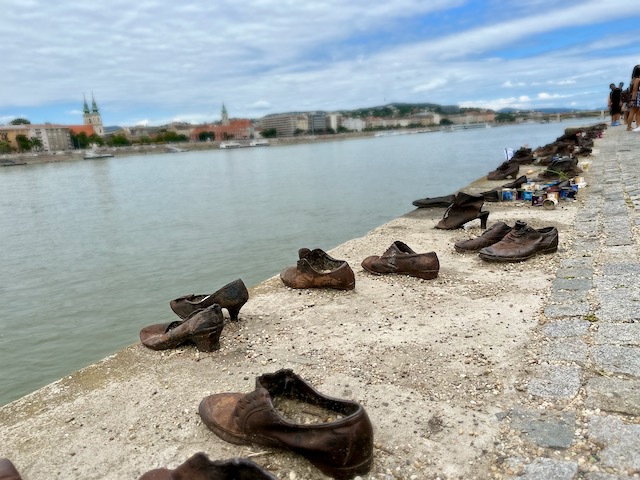
Day 3 started with one of the most quietly affecting stops of the whole trip. The Shoes on the Danube Bank is a memorial of 60 pairs of iron shoes cast in bronze and placed along the Pest bank of the river. They mark the spot where thousands of Jews were shot and killed during World War II, ordered to remove their shoes before being executed at the water’s edge. It’s a simple memorial — no grand structure, no audio guide — just shoes on a ledge. One pair held a small Israeli flag and a few candles when we passed. It’s impossible to walk past and not feel the weight of it.
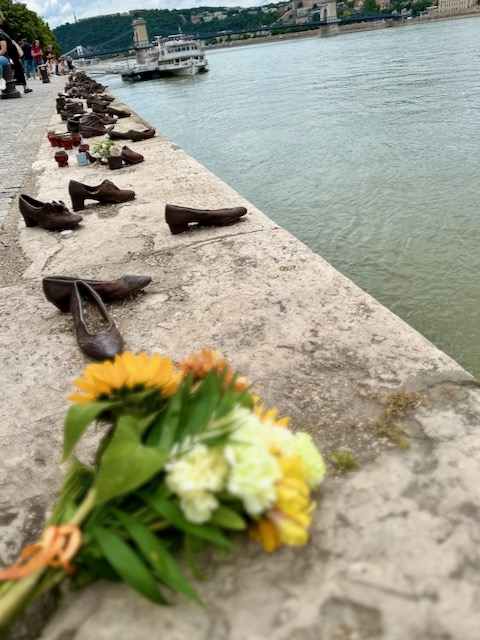
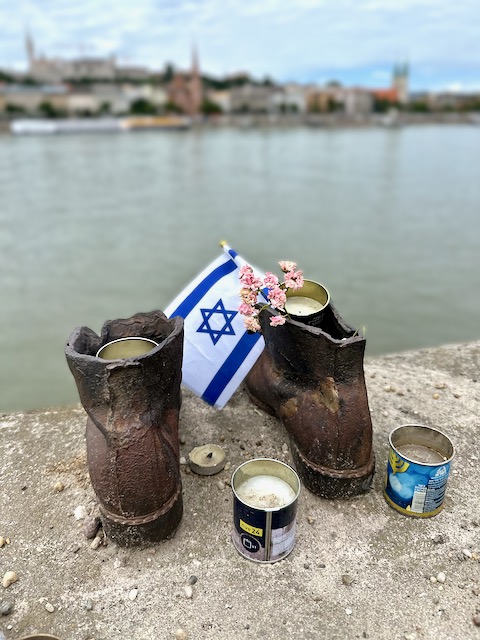
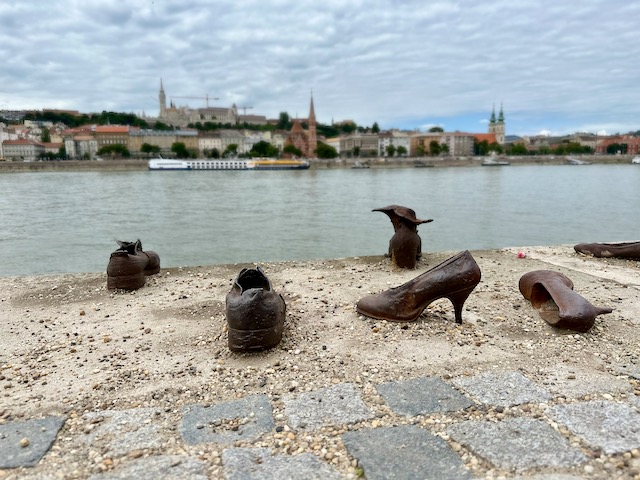
Hungarian Parliament Building
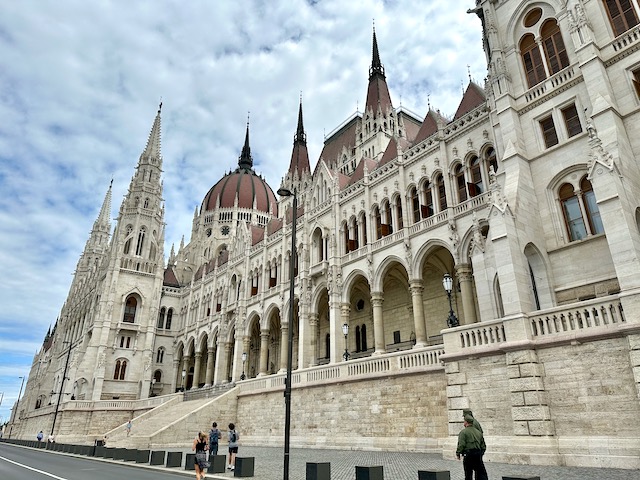
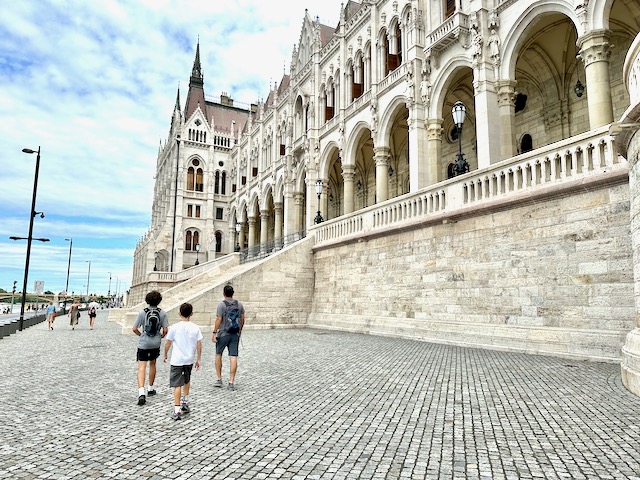
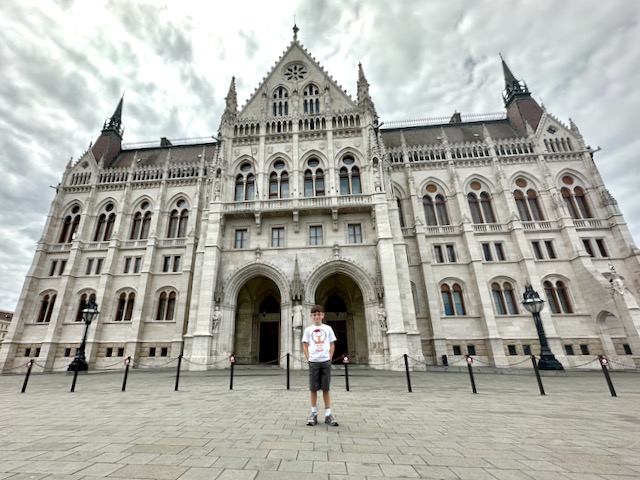
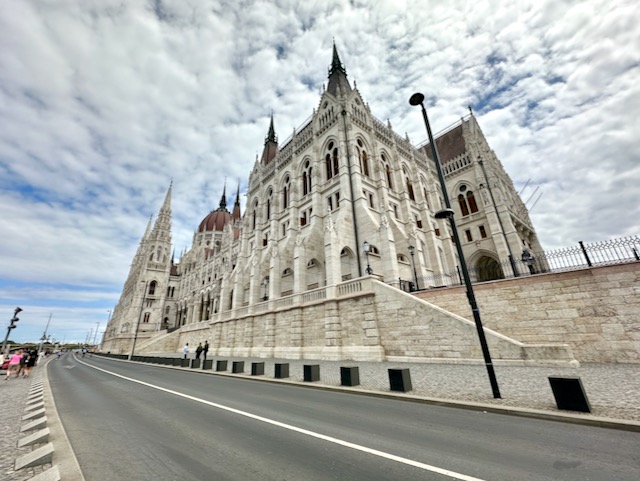
A short walk north along the Danube brought us to the Hungarian Parliament Building — one of the most architecturally striking buildings in all of Europe. Built in the Gothic Revival style and completed in 1904, it stretches 268 meters along the riverbank with 96 spires and a massive central dome. We didn’t do an interior tour this time, but the exterior more than earns a stop. Walking the full length of the building along the road that hugs the river, looking up at the arched windows and stonework, is one of those moments where you just go quiet for a minute.
Margaret Island
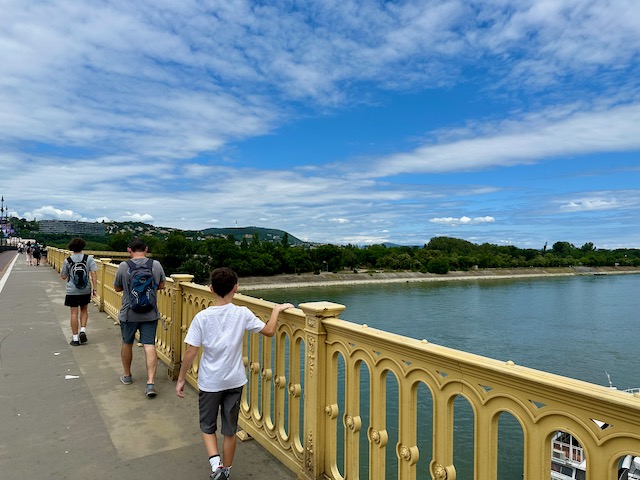
We crossed to Margaret Island on foot via Margaret Bridge, walking across the ornate yellow span with the Danube spreading out in both directions. The island sits in the middle of the river and operates almost entirely as a car-free park — 2.5 kilometers of trees, gardens, fountains, and recreational facilities. After eleven days of city walking, it felt like stepping into a different world. The tree canopy alone was worth the detour.
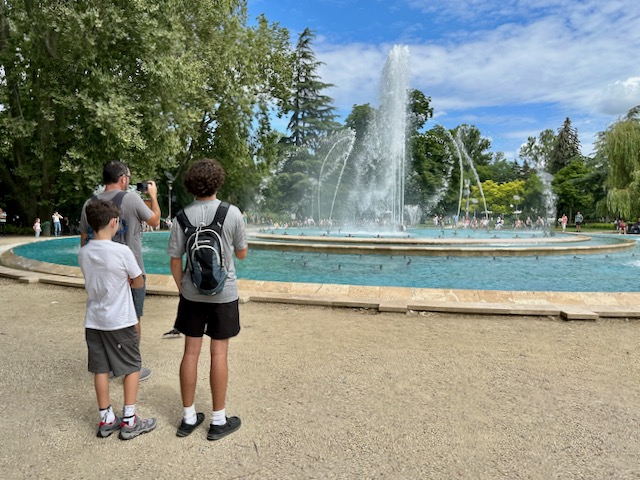
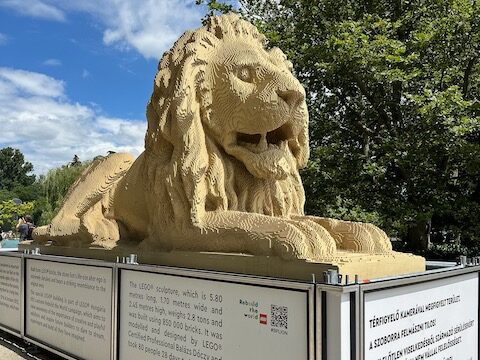
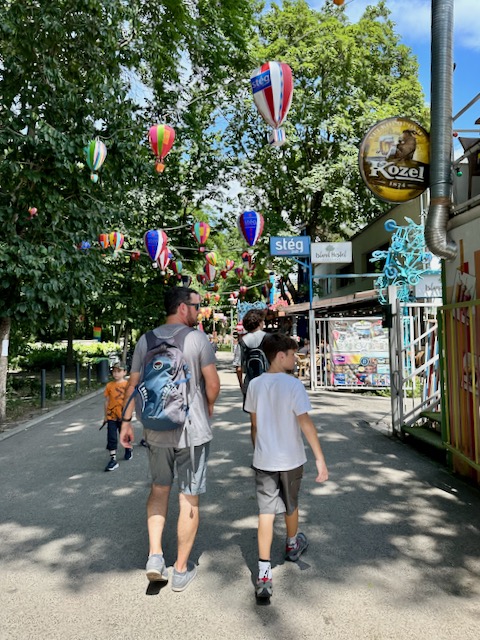
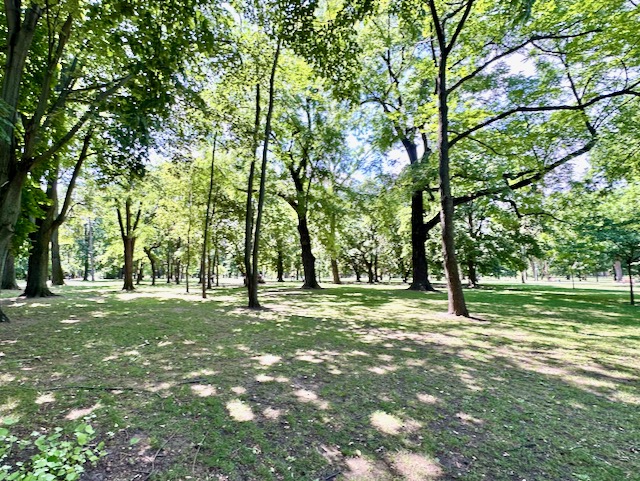
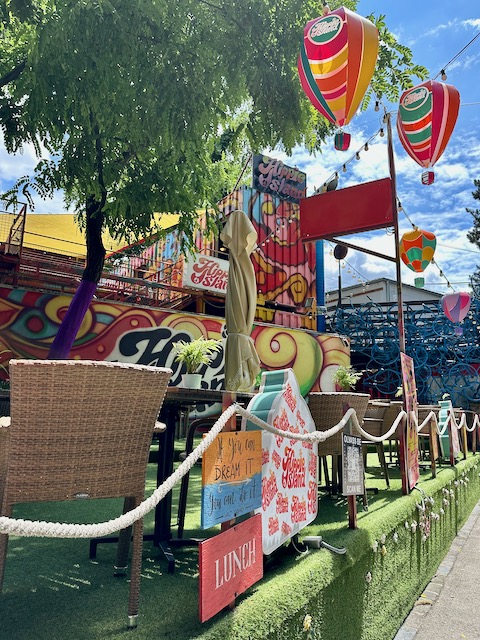
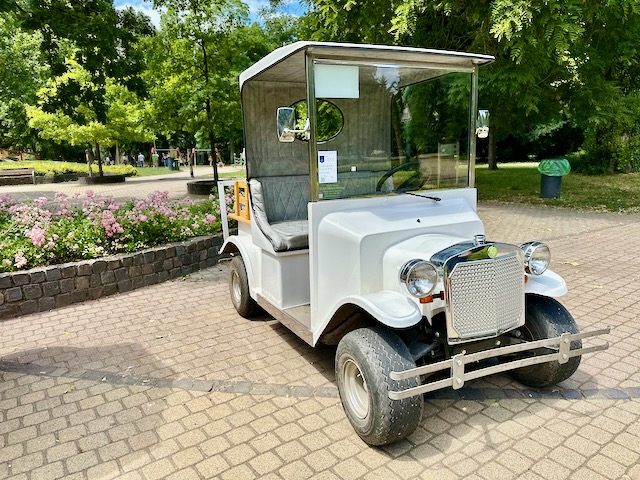
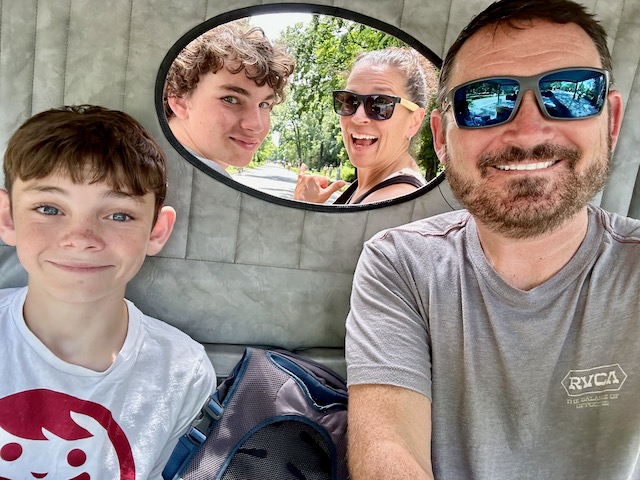
We found the Music Fountain, where water dances in time to classical music, and spent a few minutes just watching it. We passed a giant LEGO lion sculpture — built from 800,000 bricks and weighing 2.8 tons, per the plaque. And then we stumbled onto something we hadn’t planned for at all: a fleet of vintage-style electric golf carts available for rent, shaped like old-timey automobiles. We couldn’t resist. We rented one and drove it around the entire island. It was, without question, the most fun we had on the whole trip.
PRO TIP: Vintage golf cart rentals on Margaret Island are located near the island’s center and available by the hour. No reservations needed — just show up. It’s the best way to cover the island without wearing out your legs, and the cars are charming.
Pozsonyi Kisvendéglő
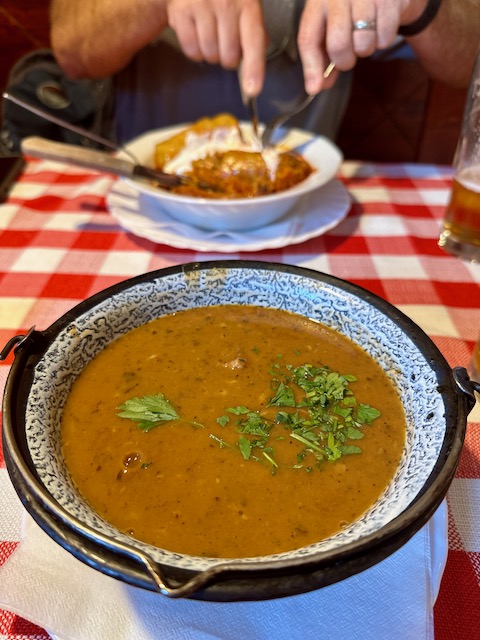
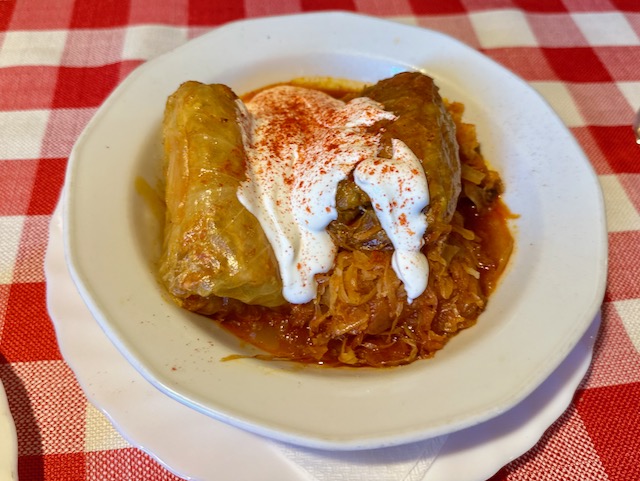
After the island, we walked to Pozsonyi Kisvendéglő for lunch — a classic neighborhood Hungarian restaurant a few blocks from Margaret Bridge with red checkered tablecloths, enormous portions, and the kind of menu that reads like a love letter to traditional cuisine. Stuffed cabbage rolls with sour cream and paprika. Bean soup in a heavy ceramic bowl. Phoenix demolished a schnitzel with nokedli and looked very pleased with himself. The prices were absurdly reasonable. It felt like being fed by someone’s grandmother, which is the highest compliment a restaurant can receive.

Flipper Múzeum Budapest
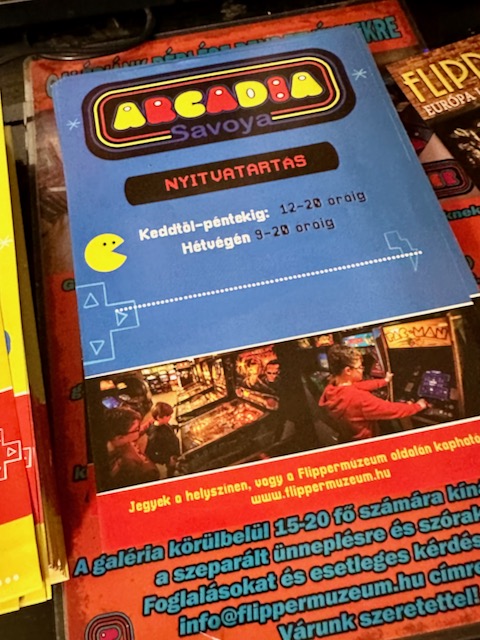
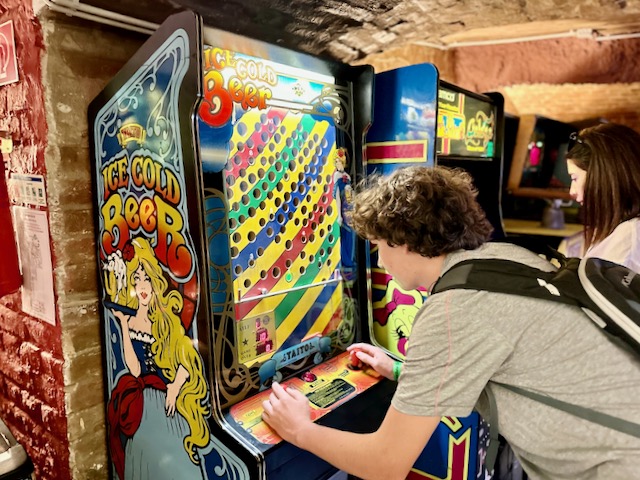
We’ve visited pinball museums before — it’s become an unofficial family tradition — but the Flipper Múzeum Budapest was our first in a foreign country, and it did not disappoint. Over 140 machines packed into a vaulted brick basement, spanning the full history of pinball from 1940s mechanical tables to 1990s digital cabinets. The admission covers unlimited play on every machine. Haven went straight for the racing game. Phoenix found the Star Wars table. We were there for hours.
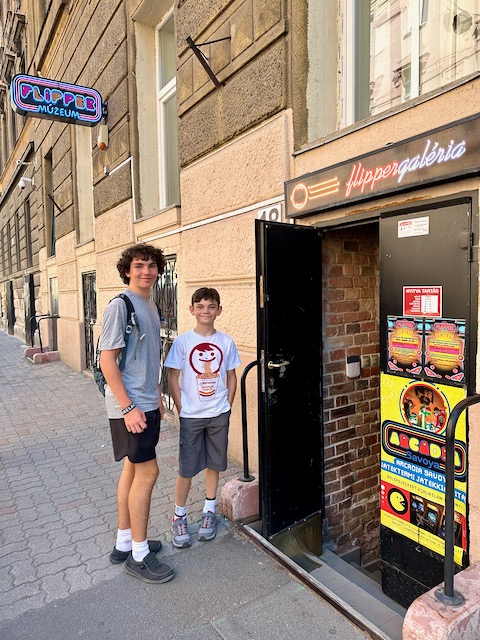
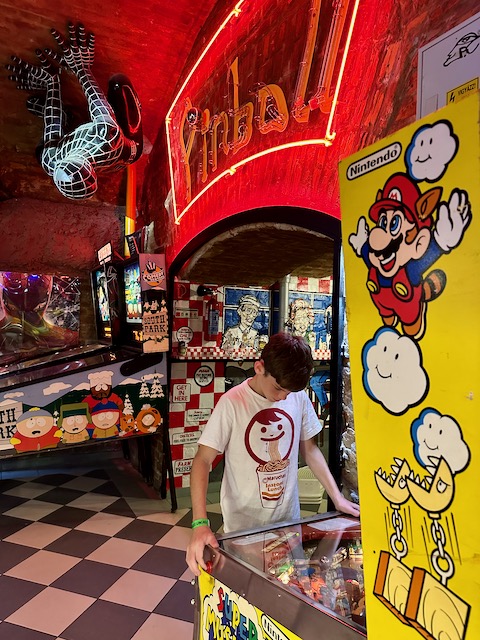
Arcade
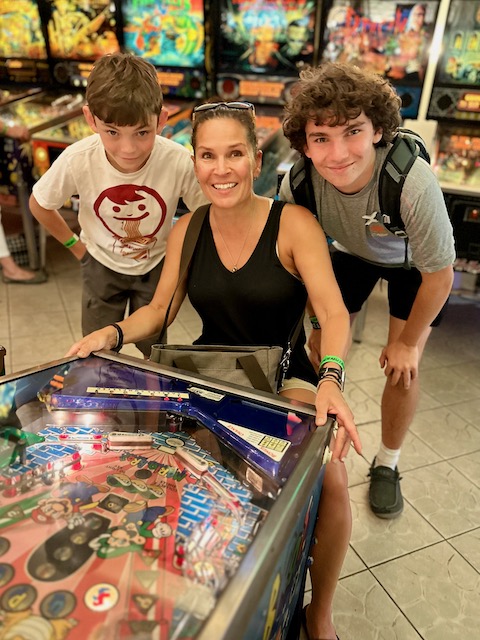
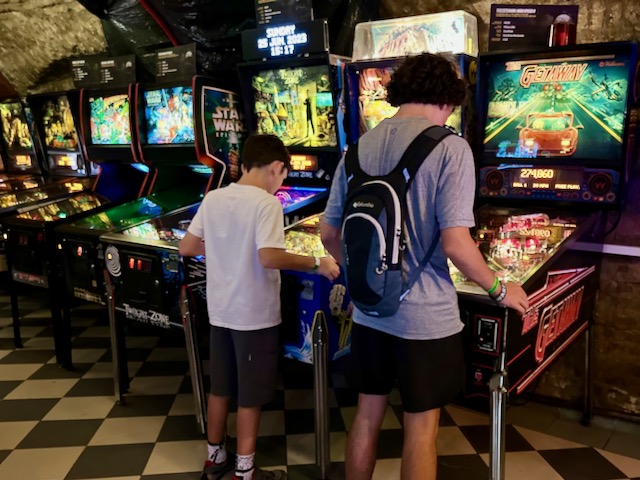

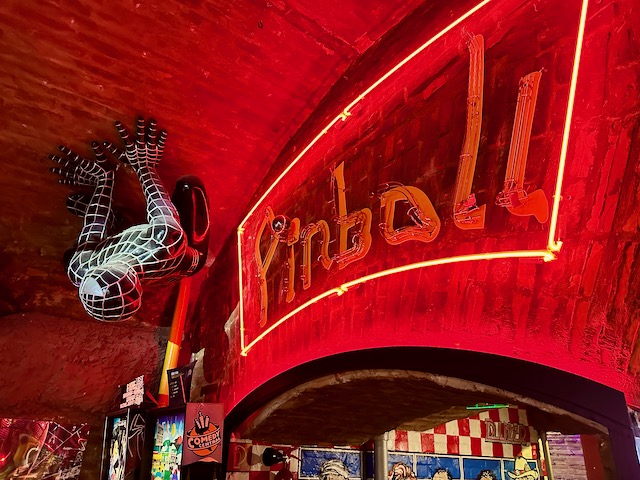
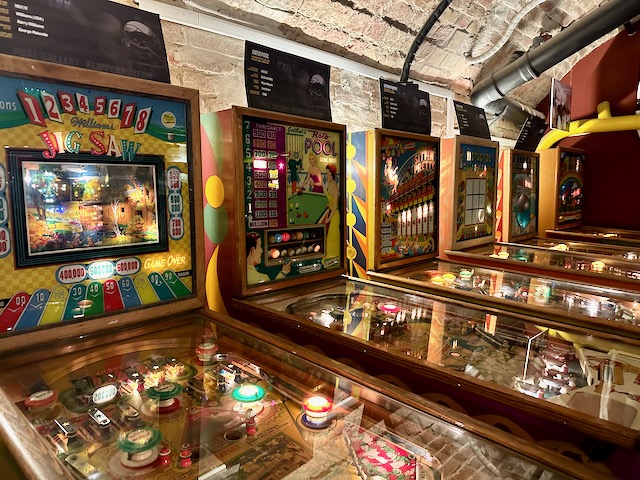
PRO TIP: The Flipper Múzeum is open Wednesday–Friday 4 PM–midnight, Saturday 2 PM–midnight, and Sunday 10 AM–10 PM. It’s closed Monday and Tuesday. One flat admission fee covers unlimited play on all 140+ machines — a great value for families.
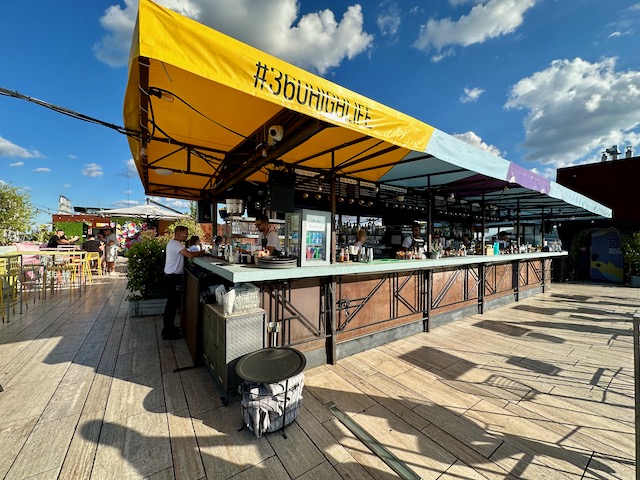
360 Bar Rooftop
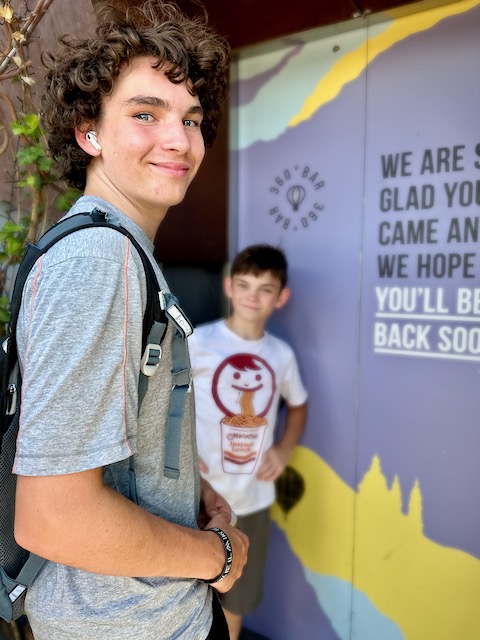
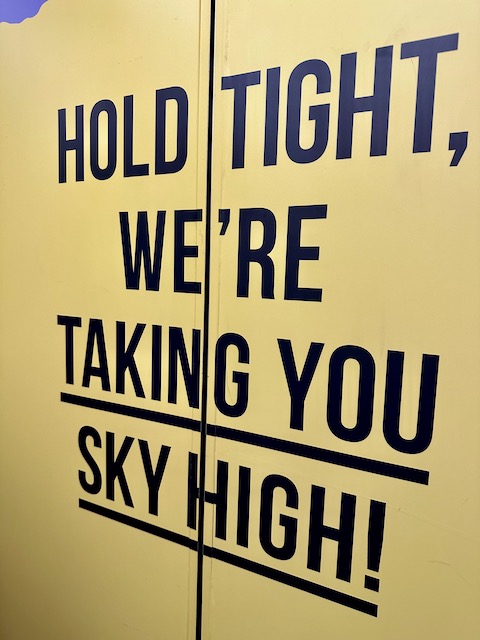
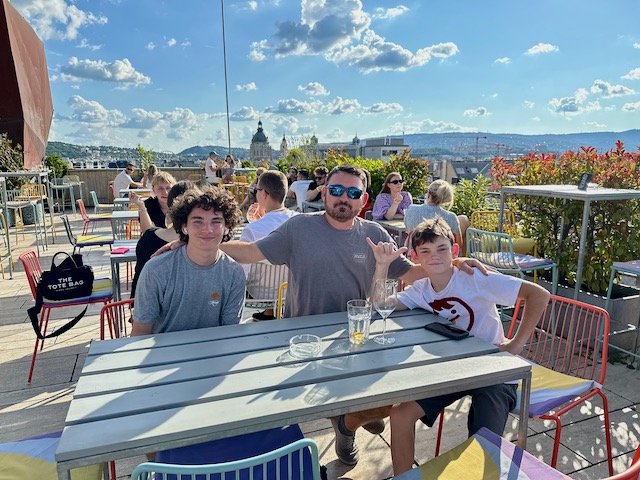
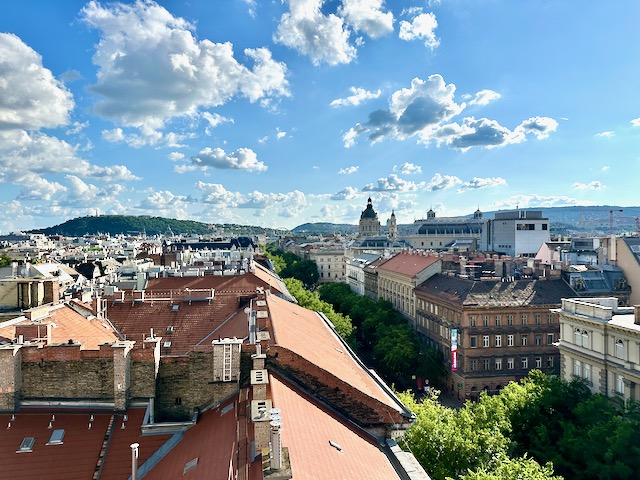
We ended our time in Budapest at the 360 Bar — a rooftop bar and restaurant in central Pest with exactly the view the name promises. The elevator door says it all: “HOLD TIGHT, WE’RE TAKING YOU SKY HIGH.” We only stayed for one drink and a few photos, but that was enough. The St. Stephen’s dome, the Buda hills, the whole city spread out around you in every direction — it’s a proper send-off for a city that had been very good to us.
Budapest 1. Hoffman’s 0.
On our final morning, we packed the car and pointed it toward Lake Bled, Slovenia. Google Maps had other plans. The GPS routed us over a bridge closed to tourist traffic — apparently a well-known ticketing trap for visitors following navigation apps. We got pulled over, along with several other confused tourists, while the Gresham Palace sat gleaming behind us in the morning sun like it was enjoying the show.
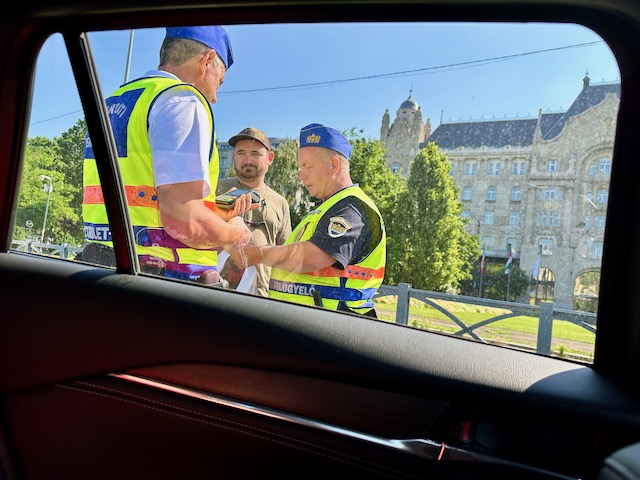
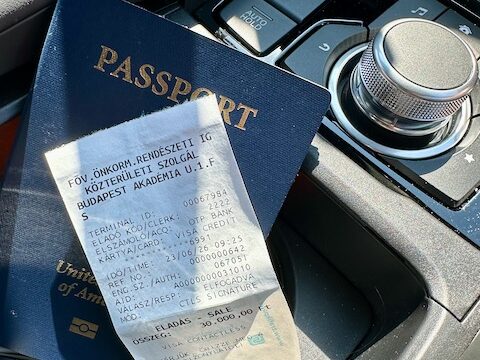
The officers were friendly and efficient. They had a handheld card payment machine. We paid 30,000 HUF on the spot, got a receipt, and were on our way within minutes. As traffic stops go, it was almost impressive. Budapest had one final move left, and it landed cleanly. We drove to Slovenia a little lighter in the wallet and fully entertained.
Final Thoughts on Budapest
Budapest was one of the most visually impressive cities we’ve ever visited, and three days barely scratched the surface. The architecture alone — the Parliament, the Basilica, the Castle, the baths — is worth the trip. But what made it work as a family destination was the variety. There was enough history and landmark-hopping to satisfy the adults and enough thermal pools, ruin bars, pinball museums, and golf cart rentals to keep the boys fully on board from start to finish. If you’re building a Budapest Hungary itinerary, three days gives you a solid foundation. Five would be better. Come hungry, book the vampire tour, and don’t follow Google Maps out of the city.
Budapest was Day 9–11 of our Epic Europe 2.0 family road trip. Previously, we visited Bratislava, Slovakia. Next stop: Lake Bled, Slovenia.
 2 Days in Berlin: History, Bavarian Beer & Everything