
Berlin, Germany’s Capital City
Berlin, the capital and largest city of Germany, is renowned for its rich history, vibrant culture, and significance in European politics. For this trip, though, it served as the jumping-off point for our second multi-country adventure across Europe — jokingly nicknamed Epic Europe 2.0. This trip took us from Germany to Croatia, passing through the Czech Republic, Slovakia, Hungary, and Slovenia along the way. Since we’d visited Germany several times before, we chose to limit our time there and focus on the other countries on our itinerary. Coming off an exhausting transatlantic flight, we needed time to reset our body clocks, so we opted to stay in Berlin for two days and visit some of its most notable historic attractions.
Cold War Divide
While Berlin has a history spanning nearly eight centuries, most people know the city for its role as the dividing line between East and West Germany during the Cold War. At the end of World War II, the Soviet Union occupied East Germany and installed a communist state, while the Allied nations occupied West Germany and built a capitalist democracy. Berlin itself was divided at its center. Most East Germans didn’t want to live under communist rule, so they fled to West Germany and beyond — an estimated four million people, posing a serious economic threat to the Soviets.
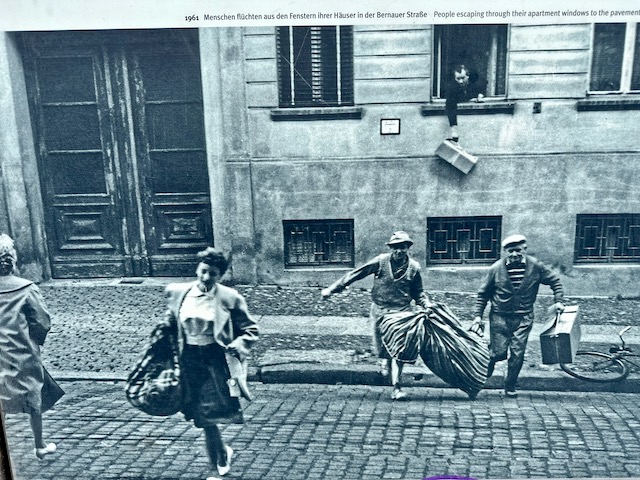
In August 1961, East Berliners watched as workers cleared sidewalks to make way for barbed wire fencing that would eventually become the 155-kilometer Berlin Wall. The freedom to cross between sectors ended overnight. Hundreds of people died trying to cross, and the Wall became a powerful symbol of communist oppression. Growing pressure from within East Germany and the West forced the Wall open in November 1989, paving the way for German reunification and marking the end of the Cold War.
Today, Berlin celebrates its vibrant nightlife, rich art scene, extensive green spaces, and diverse culinary scene. Whether you explore the numerous museums, stroll through Tiergarten — Berlin’s answer to Central Park — or raise a liter of Hofbräu at the Hofbräuhaus, the city offers plenty of opportunities to experience both historical depth and contemporary energy.
Itinerary Highlights
Day 1: Walk Through Mitte, Berliner Dom, Hofbräu Wirtshaus Berlin
Day 2: Checkpoint Charlie, Potsdamer Platz, Lindenbräu Restaurant, Memorial to the Murdered Jews of Europe, The Brandenburg Gate, The Reichstag Building, Bavaria Berlin Restaurant
Day 1 — Arrival in Berlin
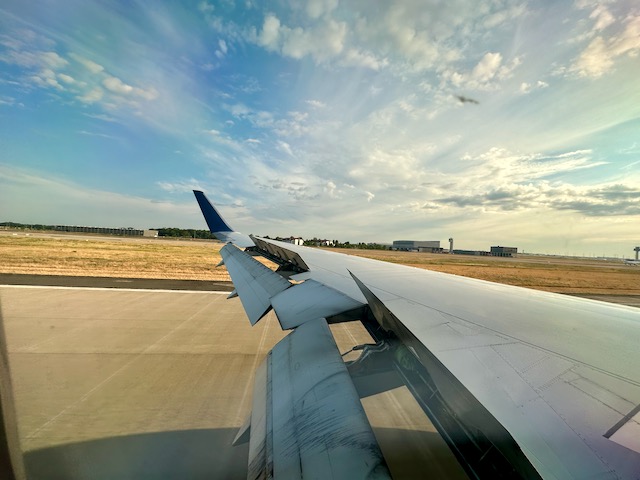
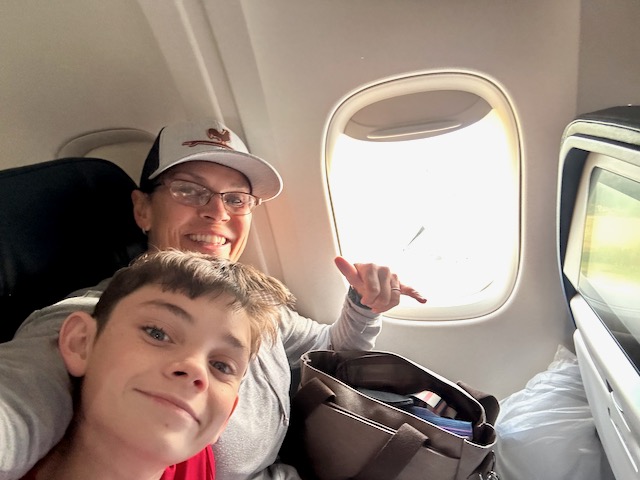
We landed in Berlin around 7:00 am, completely exhausted from the overnight flight. Our first priority: pick up the rental car, check into the apartment hotel, and sleep.
We booked Sixt Rental Car, which advertised airport pickup. At BER, however, the agent informed us that our reserved Mazda Station Wagon wasn’t available at that location. They handed us a much smaller car and sent us to their downtown office to swap it — during morning rush hour.
Honestly, I have no idea how Craig managed the drive, since the rest of us could barely keep our eyes open. We eventually sorted the car and checked into the Adina Apartment Hotel Berlin Checkpoint Charlie. As soon as we reached our apartment, we crashed and slept until around 5 pm. The plan for the evening was simple: walk to dinner and see what we passed along the way.
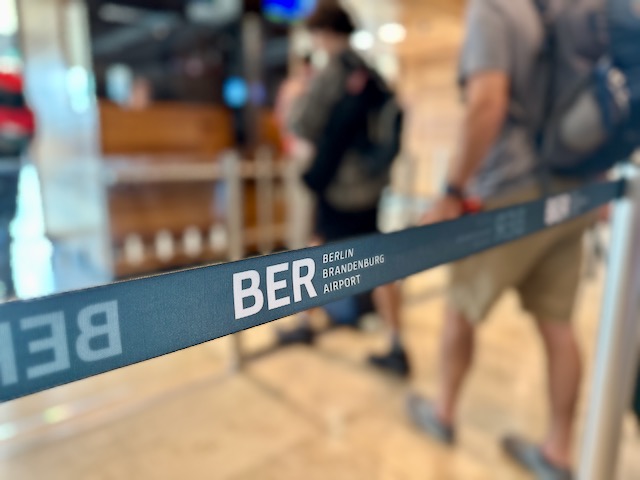
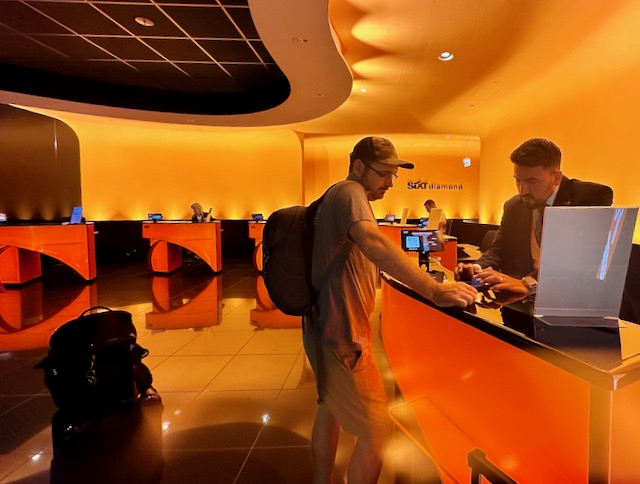
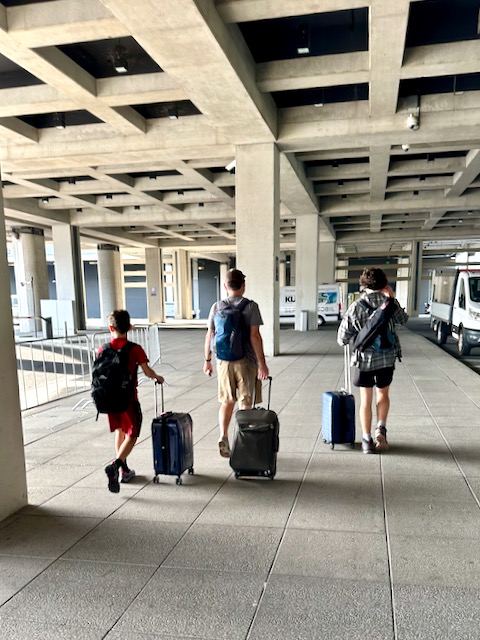
Renting in Berlin and returning in Dubrovnik cost $3,372 for 23 days — more than we’d typically pay. But avoiding the round-trip back to Berlin made the surcharge worth it.
PRO TIP: If you plan a one-way rental across multiple European countries, expect a significant drop-off surcharge. Get quotes from several companies well in advance — prices vary widely and cross-border availability can be limited.
An Evening Walk Through Mitte
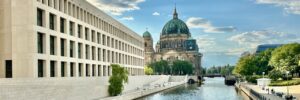
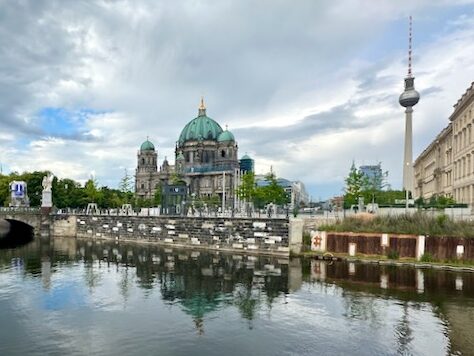
Walking from our hotel toward Alexanderplatz, we followed the bank of the Spree River as the view opened up to the green copper domes of the Berliner Dom rising above Museum Island. The cathedral’s reflection rippled across the water alongside the stone arches of the Schlossbrücke (Palace Bridge). Karl Friedrich Schinkel designed the bridge in the 1820s, and eight white marble sculptures of Nike guiding young warriors line its railings — details you’d miss entirely if you didn’t slow down. We slowed down. We were too tired to walk fast anyway.
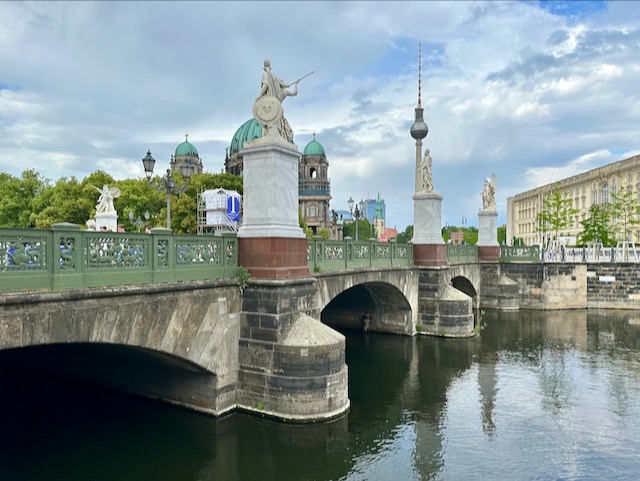
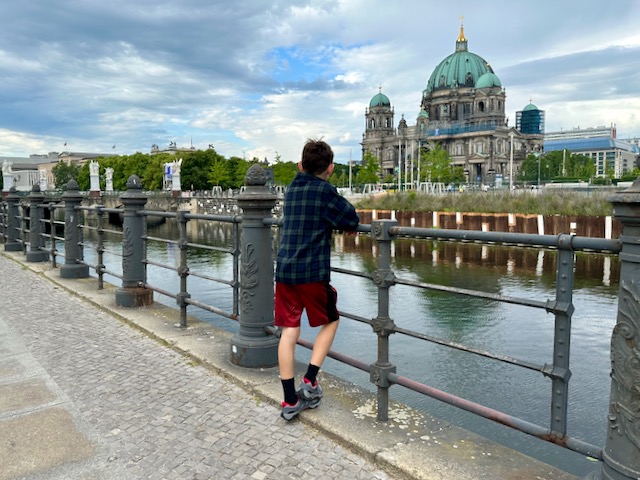
Berliner Dom
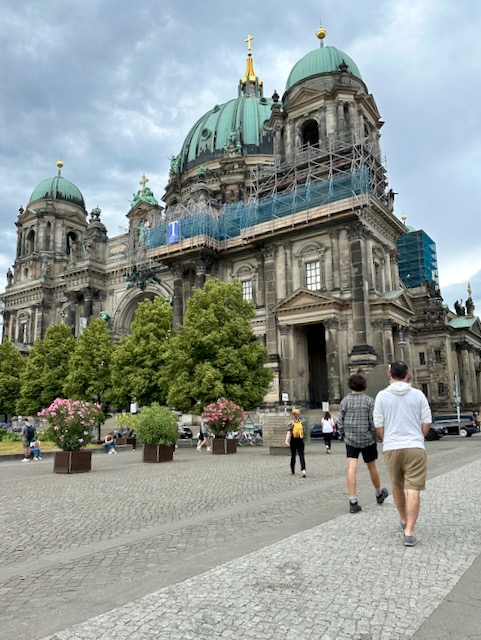
The Berliner Dom (Cathedral Church of Berlin) dominates the Museum Island skyline — Germany’s most prominent Protestant church, completed in 1905 on a UNESCO World Heritage Site in the Spree River. Its Baroque facade, ornate detailing, and iconic green copper dome make it striking from every angle. Visitors can explore the interior, descend into the Hohenzollern crypt, and climb to the observation deck for panoramic views over central Berlin. We admired it from the outside and kept moving — dinner had been on our minds since somewhere over the Atlantic.
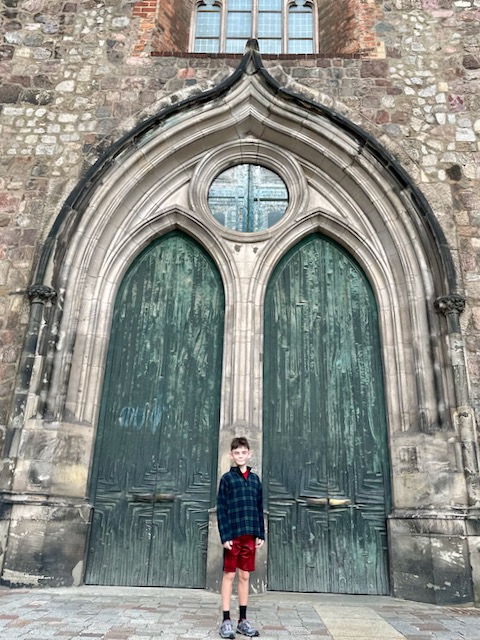
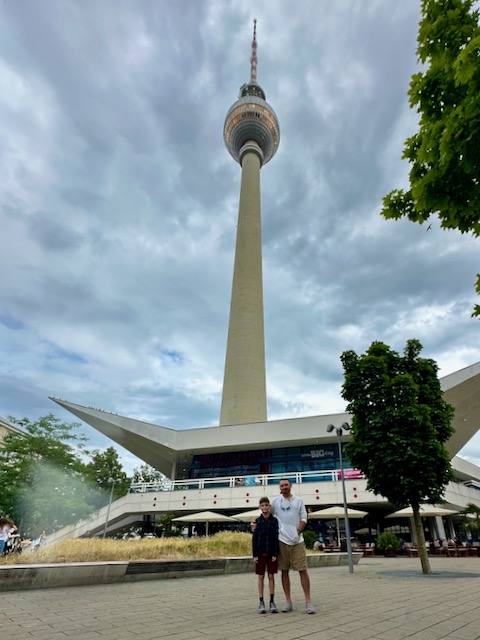
Continuing toward Alexanderplatz, we passed the medieval Marienkirche (St. Mary’s Church) — one of Berlin’s oldest surviving churches, dating to the 13th century — with the 368-meter Fernsehturm (TV Tower) rising directly behind it. East Germany built the tower in 1969 as a statement of socialist achievement, and it remains the tallest structure in Germany today. A 700-year-old Gothic church dwarfed by a Cold War-era concrete needle — that’s very Berlin.
Hofbräu Wirtshaus Berlin
The Hofbräu Wirtshaus Berlin sits right on Alexanderplatz, spanning 6,500 square meters of communal benches, traditionally costumed waitstaff, and authentic Hofbräu beer from Munich. Bands perform nightly, delivering the same oompah-meets-rock set list you’d find at the flagship location in Munich. After a brutal travel day, this restaurant delivered exactly what we needed. The beers arrive in proper 1-liter Masskrüge, the atmosphere is loud and convivial, and the food is exactly as filling as you’d hope. We were all in.
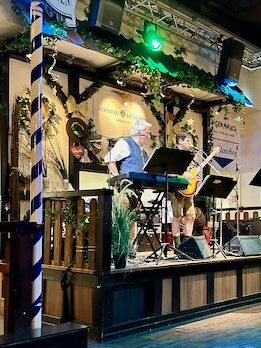
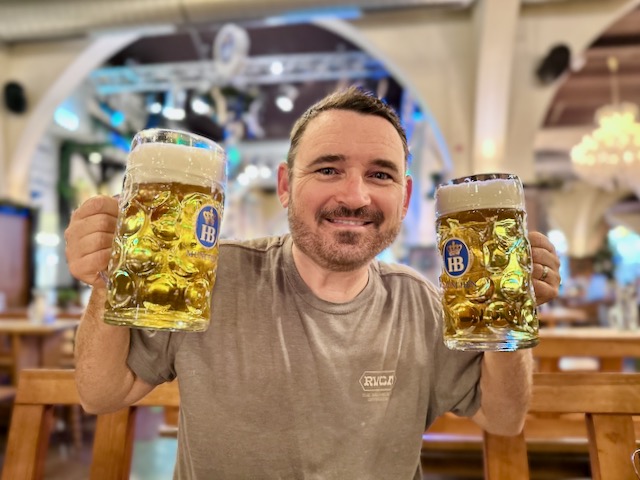
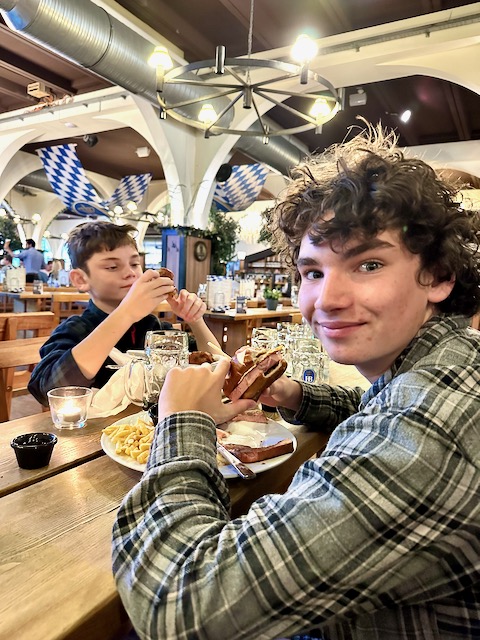
PRO TIP: The Hofbräu Wirtshaus Berlin is open daily and takes no reservations, but it fills up fast on weekends and evenings. Arrive early — especially if you want a table near the stage.
Day 2 — Berlin’s Historic Core
With only one full day in Berlin, we packed it with the city’s top attractions: Checkpoint Charlie, Potsdamer Platz, the Memorial to the Murdered Jews of Europe, the Brandenburg Gate, and the Reichstag. A friend was also in Berlin for work, so we planned to meet him along the route. From our hotel, all five sites required roughly two hours of walking — and the Reichstag visit required a reservation for a specific entry window, which gave us a hard deadline. We started early and kept moving.
Checkpoint Charlie Outdoor Museum
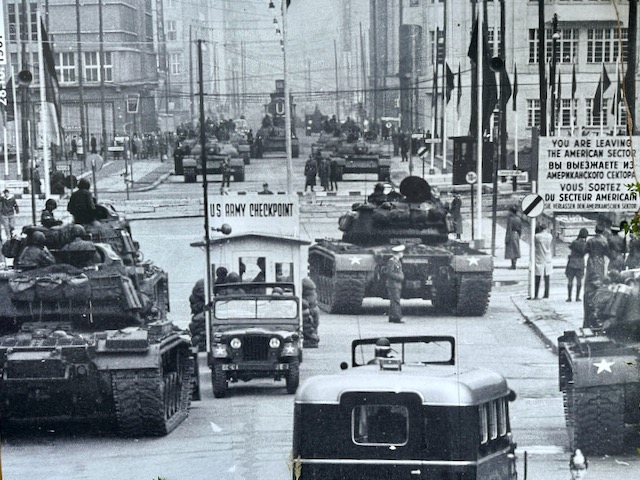
Checkpoint Charlie is one of Berlin’s most iconic attractions — a former American military post during the Cold War and a crossing point between East and West Berlin. It earned its name as the third Allied checkpoint on the border, following Checkpoint Alpha at Helmstedt and Checkpoint Bravo at Dreilinden. “C” in the NATO phonetic alphabet is Charlie. The site witnessed numerous tense standoffs, most notably in October 1961 when US and Soviet tanks faced each other for 16 hours just meters apart.
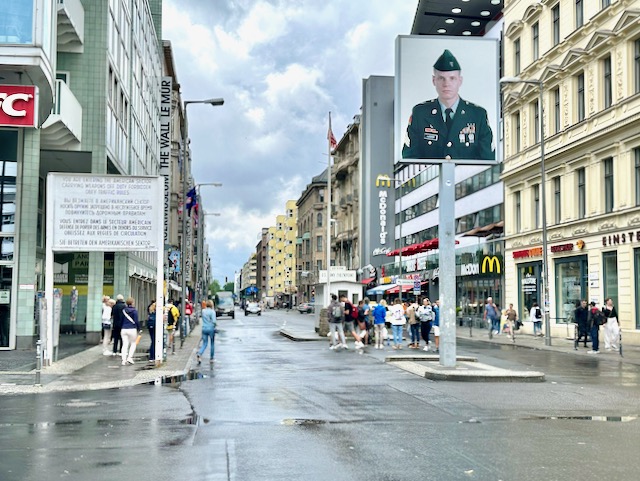
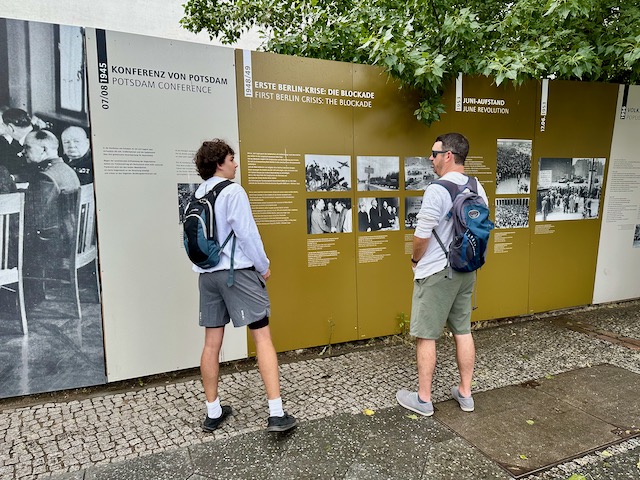
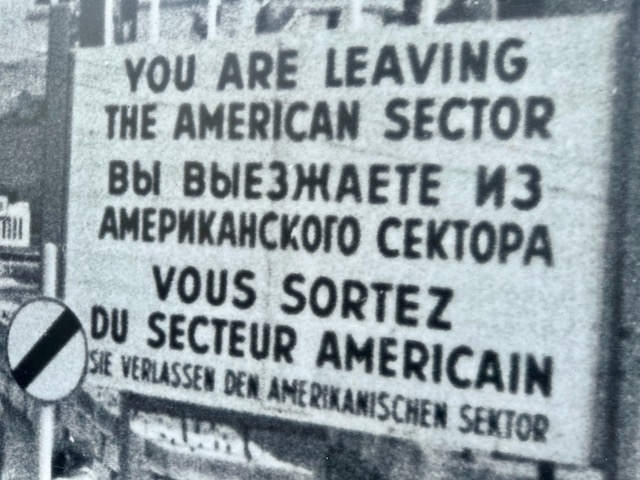
The outdoor museum brings Berlin’s division to life through photographs, timelines, and personal accounts — stories of daring escape attempts, espionage, and superpower tension. Walking the panels, we stopped at Churchill, Truman, and Stalin at the 1945 Potsdam Conference; the 1948 Berlin Blockade; US Army tanks staring down Soviet armor at this exact intersection. A close-up of the four-language sign — “You Are Leaving the American Sector” — made it all feel immediate.
Checkpoint Charlie Guardhouse
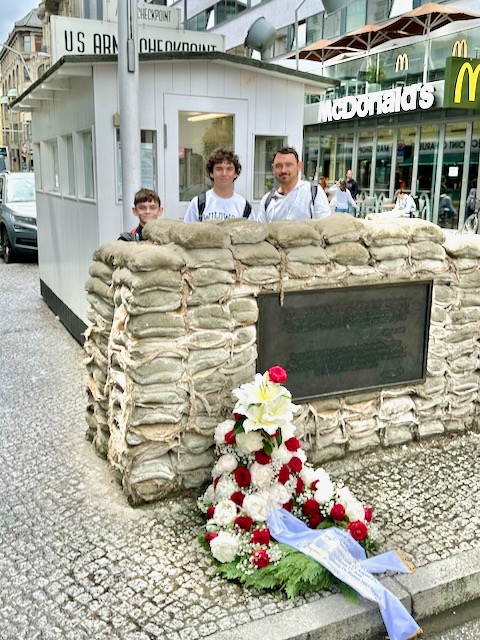
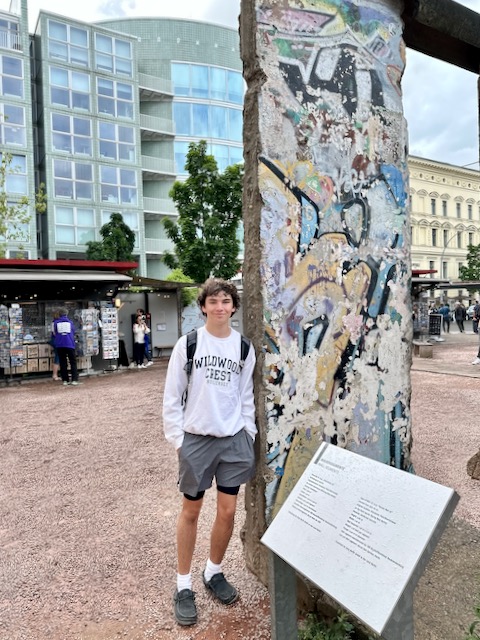
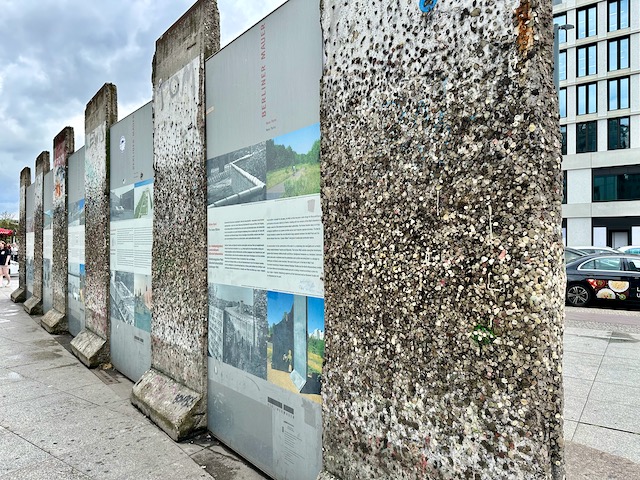
A replica of the original Checkpoint C guardhouse stands on the street, and original Berlin Wall segments sit nearby — covered in graffiti, their pockmarked concrete surfaces pitted from the people who chipped away at them after the Wall fell in November 1989. A memorial wreath at the base of a sandbag monument near the crossing was a quiet detail that cut through the tourist noise. We arrived before 10 am, ahead of the crowds, and it made a real difference.
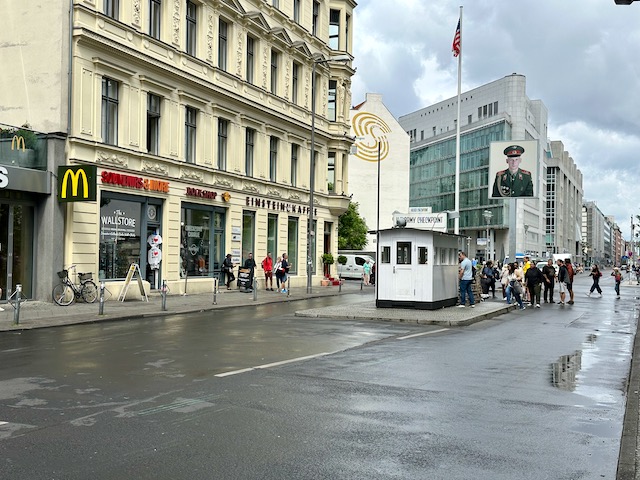
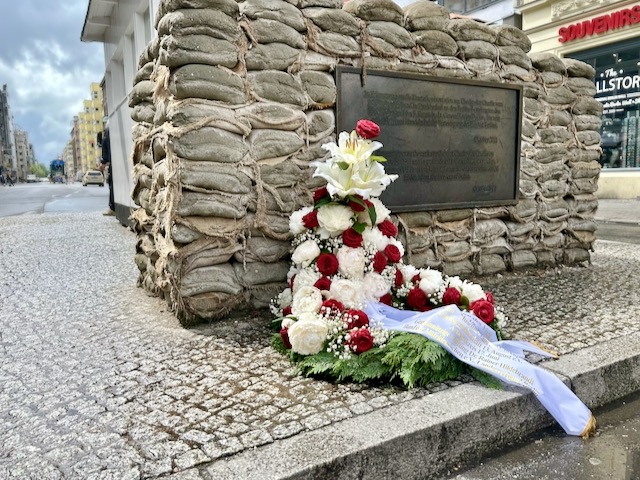
PRO TIP: Checkpoint Charlie is free and open 24 hours. Arrive before 10 am to beat the tour groups — by midday, the area is packed. The outdoor museum panels are the real highlight and always accessible, regardless of the paid museum’s hours.
Potsdamer Platz
Potsdamer Platz occupies the widest point of the Berlin Wall’s “death strip” — the heavily fortified no-man’s land between the inner and outer walls that trapped East Germans from 1961 to 1989. During those years, it sat as a massive wasteland at the city’s heart.
When the Wall fell, the area transformed almost overnight. Workers dismantled a large section here within days, and a makeshift crossing opened. In 1990, Roger Waters performed “The Wall” on the former death strip to an audience of over 350,000 people — what became the largest rock concert in history.
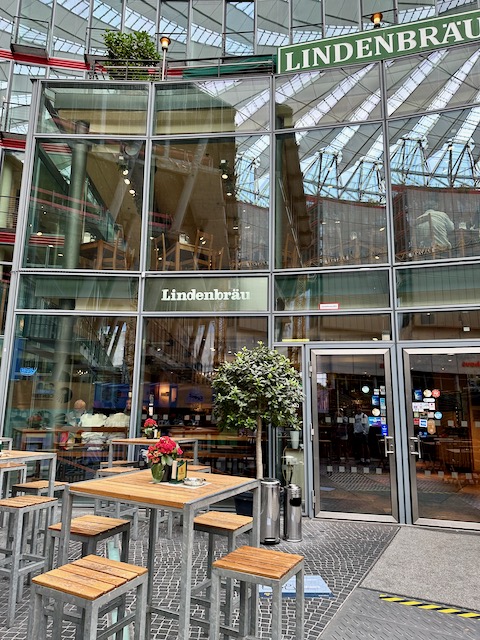
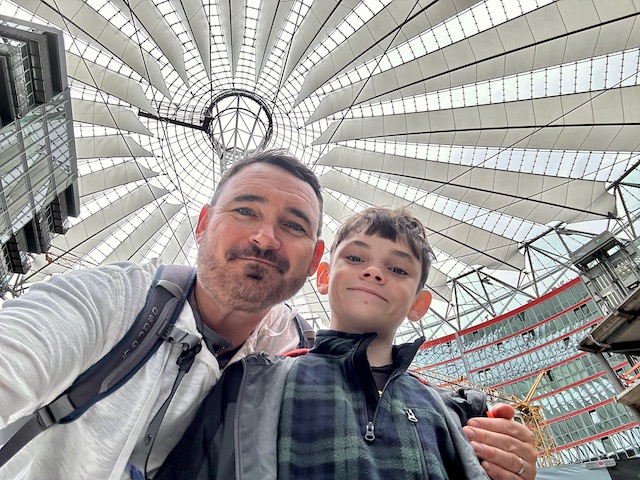
Today, Potsdamer Platz buzzes with the Sony Center, the Kollhoff Tower, the Legoland Discovery Centre, and a row of original Wall segments with information panels along a nearby gravel stretch. We came primarily to meet a friend at Lindenbräu, inside the Sony Center’s iconic glass-and-steel atrium.
Lindenbräu Restaurant
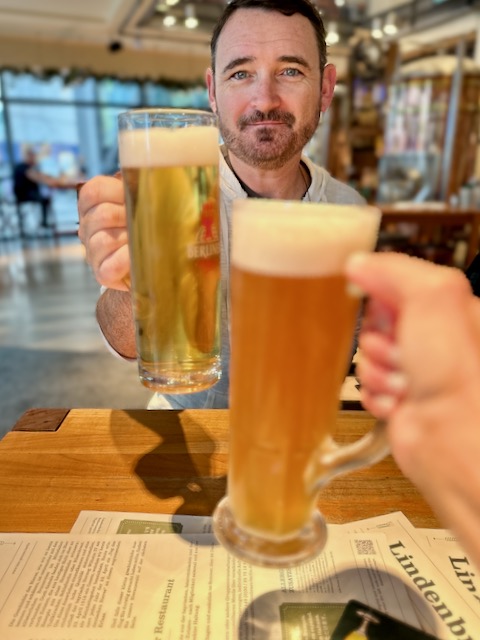
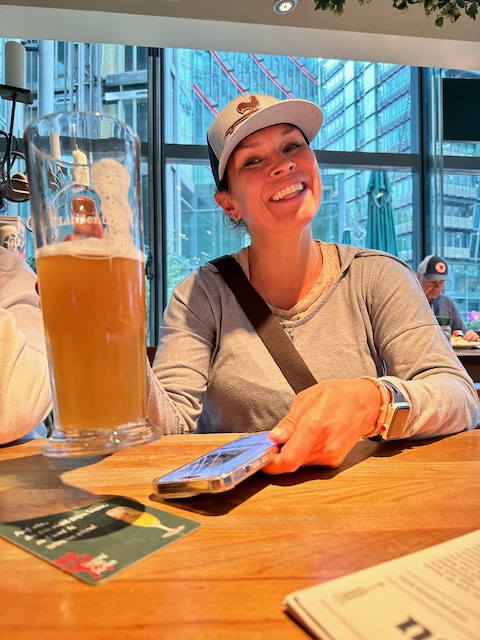
Lindenbräu pairs rustic Bavarian ambiance with the Sony Center’s sleek glass atrium — a traditional German brewpub inside one of Berlin’s most modern spaces. We settled in over cold house-brewed wheat beers and warm soft pretzels, caught up with our friend, and took a proper break from the walking. After a round or two, we said our goodbyes and pushed on.

Memorial to the Murdered Jews of Europe
Completed in 2004, the Memorial to the Murdered Jews of Europe honors the six million Jews killed during the Holocaust. Architect Peter Eisenman designed the installation: 2,711 grey concrete stelae — rectangular slabs ranging from ground level to nearly five meters tall — arranged in a grid on a sloping four-acre field, a short walk from the Brandenburg Gate.
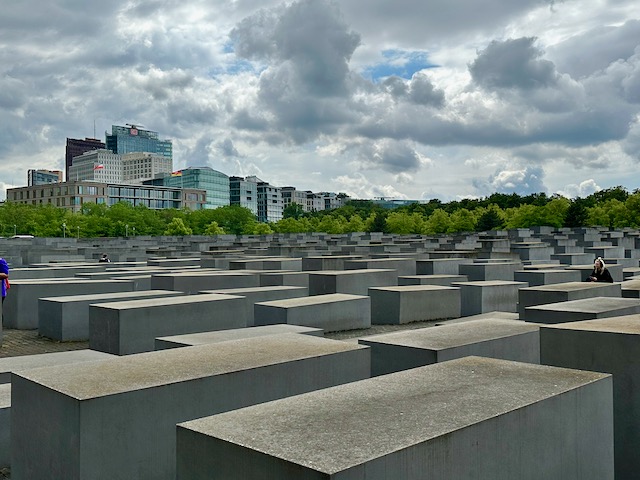
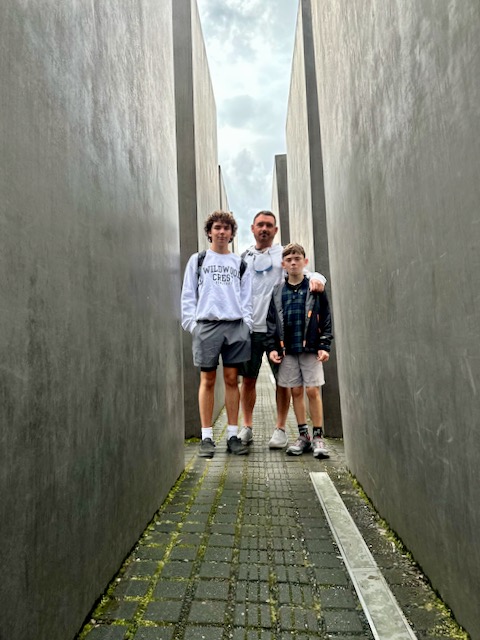
As you walk deeper into the grid, the ground slopes unpredictably and the stelae grow taller around you. The walkways narrow. The walls tower overhead until you feel genuinely enclosed — immersed in something that feels like a graveyard, or something darker. The scale only registers once you’re inside it.
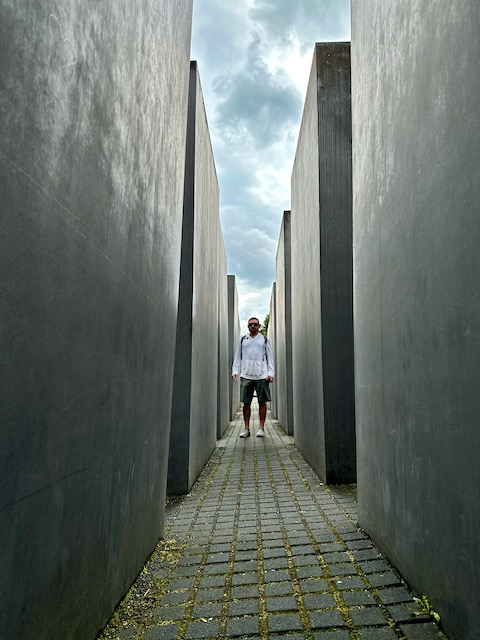
PRO TIP: The memorial is free, open 24 hours, and accessible from all four sides. The underground Information Centre (open Tuesday–Sunday) adds significant historical context and is well worth the time if your schedule allows.
The Brandenburg Gate
The Brandenburg Gate is Berlin’s most recognizable monument — the only surviving historical city gate, carrying over 200 years of turbulent history. Carl Gotthard Langhans built the neoclassical triumphal arch in 1791, topping it with the copper Quadriga, a four-horse chariot driven by Victoria, the goddess of victory. Napoleon liked it so much he had the Quadriga shipped to Paris in 1806. The Prussians took it back eight years later.
After the Berlin Wall went up, the gate sat in the restricted zone — inaccessible to both East and West Berliners for nearly three decades. It became a powerful symbol of division, then an equally powerful symbol of unity when the Wall came down. Today, it’s one of the most photographed spots in the city and can be very crowded, so arrive early if possible.
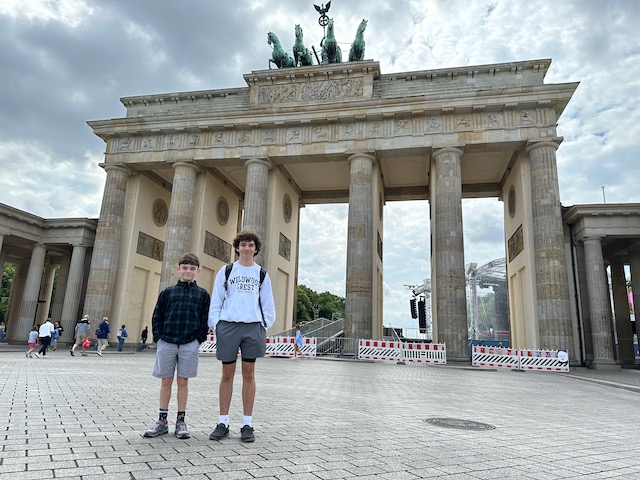
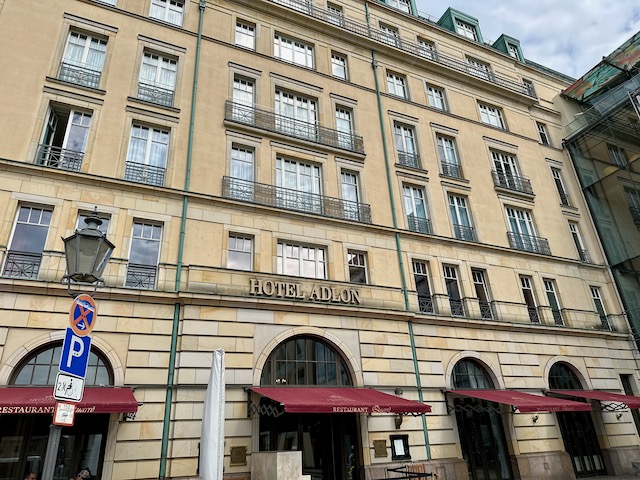
Steps from the gate, we passed the Hotel Adlon Kempinski — one of Europe’s most storied hotels, open since 1907 and a longtime favorite of royalty, heads of state, and celebrities. It sits in a prime position on Unter den Linden, facing the gate. We did not stay there. We did stop to look.
The Reichstag Building
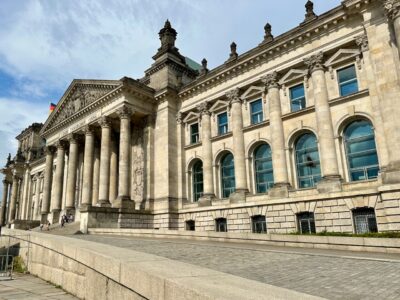
The Reichstag Building is a powerful symbol of German democracy — home of the Bundestag and a witness to some of the most consequential moments in modern European history. Arsonists set the original building ablaze in 1933, an attack the Nazis used as a pretext to consolidate power. World War II left it heavily damaged. After reunification, British architect Sir Norman Foster reimagined the building entirely, preserving the neoclassical stone exterior while adding a striking glass dome that opened to the public in 1999.
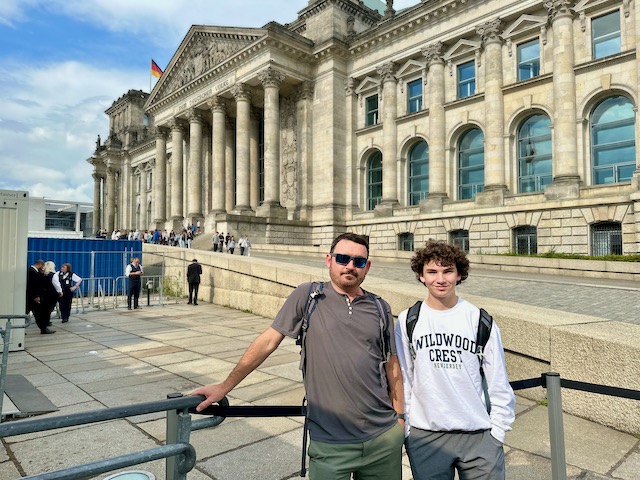
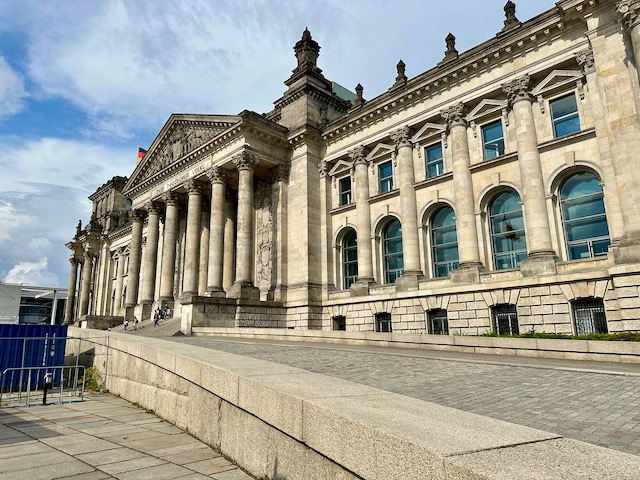
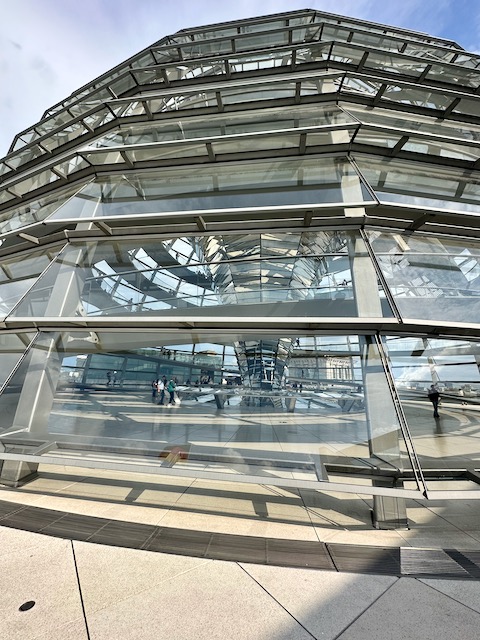
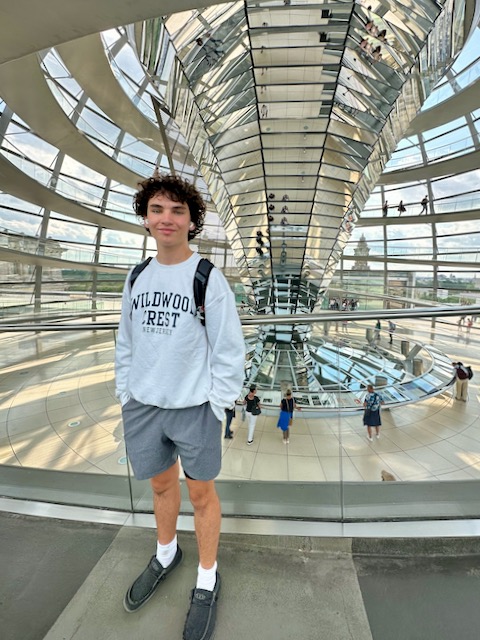
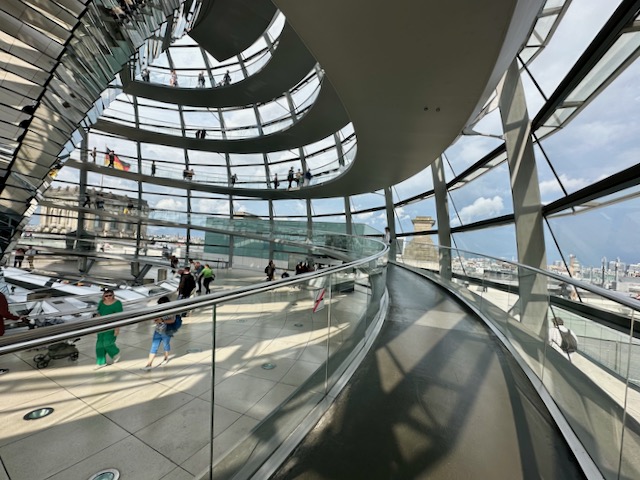
Foster’s glass dome is the centerpiece. From the outside, it looks like a faceted steel-and-glass sphere sitting incongruously atop a 19th-century stone building. Inside, it’s something else entirely. A double-helix spiral ramp winds upward around a mirrored central funnel — the “light sculptor” — that reflects daylight down through the glass floor into the parliamentary chamber below. Citizens walk above their elected representatives, literally looking down into the chamber. Transparency, architecturally speaking.
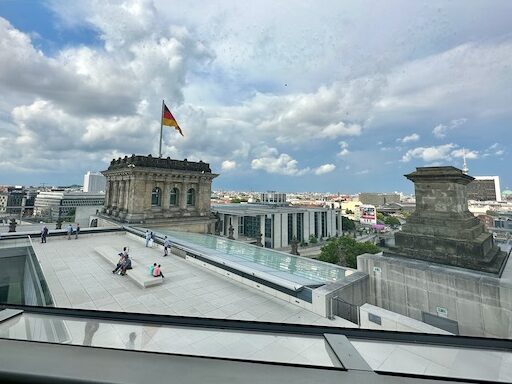
PRO TIP: Admission to the Reichstag dome and rooftop is free, but you must register in advance via the Bundestag’s online registration form. You’ll need full names, dates of birth, and nationalities for everyone in your group. Book well ahead — slots fill up weeks out in summer. Your registration assigns a specific entry window, so plan the rest of your day around it.
Bavaria Berlin — A Proper Final Meal
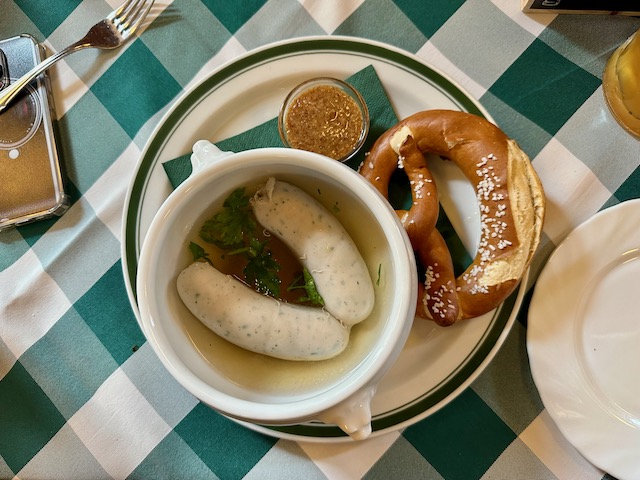
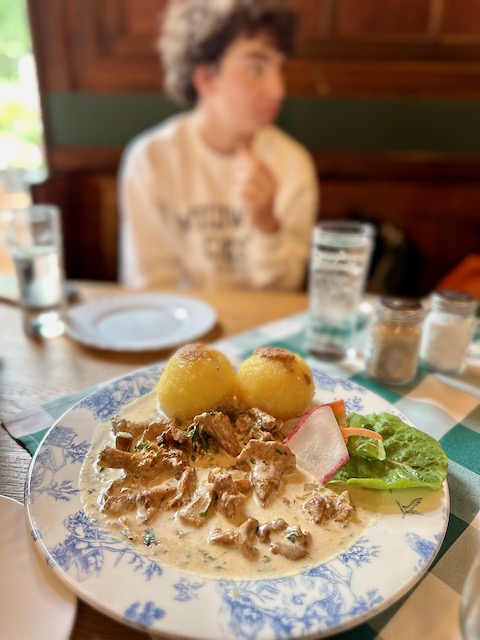
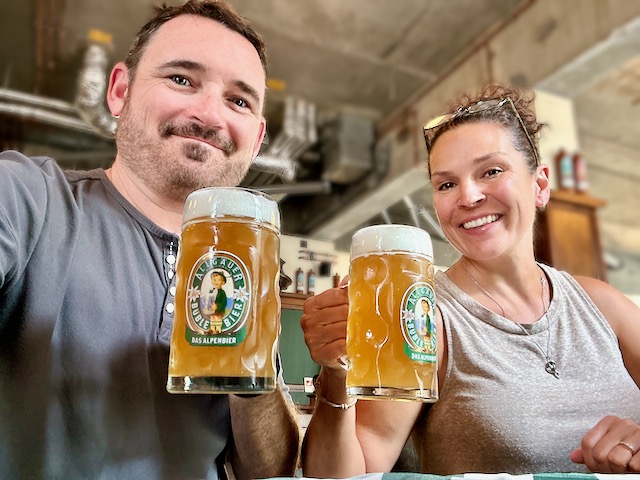
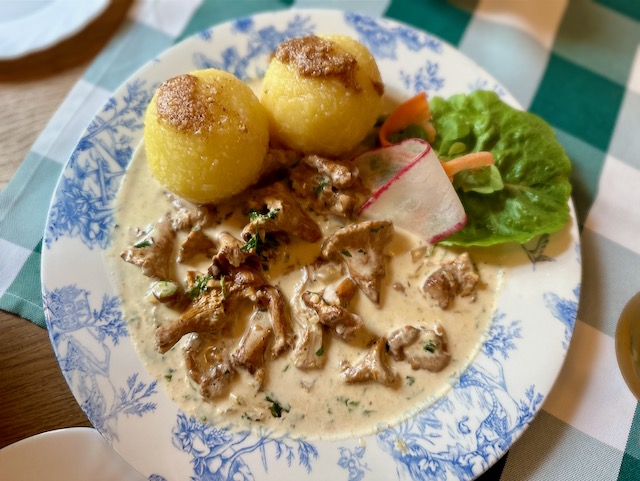
After a full day on our feet, we found Bavaria Berlin Restaurant located at Hannah-Arendt-Straße 3, between the Brandenburg Gate and Potsdamer Platz, and sat down for a proper meal. We ordered Allgäuer Büble Bier — “Das Alpenbier,” a Bavarian wheat ale from the Allgäu region of southern Germany — in liter Masskrüge. For food, we went with Weißwurst (traditional Bavarian white veal sausages, served warm in broth with sweet mustard and a soft pretzel) and Rahmschwammerl (wild mushrooms in cream sauce over two golden Semmelknödel bread dumplings). It was exactly the kind of meal you want after eight hours of Cold War history.
Departure Day
We left Berlin the morning of June 17, heading southeast toward Prague. Two days felt like just enough — enough to walk the Cold War’s fault lines, enough to stand inside the Reichstag dome and look down at democracy in action, and enough to eat our weight in pretzels and Semmelknödel. Berlin was the perfect kickoff for Epic Europe 2.0. The rest of Europe was waiting…
 Bratislava — Overlooked Gem on the Danube River