
A Long-Awaited Return
Prague, Czech Republic, was the second stop on our Epic Europe 2.0 cross-country road trip in the summer of 2023. For me, it was a long-awaited return — I’d first visited in 1997 while attending college classes in Innsbruck, Austria, and I fell hard for it. For the boys, it was their first time in one of Europe’s most arresting cities, and I couldn’t wait to see it through their eyes. Nicknamed the “City of a Hundred Spires,” Prague captivated me with its ornate Gothic architecture and winding cobblestone streets. Wandering past breathtaking palaces and centuries-old churches felt like stepping into the pages of a storybook.
The city boasts a rich history dating back to 880 AD and was once the heart of the Slavic Kingdom of Bohemia. Today, Prague is the capital of the Czech Republic and home to 1.3 million people. It’s renowned for its Old Town Square, Baroque buildings, Gothic churches, and the animated Astronomical Clock — and for the iconic Charles Bridge, a medieval stone arch adorned with Baroque statues connecting the Old Town to Prague Castle across the Vltava River.
A City That Carries It’s History
But Prague is not all fairy tales. Despite its indisputable beauty, the city still carries visible scars from World War II — bullet holes and bomb damage from the Nazi occupation still mark its buildings. Once home to one of Europe’s largest Jewish communities, the Jewish Quarter is visibly weighted by history. The Old Jewish Cemetery, a 2.5-acre site packed with 12,000 weathered headstones representing countless souls, is easily one of the most somber places we’ve ever visited. Since my 1997 trip, Prague’s popularity has surged dramatically. After the fall of the Iron Curtain in 1989, Prague quickly emerged as one of Europe’s most beautiful capitals. What once could be done in a weekend now takes days to absorb. Rather than trying to see everything, I chose to include only my favorites and to prioritize a few of the city’s more unique experiences — some dark, some delicious, and one that involved soaking in a tub of beer.
Prague Itinerary Highlights
- Day 1: Arrive from Berlin, Old Town Square, Dinner at Upavouka Medieval Tavern
- Day 2: Sunrise walk in Old Town, St. James Church (the Thief’s Arm), Operation Anthropoid WWII Walking Tour, Charles Bridge, Hamleys Toy Store, Mad Rabbit Macarons Bar, Original Beer Spa
- Day 3: Day trip to Kutná Hora (Sedlec Ossuary Bone Church), Restaurace U Balanů, Cathedral of Our Lady at Sedlec, Old Jewish Cemetery
Day 1 — Arriving in Prague, Czech Republic
We arrived in Prague by car from Berlin, Germany, around 1 pm, checked into our apartment at Golden Angel Suites, parked the rental car, and headed into Old Town for a bite to eat. I chose Golden Angel Suites specifically for its location — walkable to everything we planned to see.
Old Town Square & the Astronomical Clock
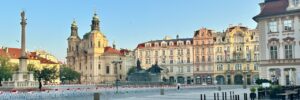
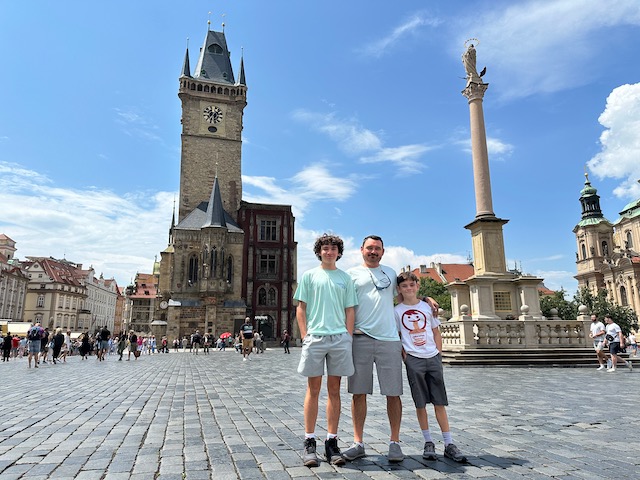
Walking into Old Town Square, the first thing I noticed was the number of people — far greater than anything I remembered from the late nineties. I looked up the numbers: the earliest tourist data I found was from 2000, which recorded 2.6 million visitors. The estimate for 2024 is 8.1 million. So it’s no surprise the square has lost some of its fairytale quietude. Nonetheless, Old Town Square is the most significant historical landmark in Prague and a must-see on any Prague Czech Republic itinerary. The square is home to the Old Town Hall with its Astronomical Clock, the Church of Our Lady before Týn, the Baroque Church of St. Nicholas, the Rococo Kinský Palace, and the monument to Jan Hus.
After strolling around the square to take in the heart of Prague, we grabbed a table outside Restaurant U Prince, which faces the Astronomical Clock directly. We had dinner reservations at 8 pm, so to avoid ruining our appetites, we shared a few small sandwiches while the boys worked through a couple of chocolate milkshakes that were, frankly, architectural achievements.
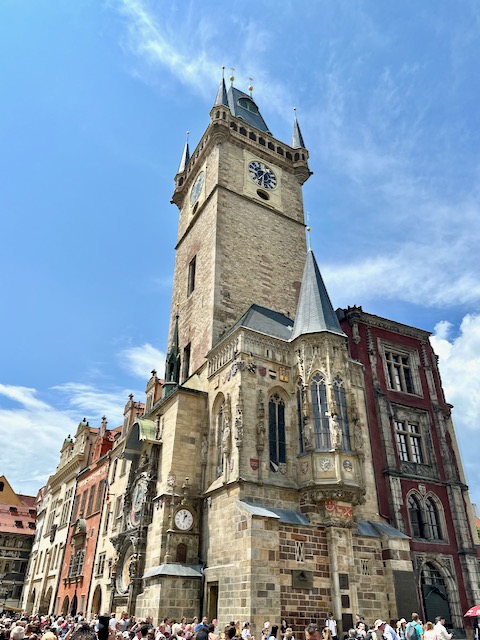
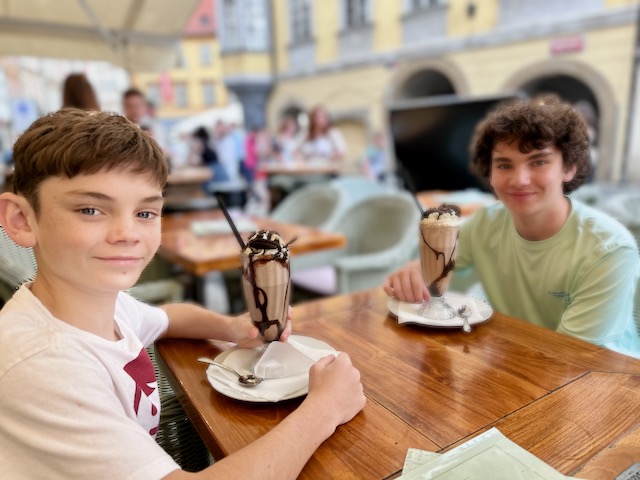
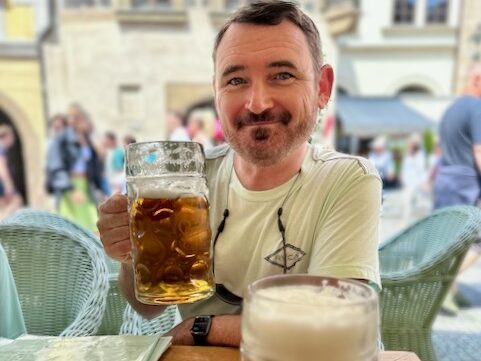
We timed our snack break well enough to catch the Glockenspiel show on the Astronomical Clock at the top of the hour — an impressive display of mechanical figures that’s been running since 1410. After people-watching for an hour, the weather started turning, so we headed back to the apartment. We arrived just before the skies opened up, sending everyone on the streets scurrying for shelter. The rain dampened our ability to continue exploring, but it gave us a few extra hours of rest that were genuinely welcomed after the drive from Berlin.
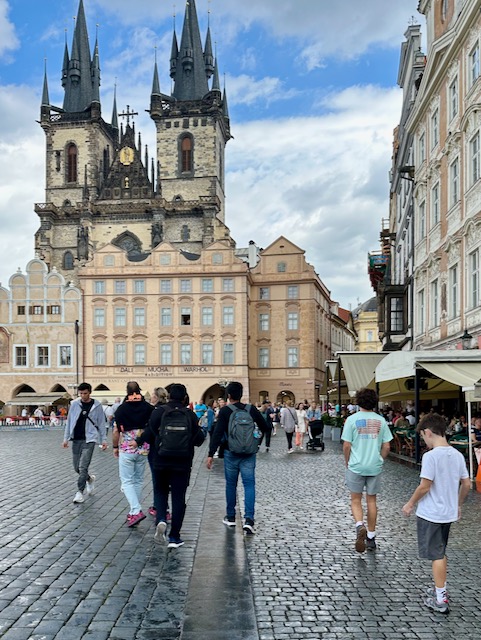
and said to have inspired Walt Disney’s Sleeping Beauty castle.
PRO TIP: Restaurant U Prince has a rooftop terrace with a direct view of the Astronomical Clock — perfect for watching the hourly show without the crowd crush below. Book ahead in summer. The clock performs from 9 am to 11 pm daily.
Upavouka Medieval Tavern
Our dinner reservation at Upavouka Medieval Tavern was the perfect conclusion to our first day in Prague. A historical dinner show set in a stone interior that looks like it hasn’t changed much since the 14th century, Upavouka offers belly dancing, sword fighting, bagpipe music, and fire breathing — all while you work through a five-course traditional Czech meal. The menu featured beef and boar goulash, roasted pork knuckle, baked duck with cabbage and dumplings, and more. Silverware is not part of the experience.
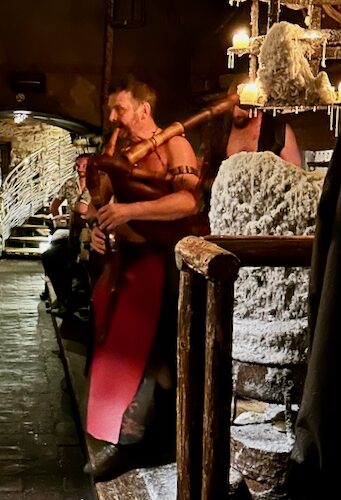
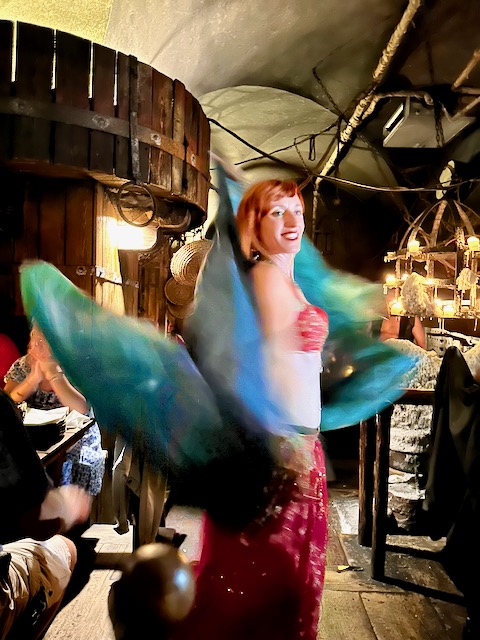
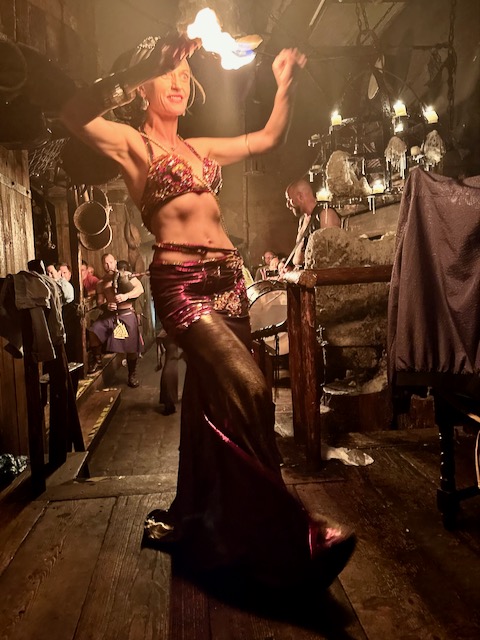
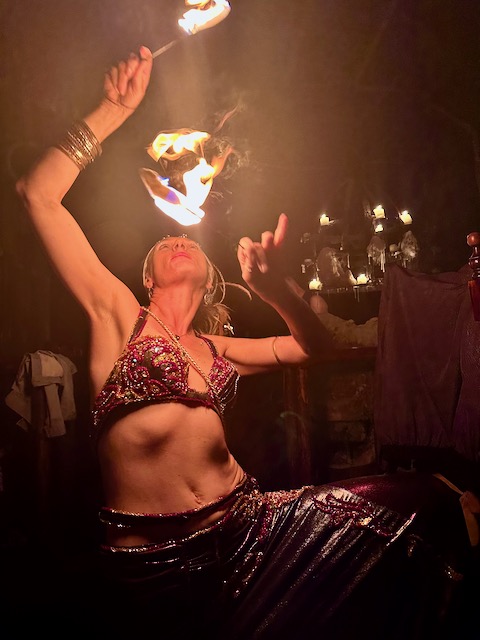
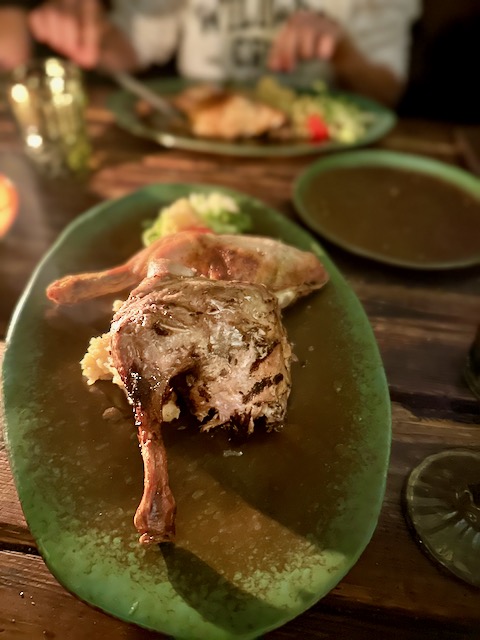
The show wasn’t just fun — it was exceptional. The characters, costumes, and performances were top-notch, and the actors genuinely seemed to enjoy their roles. The food was equally good; each course was perfectly cooked and beautifully plated. It was well worth the $67 USD ticket price.
PRO TIP: Book Upavouka well in advance — it fills up fast in summer, particularly on weekends. The show runs approximately 2.5 hours. Arrive a few minutes early; seating is assigned and the energy builds quickly once it starts. Booking reference confirmation is all you need at the door.
Day 2 — History & Heroes in Prague
Sunrise in Old Town
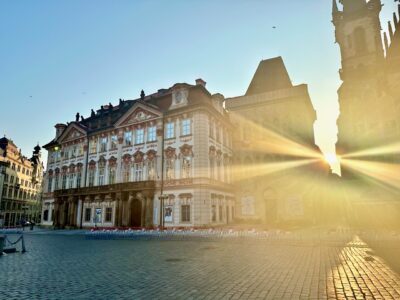
We woke early on our second day, our bodies still adjusting to the time change, and decided to make the most of the predawn hour. The boys were sound asleep, so we slipped out for a sunrise walk, hoping to capture a few photos of Old Town Square before the city woke up. The day before, I’d managed a few shots, but having strangers in the frame has always annoyed me. I wanted wide-angle images that actually showed what this city looks like — which requires getting there before approximately eight million other tourists do.
When we reached Old Town, we were virtually alone. We walked the entire square in near-solitude, snapping photos of the exquisite architecture in the early morning light. It was perfect — the city I remembered, briefly returned.
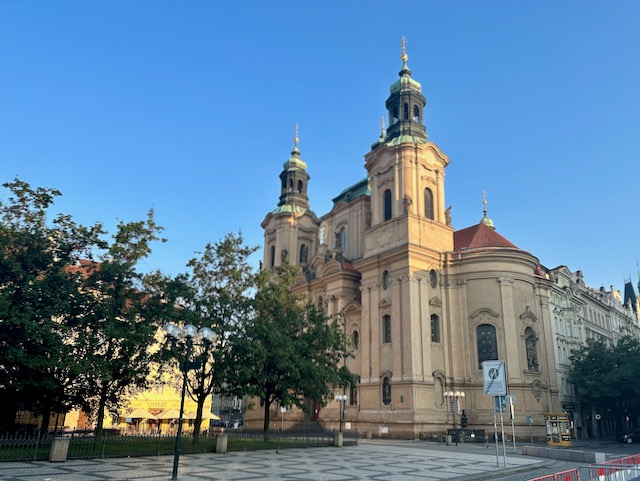
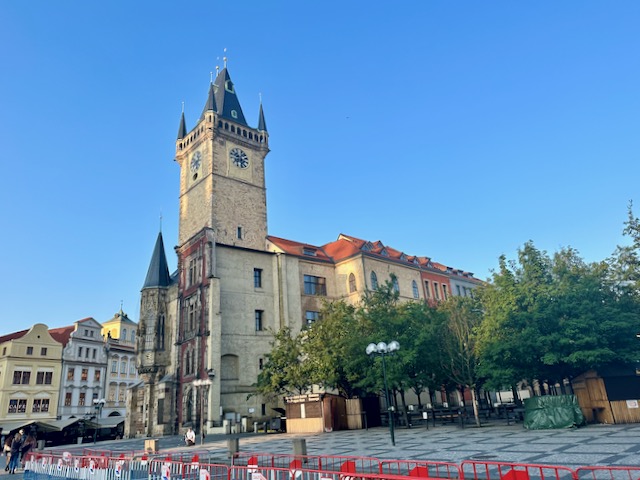
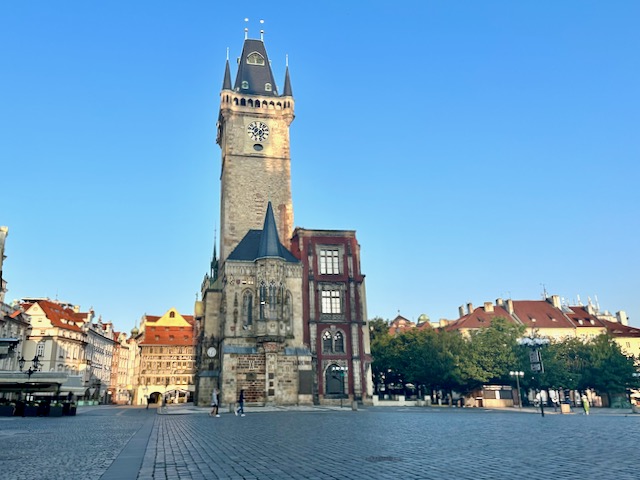
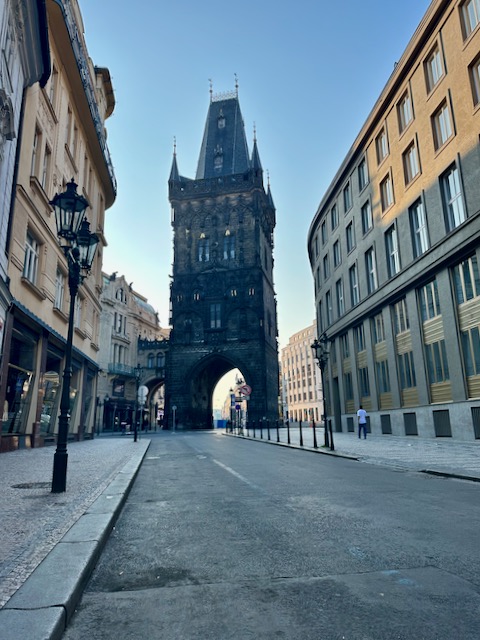
prague-old-town-square-empty-sunrise-st-nicholas.jpeg
Old Town Square at sunrise — about as close to 1997 Prague as you’ll get in 2023.
PRO TIP: Set an alarm. Old Town Square between 5:30 and 6:30 am is a completely different city — quiet, golden, and genuinely beautiful. By 9 am, the crowds return and the magic largely disappears. It’s worth losing an hour of sleep.
St. James Church — The Thief’s Arm
Before our 10 am tour, we made a quick detour to St. James the Greater Church — a Baroque masterpiece with an extraordinary interior and an even more extraordinary story dangling from the ceiling. As you enter, look immediately to your right, up by the ceiling: a withered, mummified arm hanging from a meat hook. It’s been there for roughly 400 years.
prague-st-james-church-interior-baroque-nave.jpeg
St. James the Greater — one of Prague’s most ornate Baroque interiors. The mummified arm is up to your right as you enter. You can’t miss it.
Legend has it that a thief attempted to steal the jewels from the statue of the Virgin Mary. The statue reached out, grabbed his arm, and held him there until the parishioners discovered him — many of whom happened to be members of the nearby butchers’ guild. They couldn’t free him from the statue’s grip and were forced to amputate. The moment the limb was severed, the statue dropped the arm and returned to her normal pose. The arm was hung from a meat hook as a reminder, and has been there ever since. Whether entirely true or not, it’s a remarkable piece of church decor.
PRO TIP: St. James Church opens at 9:30 am. It’s a 4-minute walk from the Powder Gate, which is where the Operation Anthropoid tour meets at 10 am — making the two a natural back-to-back pairing. The church is free to enter and is an active parish, so be respectful of services.
Operation Anthropoid WWII Walking Tour
The Operation Anthropoid Walking Tour is easily one of the best tours we’ve taken anywhere in Europe. It brings back Prague’s darkest chapter — the Nazi occupation and one of the most audacious resistance operations of World War II — through the streets and sites where it actually happened.
Operation Anthropoid was planned by the Czechoslovak government-in-exile in London to assassinate Reinhard Heydrich, one of the principal architects of the Holocaust and one of the most powerful men in the Nazi regime. On May 27, 1942, paratroopers ambushed Heydrich’s car in a Prague suburb, fatally wounding him. The Nazi reprisals were brutal — entire villages were destroyed, and thousands of Czechs were executed.
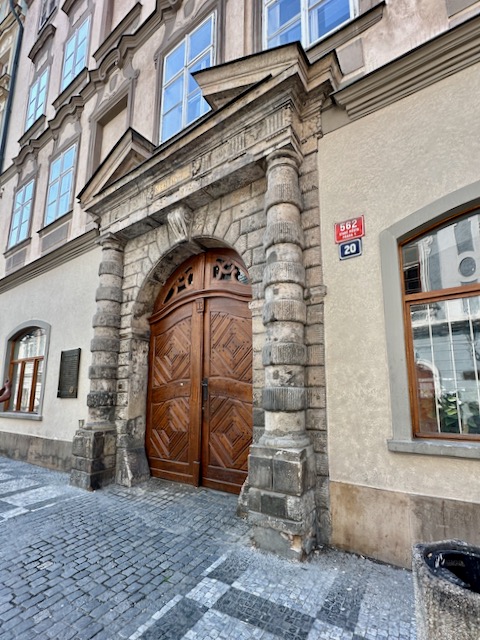
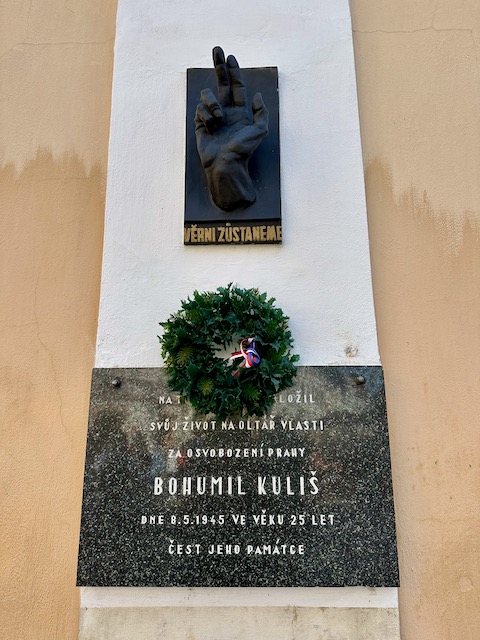
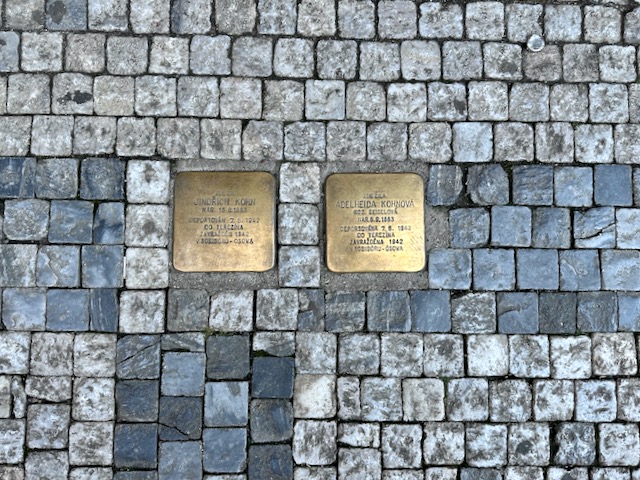
After the assassination team went into hiding, they were betrayed by another resistance member and cornered by over 700 Nazi soldiers in the crypt of the Saints Cyril and Methodius Church in Prague. They fought back for six hours with only small-caliber handguns before being killed. They are regarded as national heroes to this day.
The tour also visited cellars that served as makeshift resistance shelters, and included a private collection of WWII artifacts and memorabilia — a rare, up-close look at history that you won’t find in a museum display case.
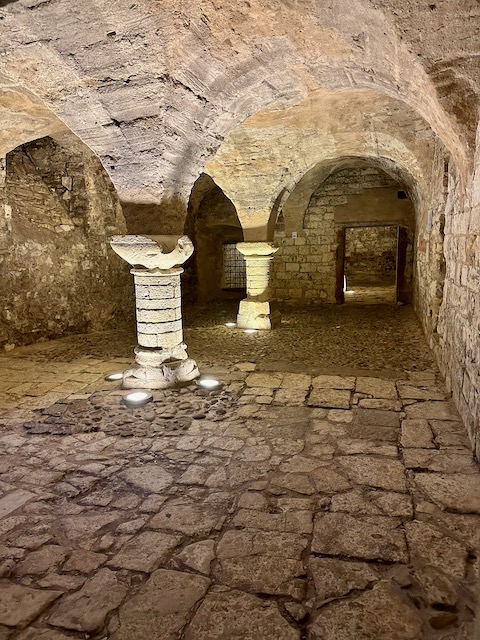
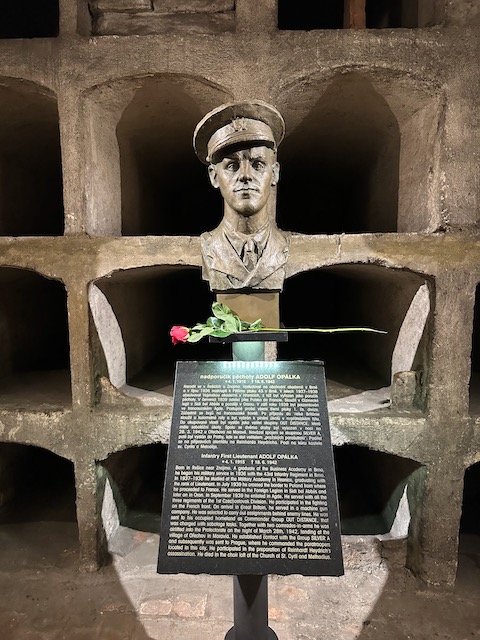
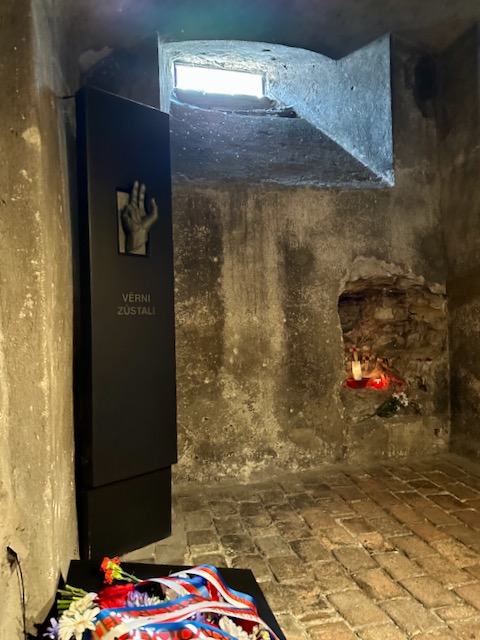
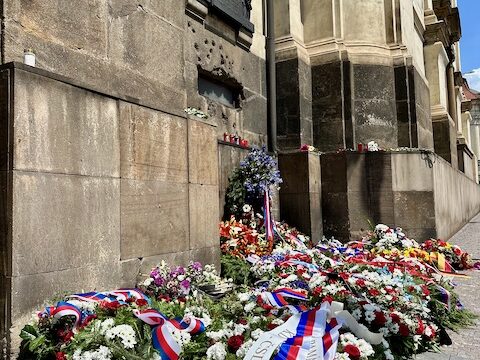
PRO TIP: The Operation Anthropoid tour meets at 10 am in front of the Powder Gate — look for the guide holding a black umbrella. The tour runs approximately 2.5 hours and ends at the crypt museum. Budget extra time to explore the museum after the tour ends; it’s one of the most powerful WWII sites in Central Europe. Book in advance online.
Charles Bridge
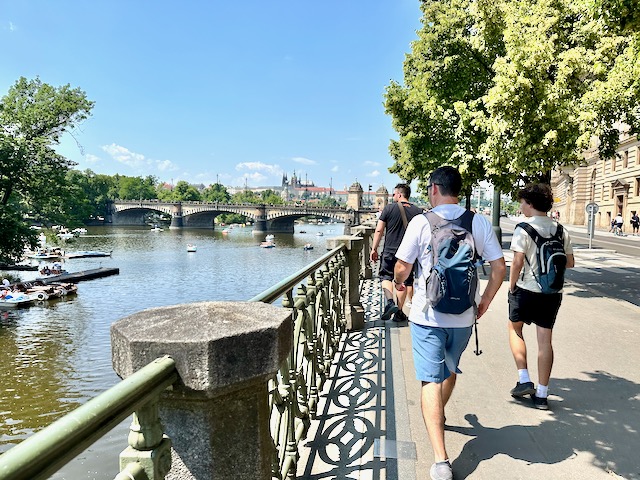
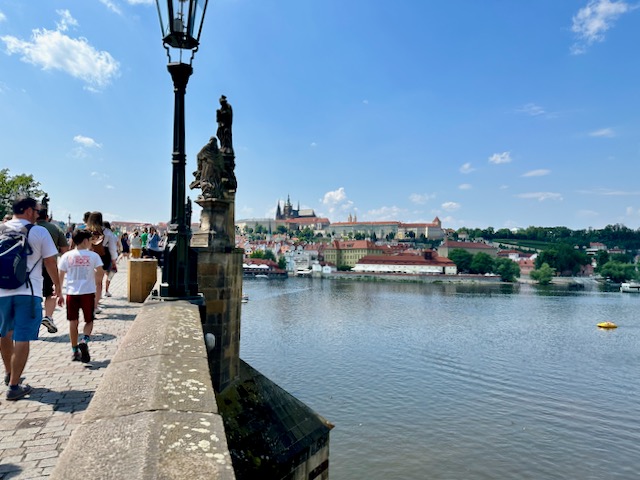
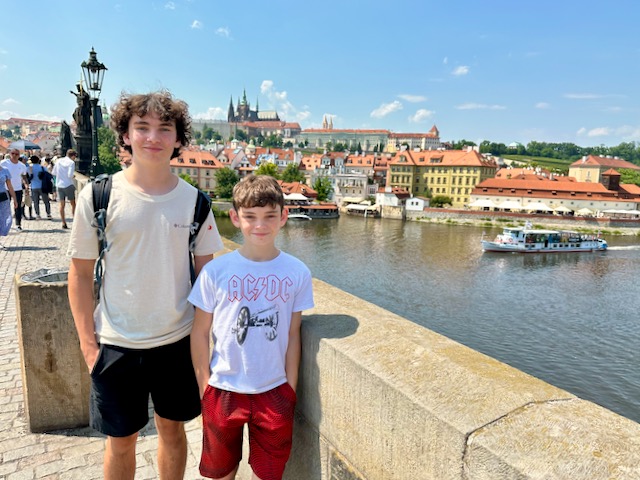
After the tour, we walked along the Vltava River back toward Old Town to take in Charles Bridge. Built between 1357 and 1402 and commissioned by King Charles IV, it was the city’s only bridge until 1841 and is now one of the most recognizable landmarks in Europe. The bridge stretches across the Vltava connecting the Old Town to Prague Castle and Malá Strana, lined with 30 Baroque statues and three grand towers. It’s often crowded, but it’s a must-see — worth the walk to browse the vendor stalls set up along the way, which make for decent souvenir hunting.
Hamleys Toy Store
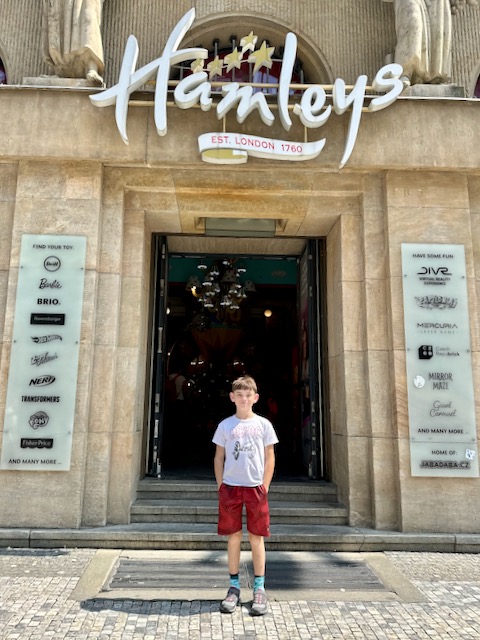
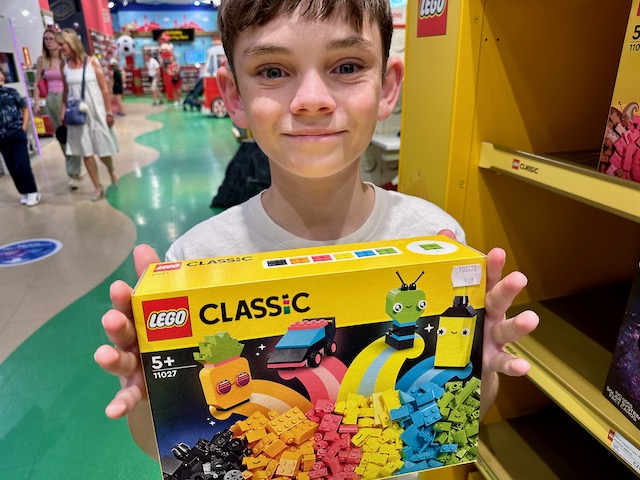
Because it was Father’s Day, I’d already made a reservation for a surprise later in the afternoon. To balance things out for the boys — who were being very good sports about several hours of WWII history — we made two kid-oriented stops first. The first was Hamleys, located near Wenceslas Square. It’s the largest toy store in the Czech Republic, with four floors of everything imaginable. The original London store dates to 1760, and the Prague location carries the same energy of barely controlled chaos and pure kid joy. After days of city sights and historical landmarks, it’s remarkable what an hour in a toy store can do for morale.
Mad Rabbit Macarons Bar
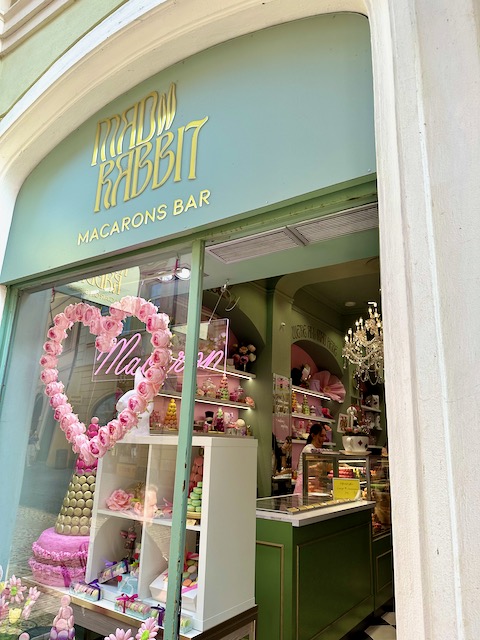
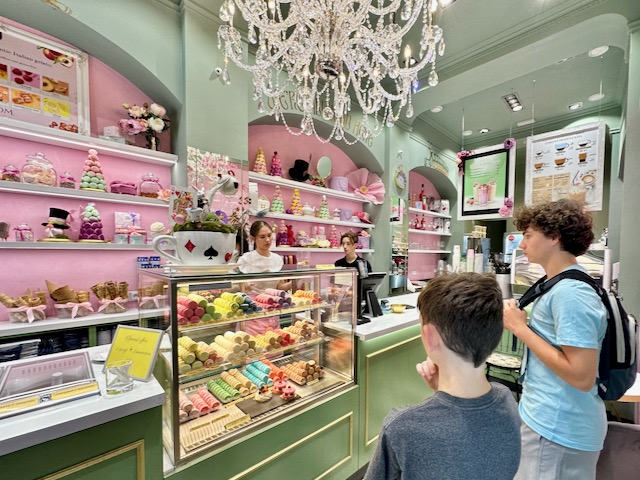
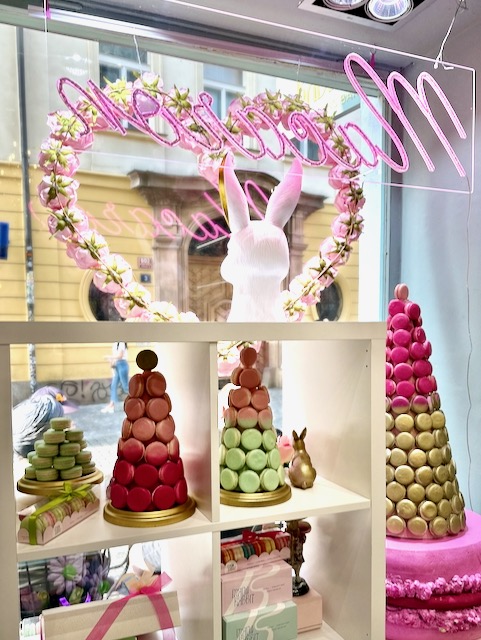
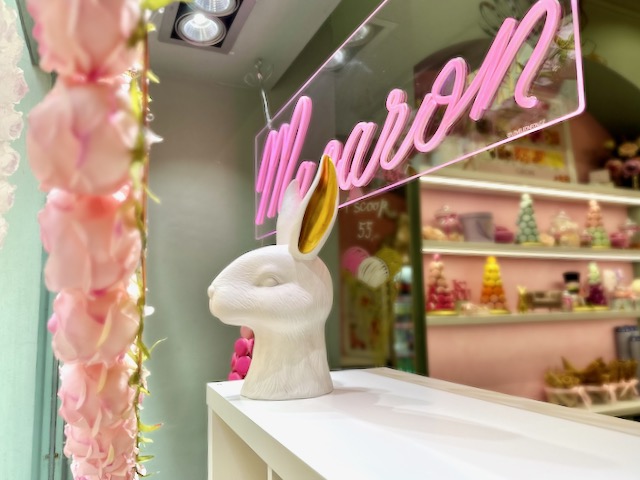
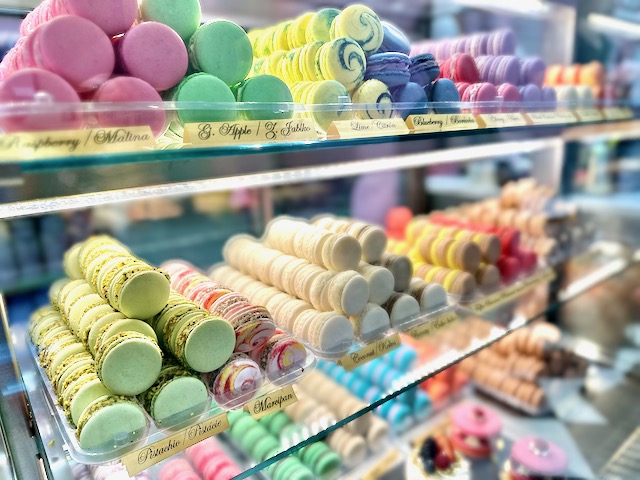
The second kid stop was completely unplanned. Walking through a covered arcade near the Old Town, we stumbled across Mad Rabbit Macarons Bar — an entire shop dedicated exclusively to macarons. The storefront alone stopped us in our tracks: mint green, pink roses, a chandelier visible through the glass. Inside, the display case was a wall of color — easily 30 flavors arranged in neat rainbow rows. For one of the boys, who has been a dedicated macaron enthusiast for years, this was the single greatest discovery of the entire trip. The faces upon entry apparently garnered reactions from other patrons, amused by the sheer enthusiasm on display. Back at the apartment later that evening, the macarons met their fate with considerable ceremony.
The Original Beer Spa
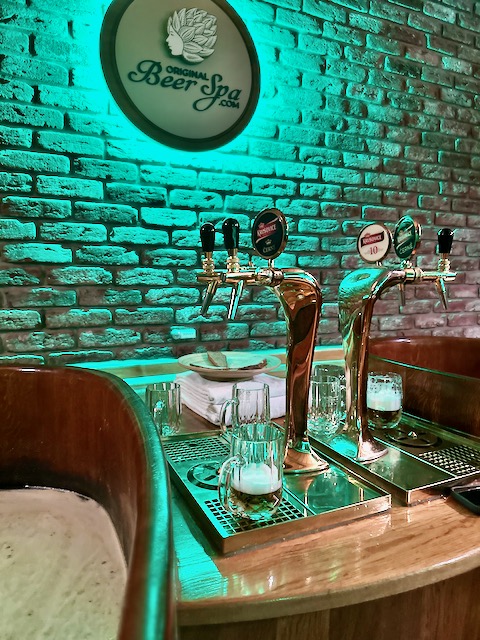
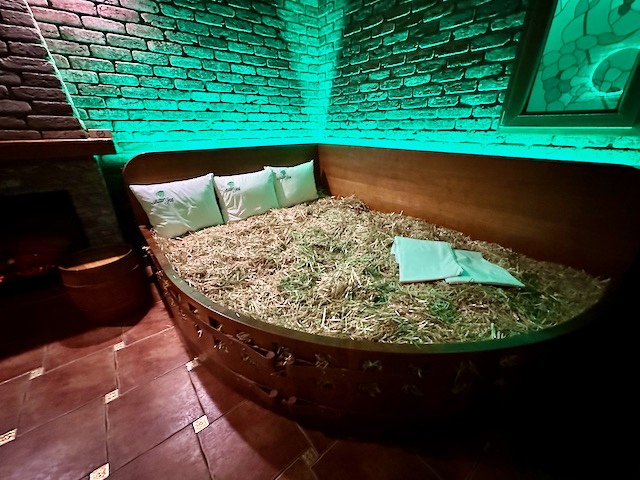
With the boys settled back at the apartment and their Lego and macarons to keep them occupied, it was time for Craig’s Father’s Day surprise. The Original Beer Spa offers what I believe is a uniquely Prague experience: an hour-long soak in a hand-carved royal oak tub filled with natural extracts used to brew Czech Krušovice® beer. The vitamins and enzymes in brewer’s yeast are said to regenerate skin, remove toxins, and ease fatigue and stress. More importantly, you have access to an unlimited personal beer tap for the duration of your soak. After a long day of walking, it was exactly as relaxing as it sounds.
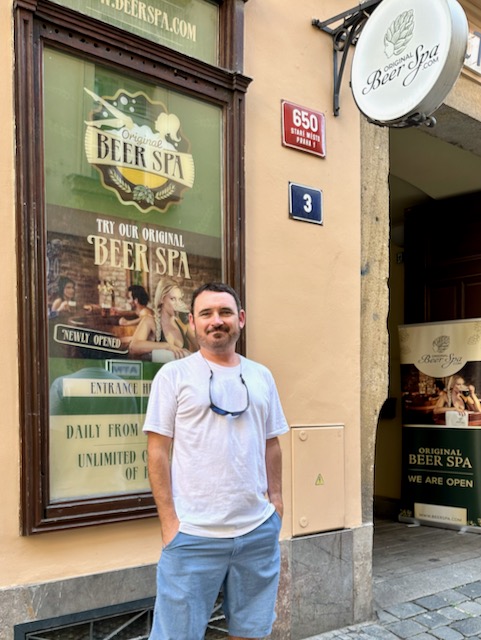

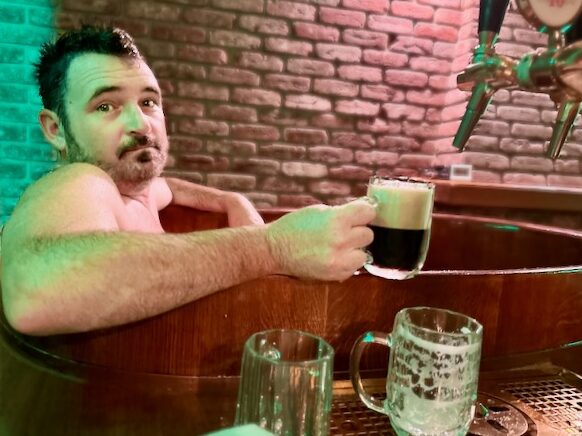
PRO TIP: Book the Original Beer Spa at least a few days in advance, especially on weekends and holidays. Sessions are 60 minutes, which goes faster than you’d think. The spa is located at Staré Město 650/3, Prague 1, just a short walk from Old Town Square.
Day 3 — Kutná Hora & the Old Jewish Cemetery
Day Trip to Kutná Hora — The Bone Church
Prague is a fantastic city, but one of the best decisions we made was getting out of it for a day. Just 45 minutes by train lies the small medieval town of Kutná Hora, home to one of the world’s most macabre works of art.
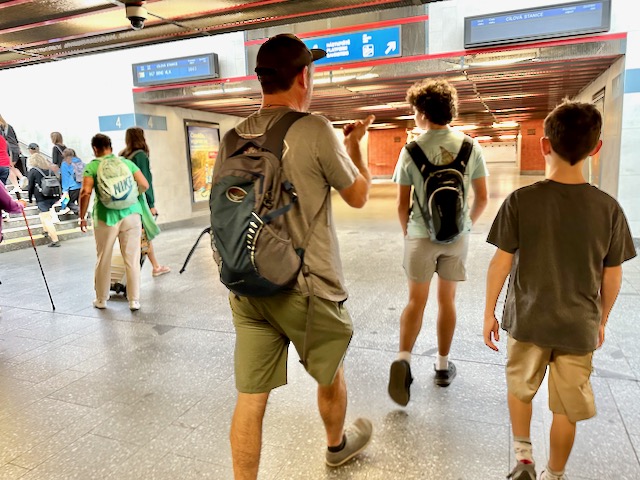
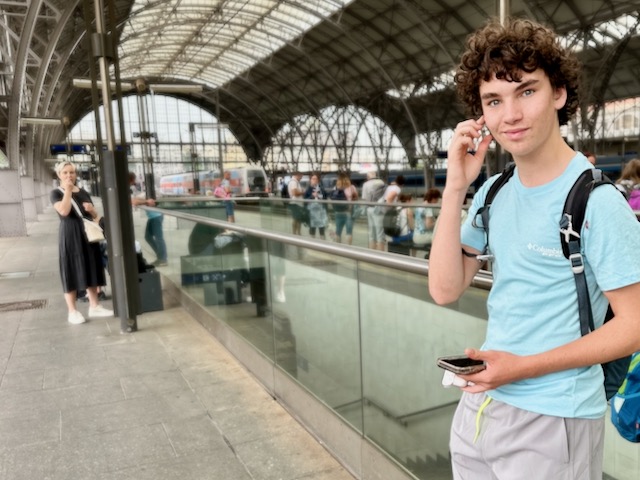
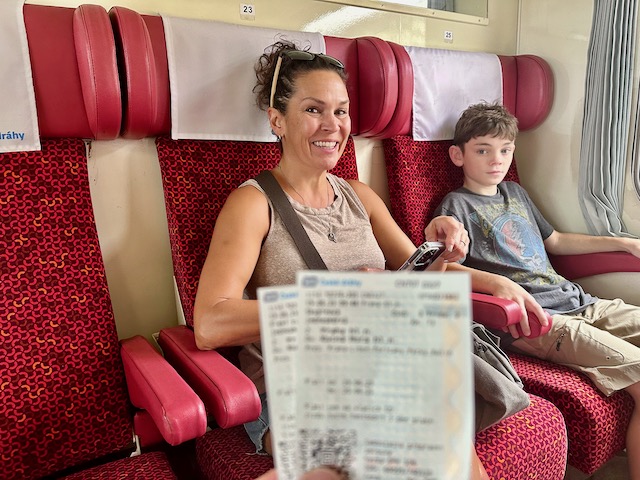

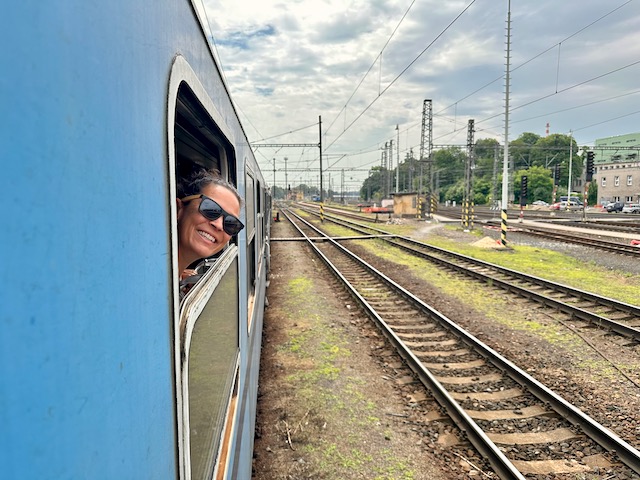
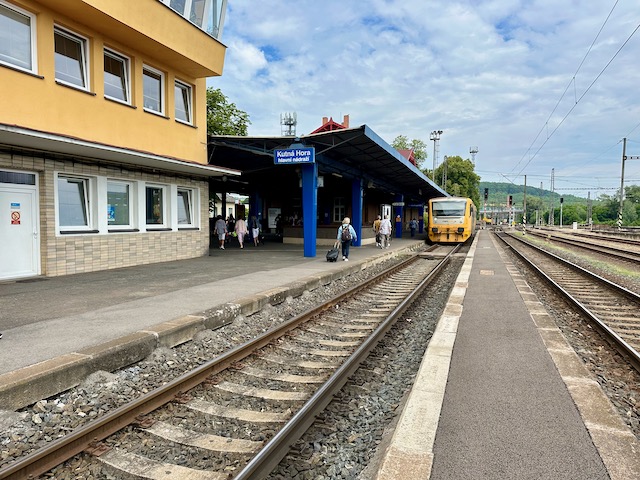
Arriving in Kutná Hora — population about 20,000, and one very famous church full of bones.
PRO TIP: Take the train from Prague’s main station (Praha hlavní nádraží), not the bus — it’s faster, more comfortable, and drops you within a 10-minute walk of the Ossuary. The journey takes about 45 minutes each way. Buy tickets at the station or in advance through Czech Railways. The Ossuary opens daily; check current hours and admission on the official site before you go.
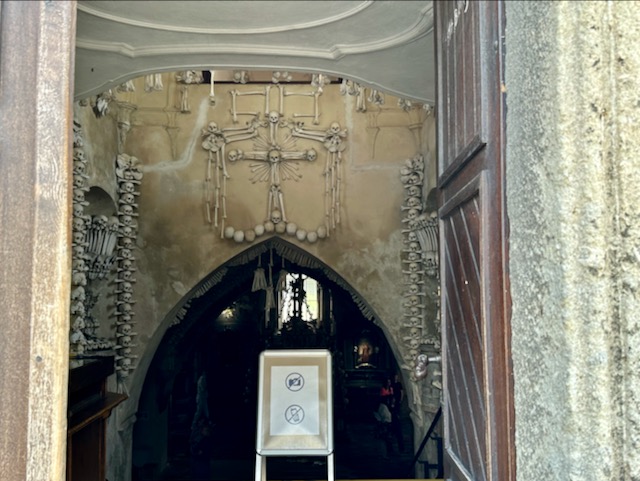
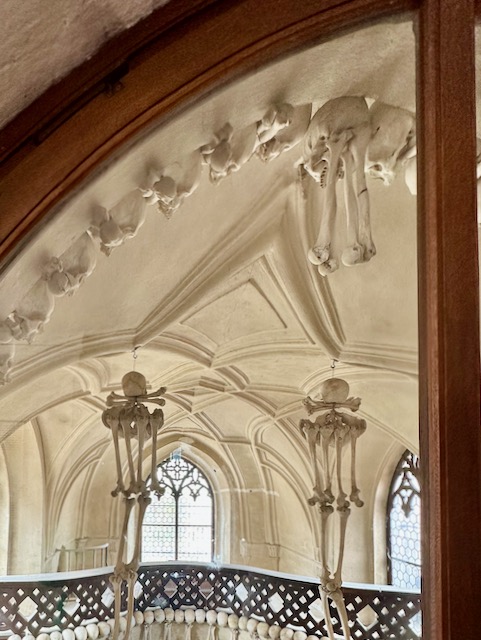
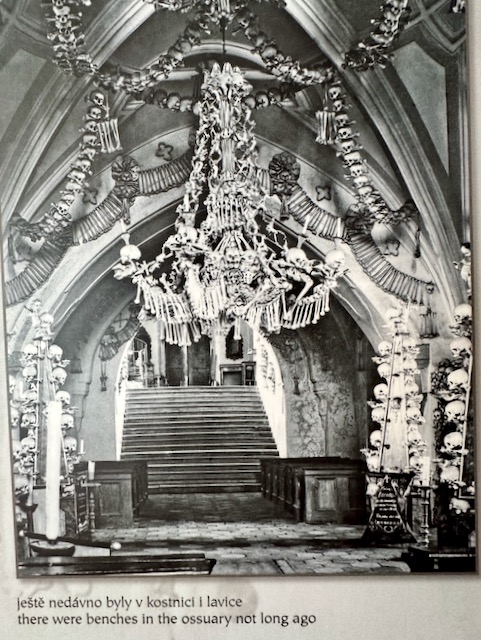
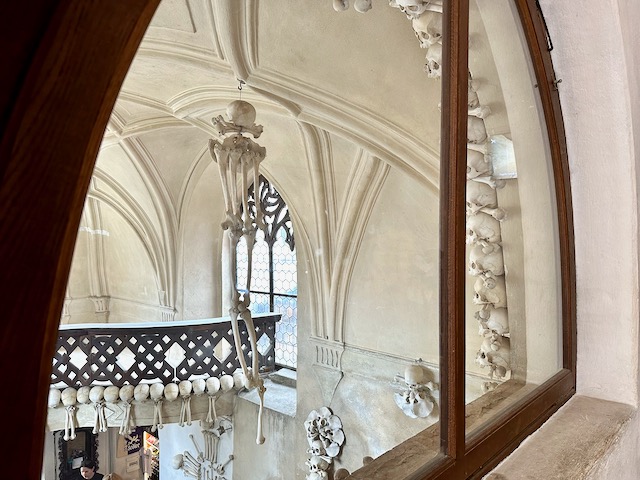
The Sedlec Ossuary, also called the “Bone Church,” is a small Roman Catholic chapel decorated with the remains of about 40,000 human skeletons. The chapel became a popular burial site in the 13th century after an abbot returned from Jerusalem with a handful of earth from the Grave of the Lord and sprinkled it over the Sedlec cemetery. In the 14th century, a surge in burials overwhelmed the area, leading to the exhumation and storage of bones in the crypt. In 1870, woodcarver František Rint was assigned to arrange the bones and made intricate decorations, including a huge chandelier with at least one of every human bone.
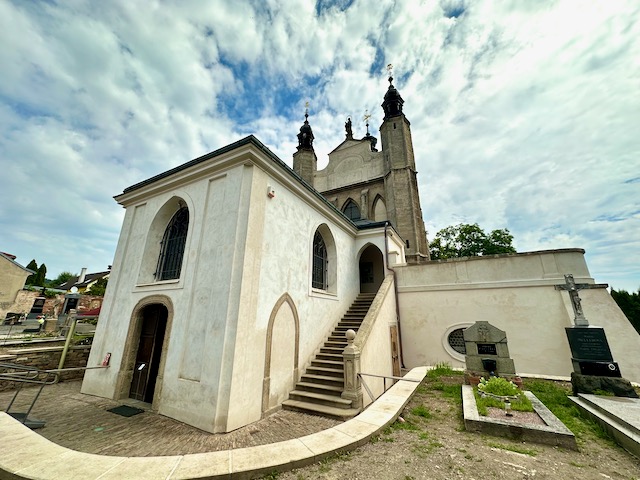
While admittedly a little creepy, the installation’s artistry is nothing short of impressive. Pictures inside the church are forbidden because tourists get too close, try to take Instagram-perfect selfies, and damage the remains. However, I managed to take a few photos from outside the church’s main rooms. But, to really appreciate the spectacle’s true magnitude, one must visit in person.
Restaurace U Balanů
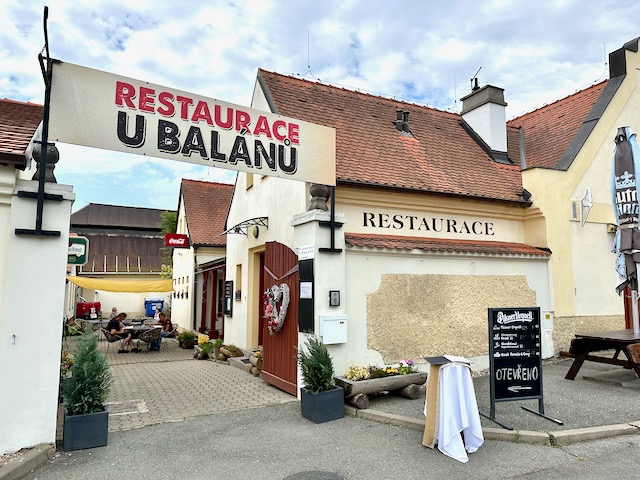
Heading back toward the train station, we walked by Restaurace U Balanů and decided to stop in for a quick lunch. The menu is mostly traditional Czech-Ukrainian food, but it also offers some kid-friendly favorites. We ordered three different entrees, which were all freshly prepared and very tasty. The service is good, and the prices are reasonable, making it a solid option for a meal heading to or from the Bone Church from the station.
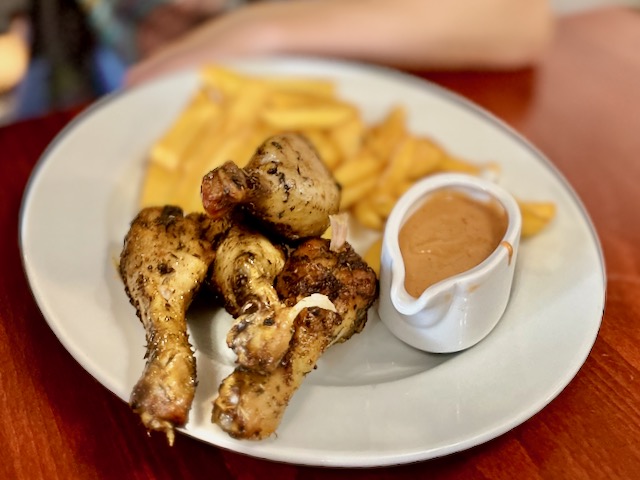
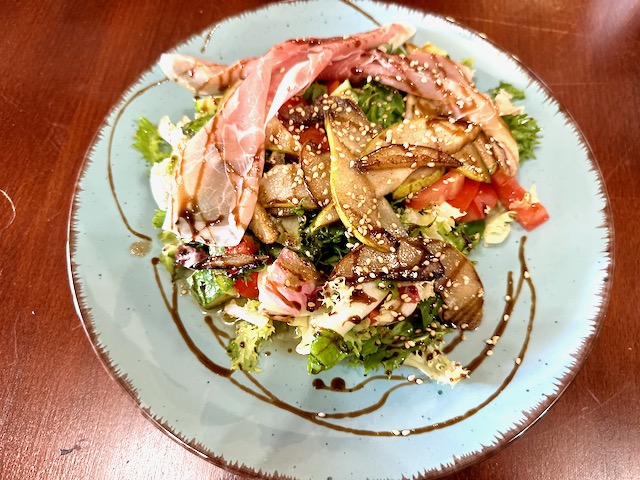
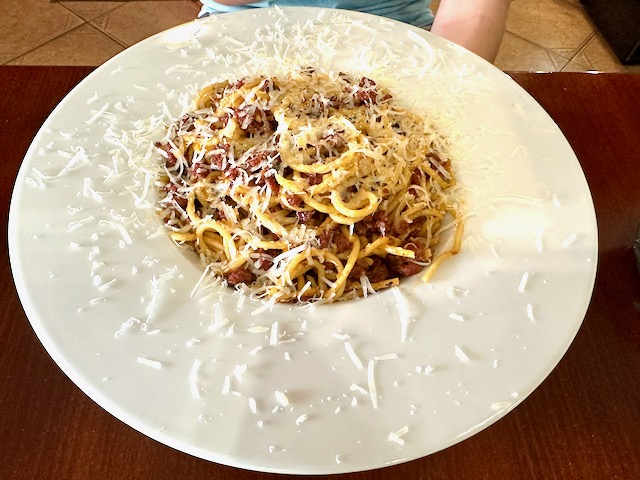
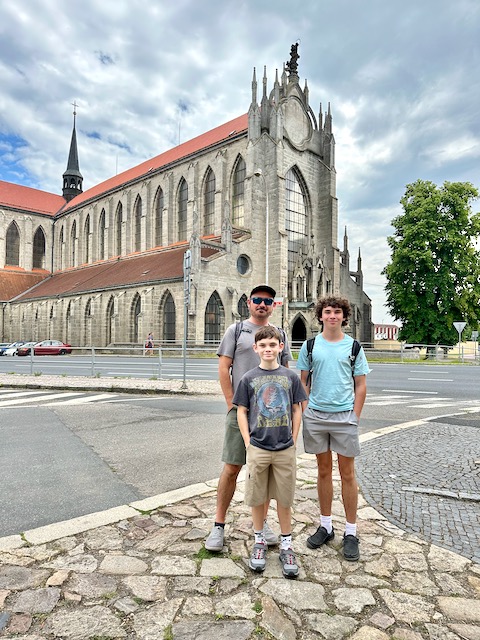
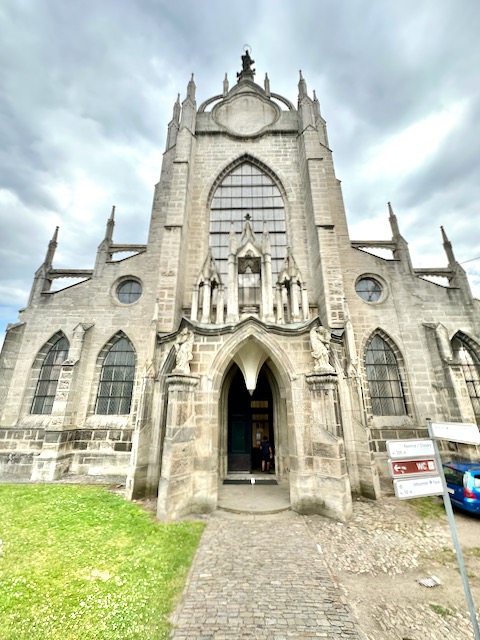
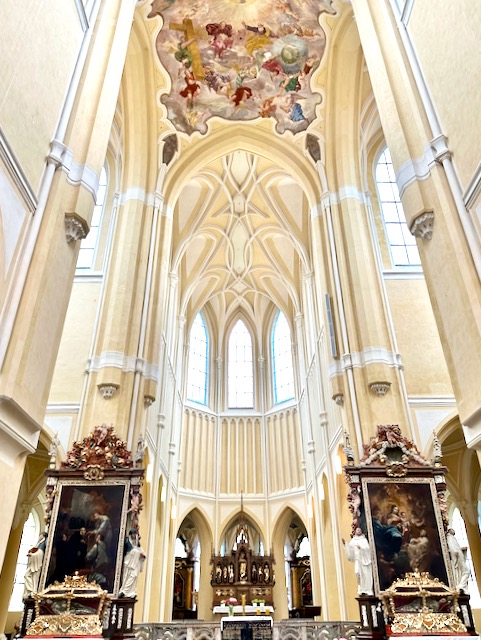
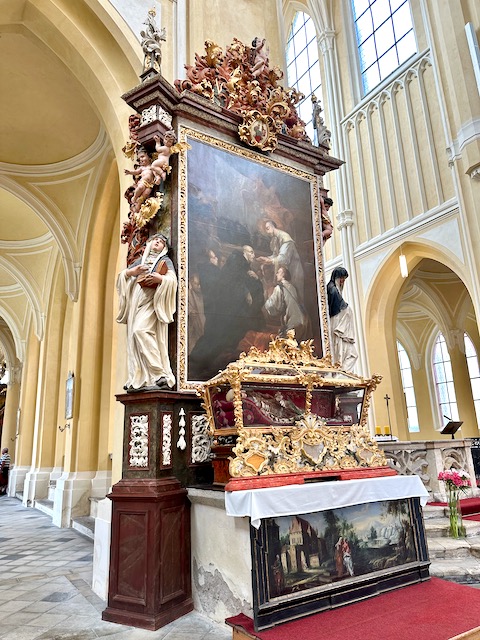
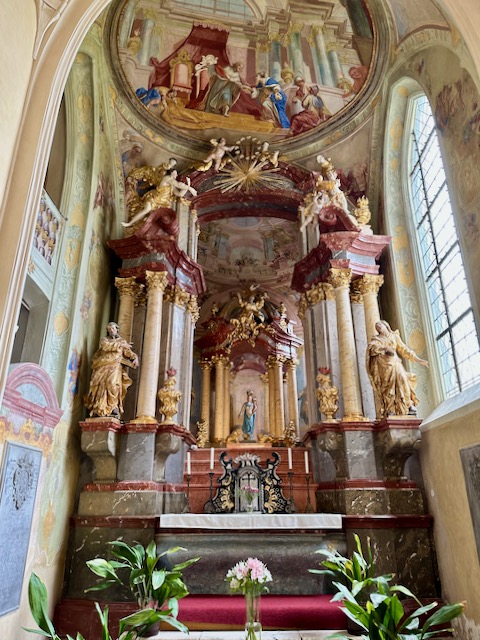
Our route back to the train station also took us past Kutná Hora’s Cathedral of Our Lady at Sedlec, a stunning UNESCO World Heritage site that combines 13th-century Gothic architecture with 18th-century Baroque modifications. The boys weren’t too keen on visiting another church, but I couldn’t resist popping in for a few photos.
Cathedral of Our Lady at Sedlec, Kutná Hora
The Cathedral of Our Lady at Sedlec doesn’t get nearly the attention it deserves, probably because it’s harder to Instagram than a room full of skulls. But it’s one of the oldest cathedrals in Central Europe, originally built around the turn of the 14th century, burned to the ground by the Hussites, and then rebuilt in the 1700s by architect Jan Blažej Santini-Aichel in a style that somehow fuses Gothic bones with Baroque personality. They call it “Baroque Gothic,” which sounds like a contradiction until you’re standing inside.
The Old Jewish Cemetery
We arrived back in Prague around 4 pm with enough time and energy for one final must-see: the Old Jewish Cemetery. It wasn’t the plan to visit on the same day as the Bone Church — in retrospect, that’s a lot of heavy for one afternoon — but with our departure the next morning, there was no other option.
The Old Jewish Cemetery is among the oldest surviving Jewish burial grounds in the world. Access is through Pinkas Synagogue — Prague’s second oldest preserved synagogue, converted in 1955 into a memorial for the nearly 80,000 Jewish victims of the Holocaust from the Czech lands. The entire interior serves as their tribute: names, birth dates, and death dates handwritten across every wall. The sheer number of names is overwhelming and nearly impossible to comprehend.
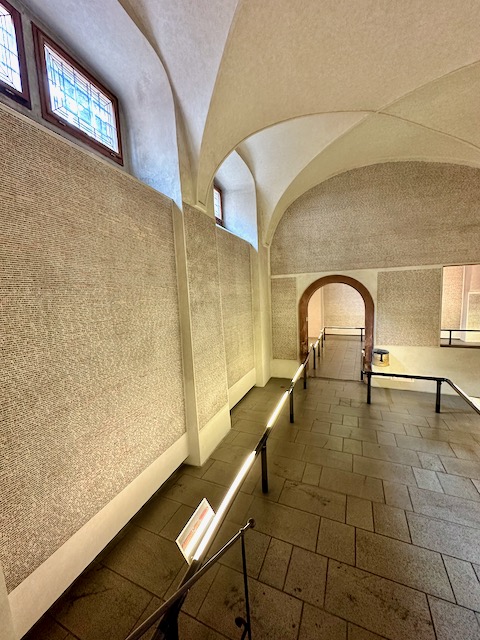
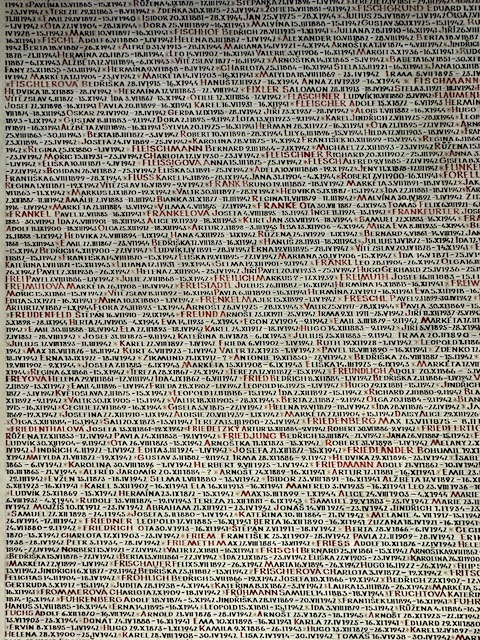
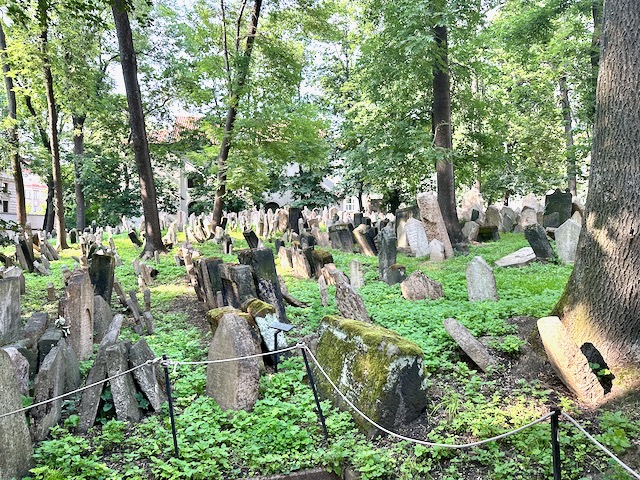
you do the math.
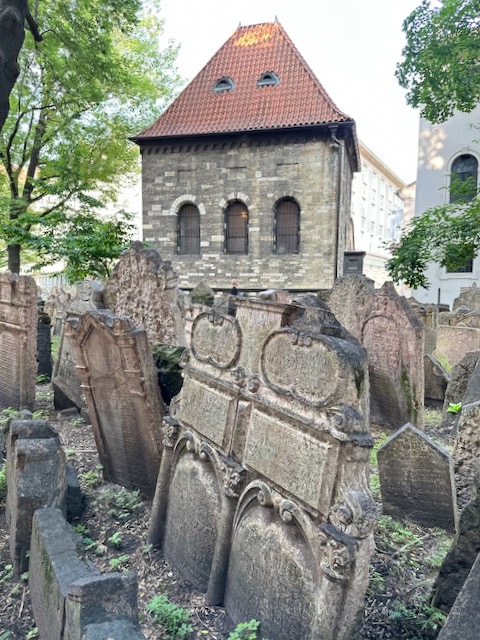
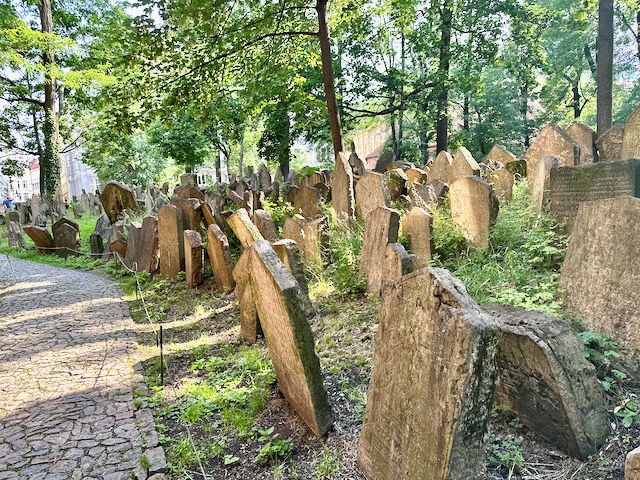
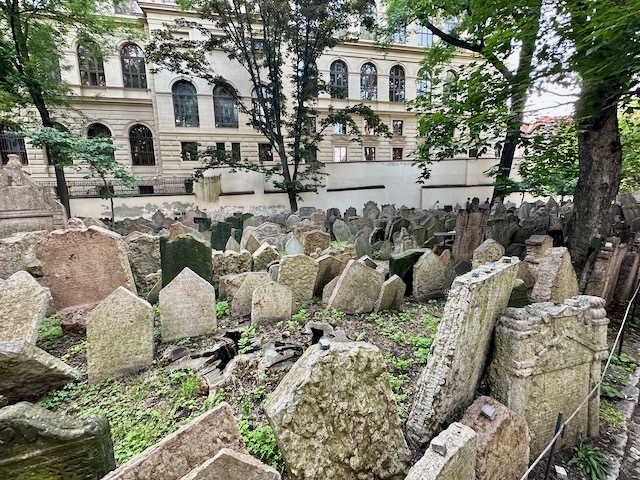
Up to twelve layers deep.
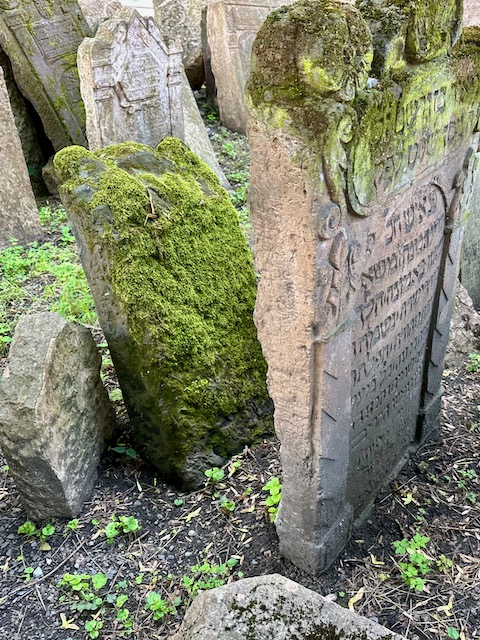
The cemetery itself is the oldest intact Jewish burial ground in Europe. The earliest tombstone dates to 1439; the last burial occurred 348 years later. Because space was so scarce, bodies were buried on top of each other — graves layered up to 12 deep. There are approximately 12,000 tombstones crammed into a 2.5-acre site, many tilting and crowded against each other as the earth has shifted over centuries. The cemetery was expanded several times over the centuries, and still couldn’t keep pace with the need. What we see is the weight of that history, literally pushing through the ground. It’s hard to find words after leaving. It’s so visually powerful and spiritually straining that it’s difficult to accept the harrowing reality of it all.
PRO TIP: The Old Jewish Cemetery is accessed via a combined ticket that includes Pinkas Synagogue and several other Jewish Quarter sites. Visit the Jewish Museum in Prague website for current pricing and hours. The Jewish Quarter (Josefov) is a short walk from Old Town Square. Plan at least 90 minutes — the Pinkas Synagogue walls alone will slow you down.
Final Thoughts on Prague, Czech Republic
Our three days in Prague blended history, reflection, and family memories in equal measure. From the charming spires of Old Town Square to the somber stones of the Old Jewish Cemetery, from a five-course medieval dinner with fire breathers to soaking in a tub of beer on Father’s Day — Prague delivered on every register. Though far busier than the city I first fell for in 1997, its appeal remains strong. The crowds are real, and worth planning around, but the city beneath them — the architecture, the stories, the weight of everything it has lived through — remains quietly extraordinary. Prague, with its layered past and lively present, leaves a lasting impression. It earned every one of its hundred spires.
Prague was the second stop on our Epic Europe 2.0 family road trip. Read about our first stop in Bratislava, Slovakia — an often-overlooked gem just 45 minutes from Vienna that surprised us all.
 Rainmaker Conservation Park, Costa Rica