
I added Omiš to our Epic Europe 2.0 Eastern Europe itinerary for one reason: Craig hates long drives. Two to three hours behind the wheel, max. Looking at the map between Plitvice Lakes and Dubrovnik, I needed a stop that made geographic sense. Omiš¡ made the cut on location alone.
What I didn’t expect was a town that would earn its place on the itinerary on its own terms. Omiš sits at the exact point where the Cetina River flows out into the Adriatic Sea — a dramatic, almost improbable geography that gives the town a character unlike anywhere else we visited in Croatia. It has a pirate history stretching back to the 12th century, two medieval fortresses clinging to the cliffs above town, and some of the clearest water on the Dalmatian coast. Not bad for a stopover.
We were seventeen days into Epic Europe 2.0 when we arrived. We’d covered more than a thousand kilometers, hiked through Plitvice the day before, and everyone was ready to slow down. Omiš was exactly that.
Omiš, Croatia Itinerary at a Glance
- Day 1: Scenic drive from Plitvice Lakes, lunch at Restaurant Kod Mije, check-in at Apartment Karmela, pebble beach swim, hot tub, and Uno night
- Day 2: Mila Gojsalić Statue & viewpoint, Old Town Omiš, Mirabella Fortress, Velika Plaža, lobster fiasco at Restaurant Kod Mije, another beach afternoon
Day 1 — Arriving in Omiš
The Drive: Plitvice Lakes to Omiš
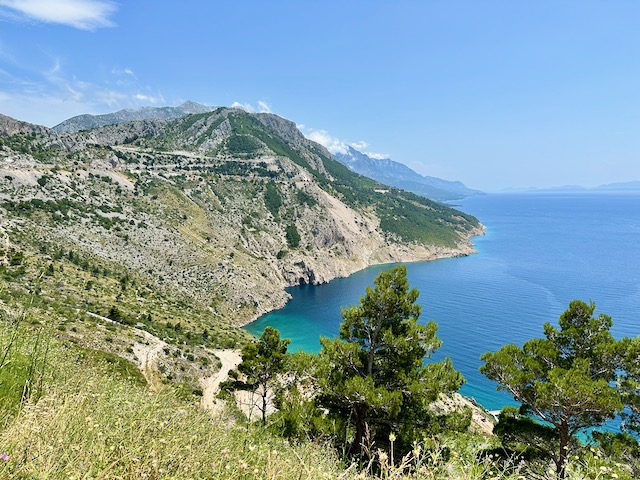
The drive from Plitvice Lakes National Park to Omiš takes just under three hours, and it earns every minute of your attention. The coastal highway along the Adriatic is as beautiful as it is hair-raising. The views are spectacular — turquoise coves far below, dramatic limestone cliffs dropping straight into the sea, the island of Brač floating on the horizon. The drop-off on the side of the road, however, is not subtle. Craig handled it like a pro. The rest of us tried not to look down.
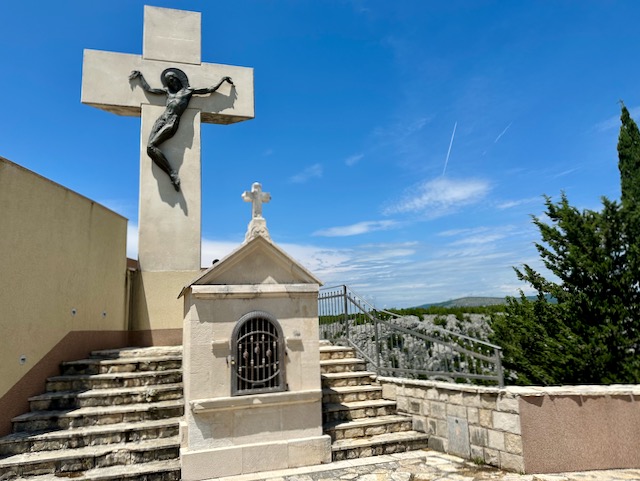
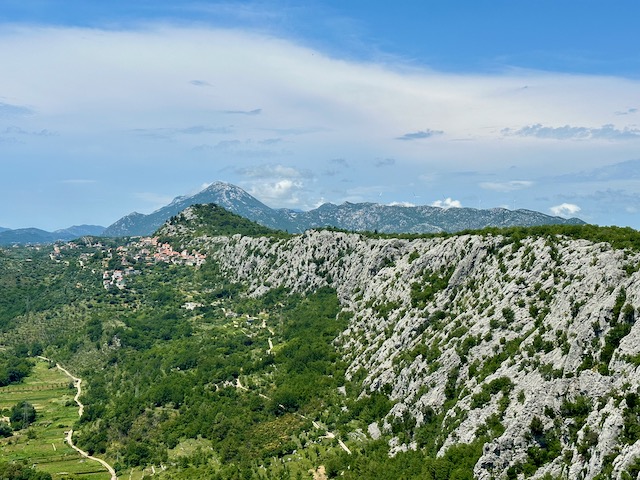
We stopped at a roadside overlook along the way — a small cross monument perched above the mountains with an absolutely stunning view of the valley below. It’s the kind of stop that sneaks up on you, and we were grateful we pulled over.
PRO TIP: The drive along the Adriatic coastal highway (D8/Jadranska magistrala) between Plitvice and Omiš is scenic but demands full attention. Pull over at designated overlooks — don’t try to photograph the view while moving. The drop-offs are real.
First Stop: Restaurant Kod Mije
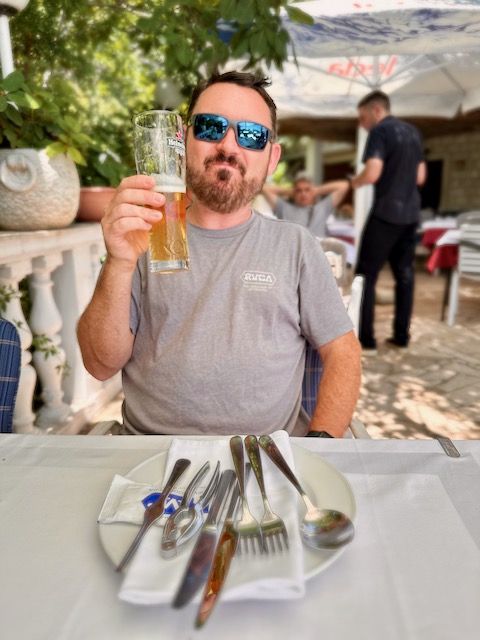
We arrived around 1:30, a bit early to check in, so we stopped at Restaurant Kod Mije — a family-owned tavern in Lokva Rogoznica, about nine kilometers south of town along the coastal highway. The boys ordered their usual (pizza, chicken strips — they are nothing if not consistent), and Craig and I had a cold beer. While we sat there, the wait staff started bringing out trays of fresh seafood and live lobsters to the tables around us so patrons could choose their own. Diners were pointing at lobsters. The lobsters were not thrilled. Craig and I looked at each other and made a silent agreement. We would be back.
PRO TIP: Restaurant Kod Mije is located in Lokva Rogoznica along the scenic Adriatic coastal highway, roughly 9 km south of Omiš town center. It’s a rustic, family-owned spot with an excellent reputation and fresh seafood. Go hungry and let them bring the tray out.
Apartment Karmela
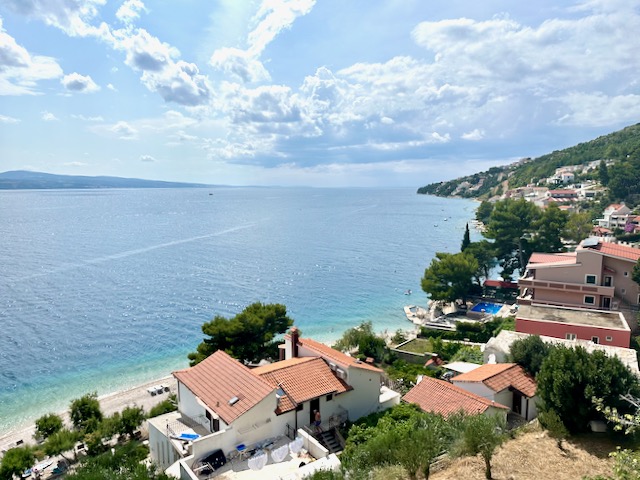
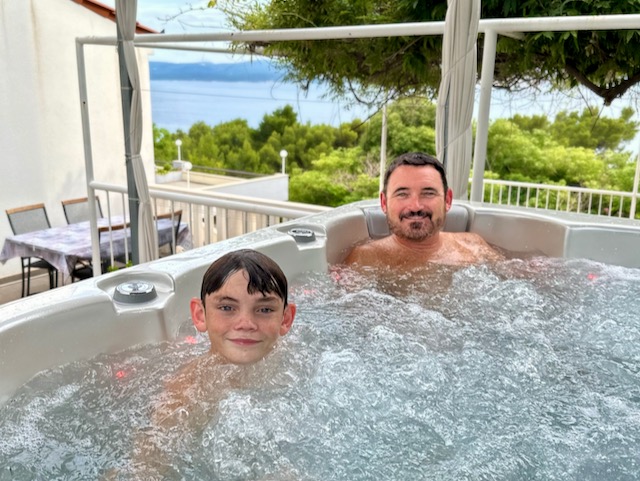
Our host Boris met us at the apartment with a plate of olive oil, olives, and sheep’s cheese. It was spotless and spacious, with a large terrace offering sunset views and a hot tub. More importantly for the boys, three bedrooms. For the first time in seventeen days, everyone had their own space. The reaction was immediate and enthusiastic.
PRO TIP: Apartment Karmela is located in Ruskamen, about 9 km south of Omiš town center. It’s a great base if you have a car and want a quieter, residential feel with easy beach access. Boris is an excellent host.
The Beach
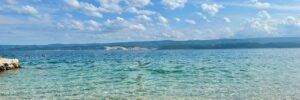
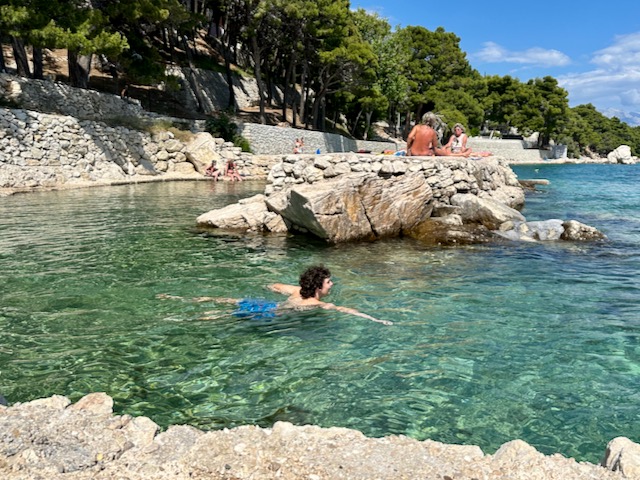
After cheese and settling in, we changed and walked down to the water. The beach nearest to the apartment was a long sweep of smooth stones — typical of this stretch of Croatia — and the water was exactly as clear as the internet had promised. Also colder than expected. I sat on the rocks in the sun. Craig and the boys went in anyway.
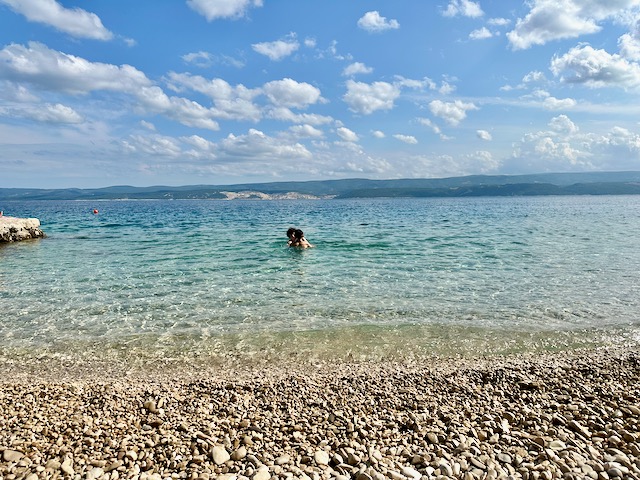
After an hour, the boys were ready to go back and do nothing — an activity they had been genuinely looking forward to after two weeks of structured itinerary. Craig and I were happy to oblige, mostly because the terrace hot tub was waiting. We stayed in for dinner, made pasta, and played Uno. It was exactly what we needed.
Day 2 — Exploring Omiš
Mila Gojsalić Statue & Cetina Canyon Viewpoint
Craig and I left the boys to sleep and drove up to the Mila Gojsalić Statue while the morning was still cool. The road is narrow, dark in stretches, and drops off sharply on one side. Mildly terrifying. To reach the trailhead, you have to run toward oncoming traffic around a blind corner. We were genuinely grateful the boys had opted for extra sleep.
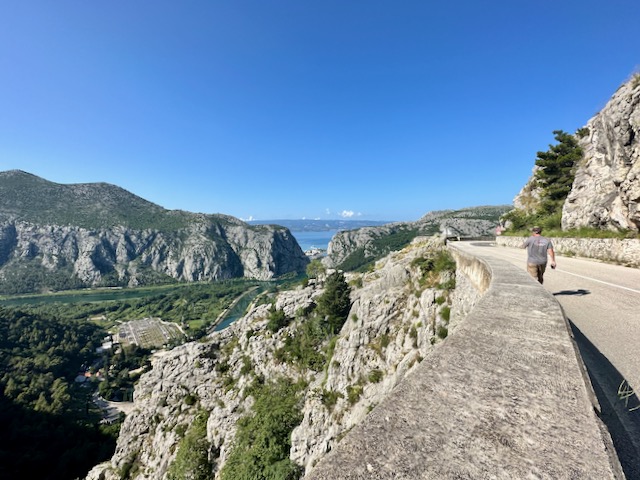
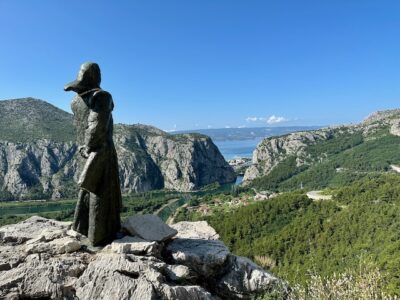
The view from the statue makes it all worth it. Looking down from the bluff, the emerald Cetina River carves through a steep gorge, the canyon road switchbacks below you, and in the distance Omiš sits right at the river’s mouth, the Adriatic spreading out beyond it. Spectacular is an understatement.
The Legend of Mila Gojsalić
The statue itself honors Mila Gojsalić, a young woman from the 16th century whose story has been told in the region for five hundred years. In 1530, when the Ottoman army under Ahmed Pasha was preparing to crush the Republic of Poljica, Mila entered the Ottoman camp alone. She was young and, by all accounts, striking enough that Ahmed Pasha was immediately distracted from his military objectives. That night, while he slept, she blew up the gunpowder store. The explosion killed them both — and enough of the army that the locals could finish the job.
Another version has her escaping and jumping from the cliffs above the Cetina rather than be captured. Either way, the locals drew courage from what she did, won the fight, and have been telling her story ever since. Ivan Meštrović’s statue watches over the canyon from the bluff where she made her choice. It’s a good place for a statue.
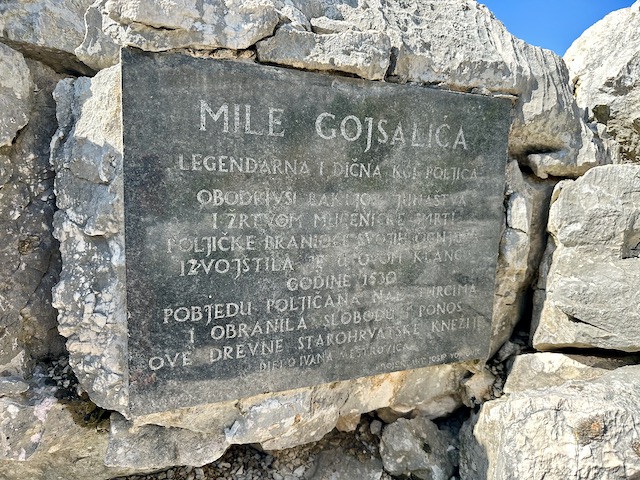
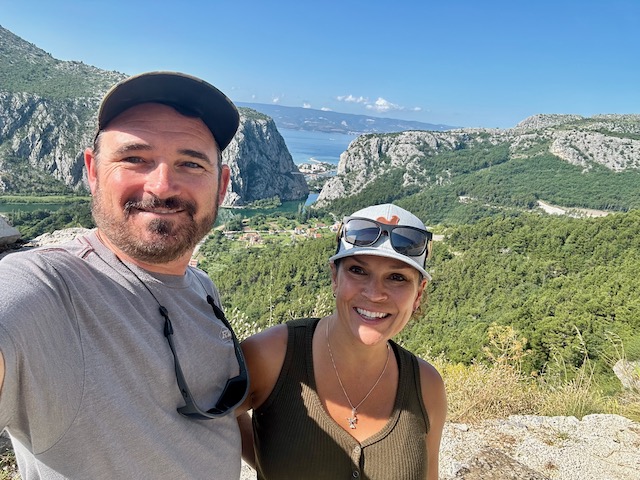
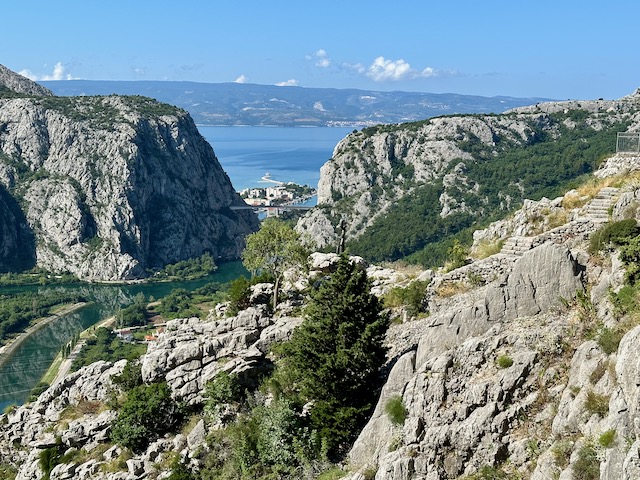
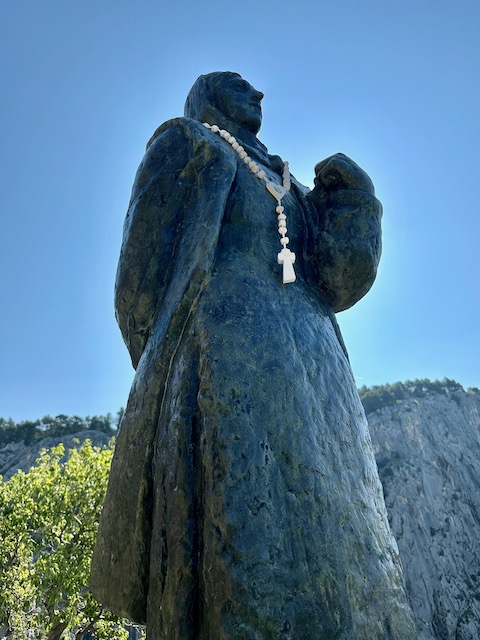
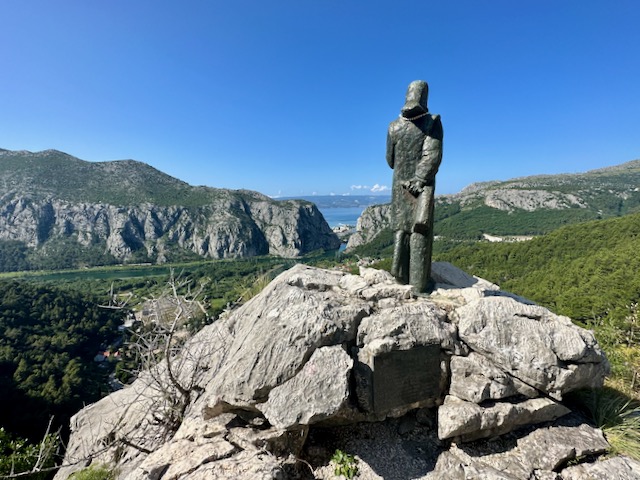
To this day, Mila’s statue watches over the Cetina and Omiš. Neither heavy rain nor strong winds discourages her from protecting her people.
PRO TIP: The Mila Gojsalić viewpoint is about 5 km from Omiš town center. The road up is narrow with sharp curves — go slow. The parking area is small, and the walk to the statue requires crossing the road around a blind corner.
Old Town Omiš
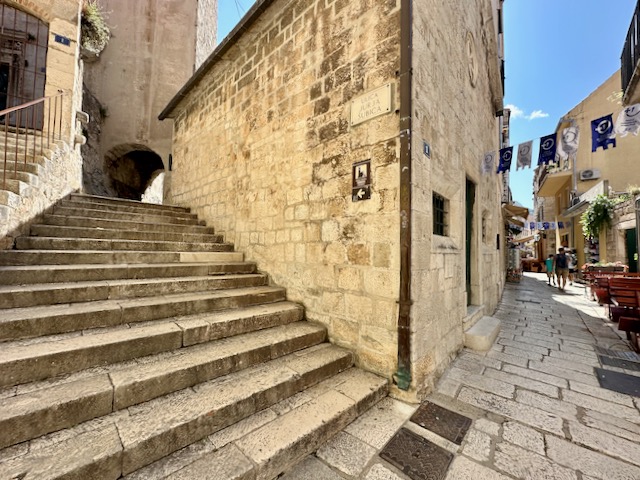
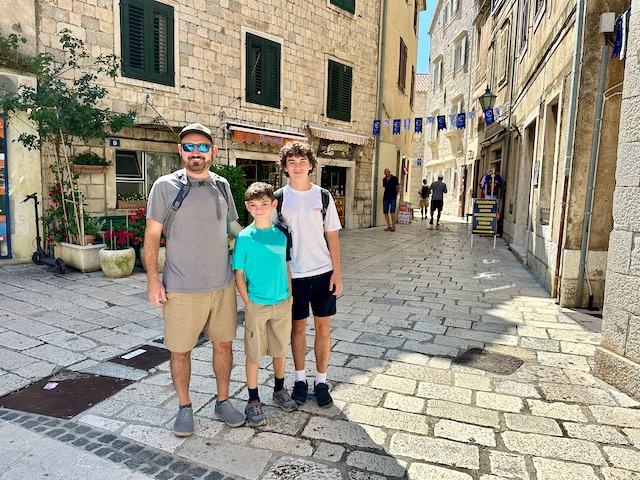
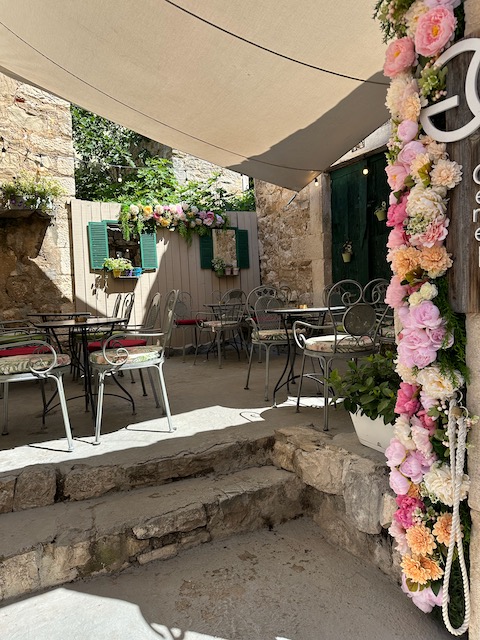
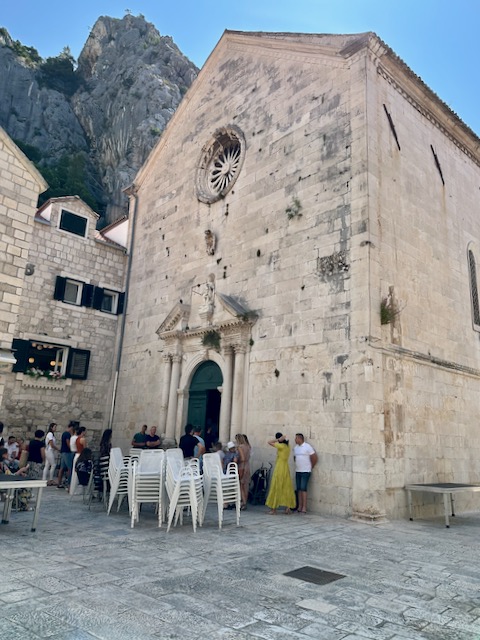
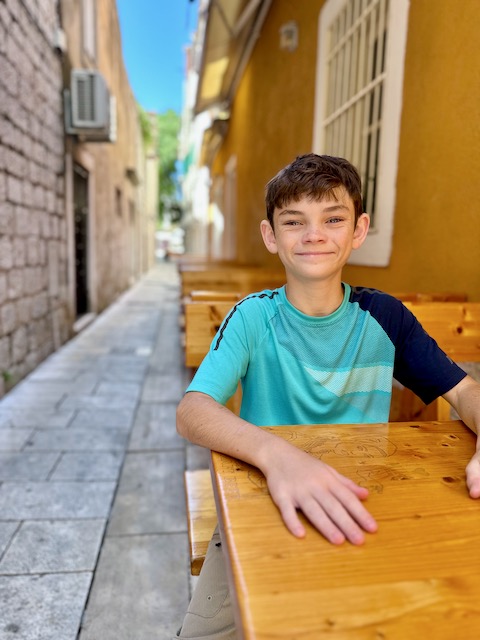
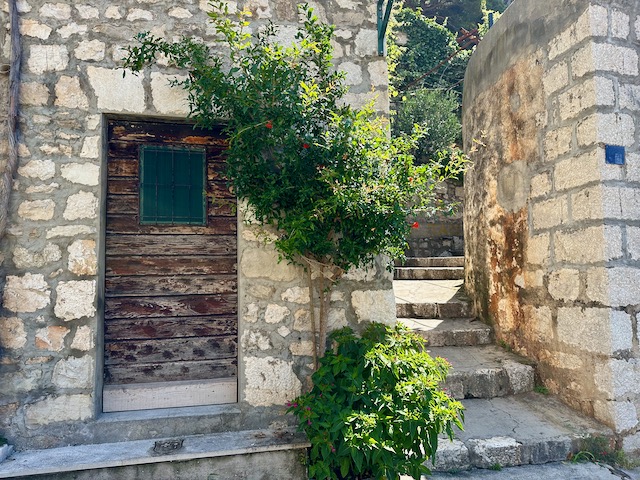
Back in town, we woke the boys and walked into the historic center. Omiš old town is a maze of narrow cobblestone alleys lined with limestone buildings, cafés spilling onto piazzas, and churches pressed against the base of the mountain like they grew there. The architecture runs from pre-Romanesque to Venetian Gothic to Baroque — centuries of different rulers leaving their marks on the same small stretch of streets. It has the feel of a town that’s been lived in continuously, which it has.
The pirate history is everywhere once you know to look for it. The medieval wall along the riverbed was built specifically to stop pursuing ships from entering the Cetina — a secret passage in the rock allowed the smaller pirate vessels through while blocking anything larger. Omiš held off the Venetians and the Ottomans for centuries from this gorge. The town knew what it was doing.
Mirabella Fortress
Two medieval fortresses sit on the peaks above town. We made the moderately challenging climb up to Mirabella — the smaller of the two, directly above the old town center. The path starts next to St. Michael’s church on the main square. You’ll be at the fortress gate in five minutes. The entry fee is 15 Kuna.
The view from the top is the payoff: red-tiled rooftops below, the Cetina canyon cutting through the mountains behind you, and the islands out at sea in front. It’s the kind of view that makes you understand why someone built a fortress here in the first place.
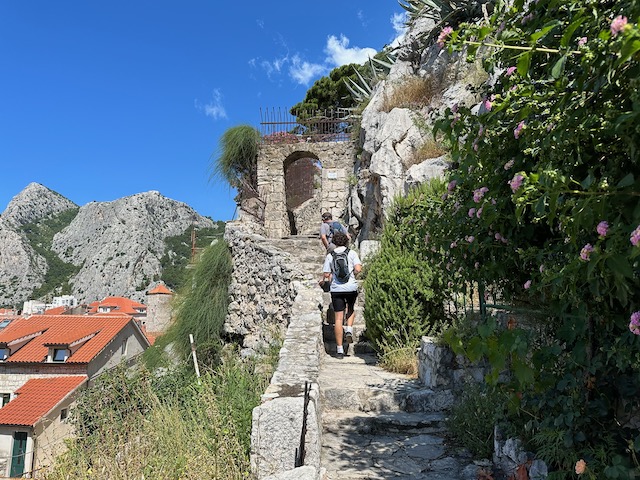
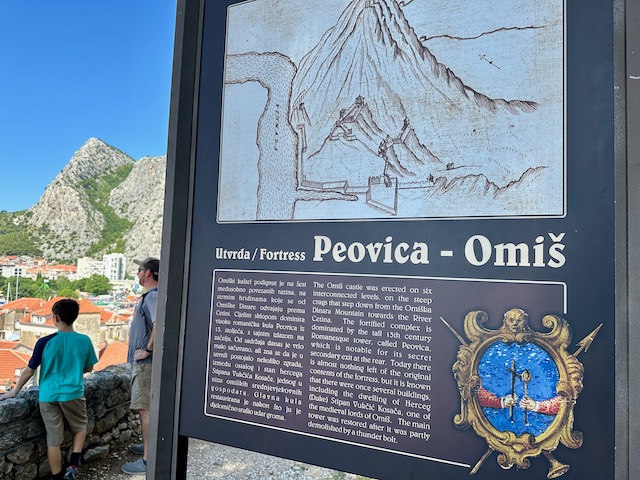
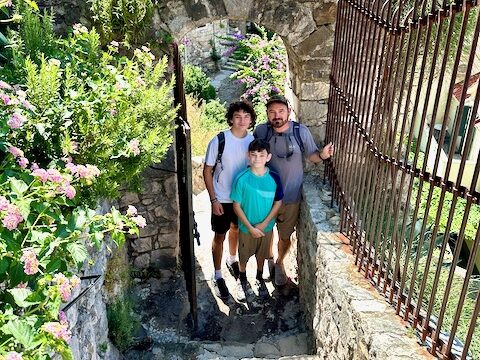
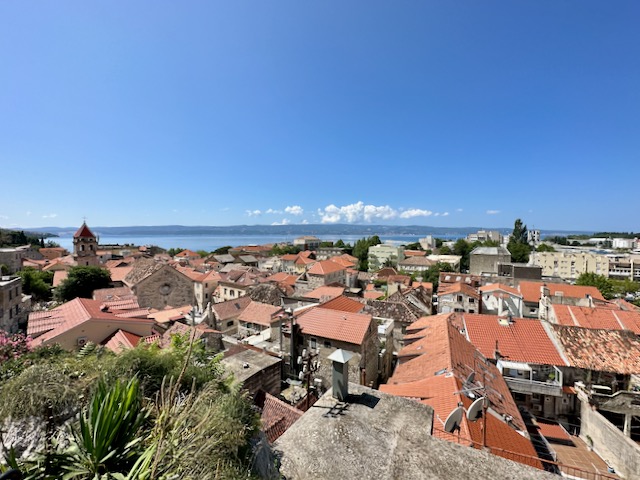
PRO TIP: The path to Mirabella starts next to St. Michael’s Church on the main town square. The climb is moderately challenging — wear comfortable shoes. Admission is modest (was 15 Kuna when we visited; Croatia has since adopted the Euro). Go in the morning before it gets too hot.
Velika Plaža
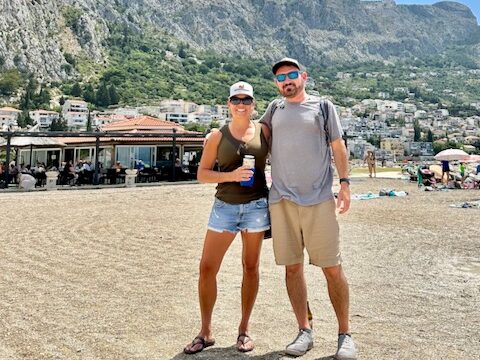
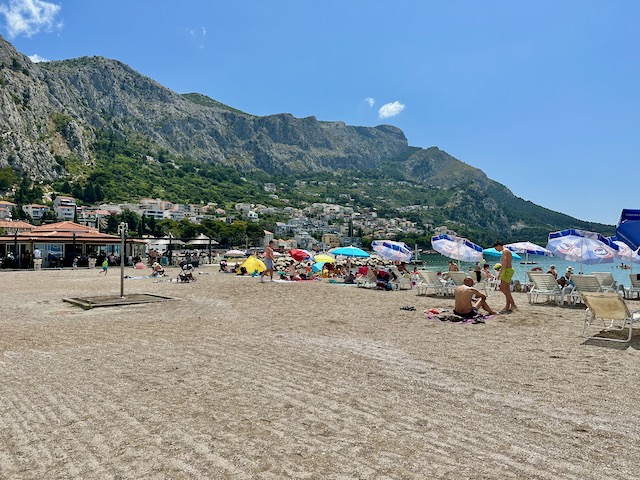
From the old town, the walk to Velika Plaža (Big Beach) takes less than ten minutes. The transition is abrupt and satisfying: narrow medieval stone alleys open suddenly onto a wide promenade with beach stalls selling local lavender, fresh fruit, and summer gear, and then the beach itself.
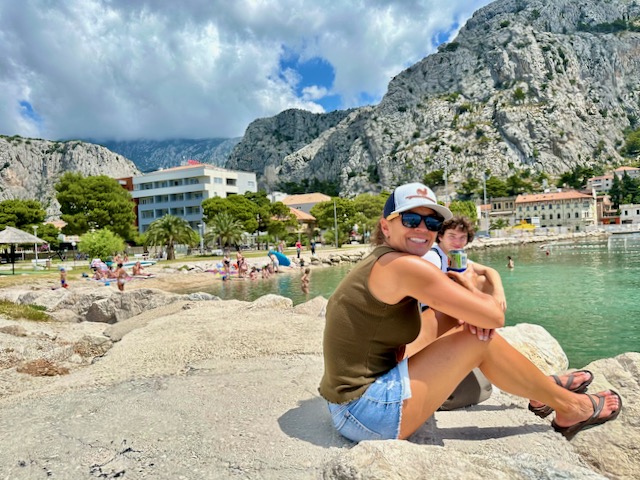
Velika Plaža is unusual for Croatia in that it’s sandy rather than pebbly, fed by sediment from the Cetina River. The water stretches out toward the island of Brač, shallow and impossibly clear, with the gray mountains framing the view back toward town. We walked to the water’s edge and sat for a while. It was a beautiful summer day, and we weren’t in a hurry.
Restaurant Kod Mije — The Lobster Fiasco
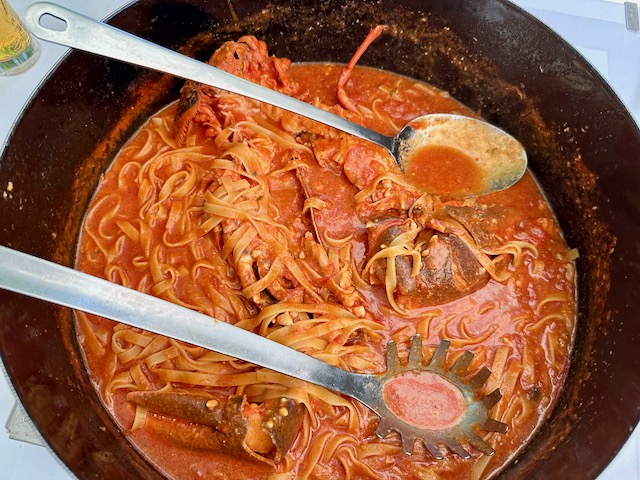
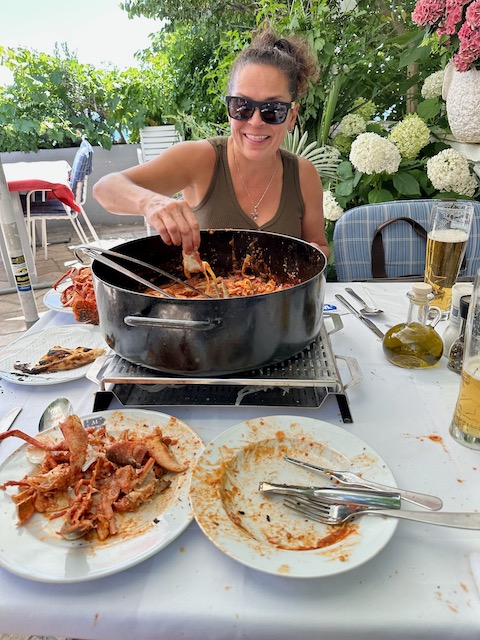
We dropped the boys at the apartment with their video games and drove back to Restaurant Kod Mije to collect on the promise we’d made ourselves the day before. We very rarely splurge on a meal when we travel, usually splitting something small or finishing what the boys leave behind. It’s one of the ways we stay on budget. But sometimes the situation calls for going big, and a giant pot of lobster fettuccine with its own warming station is hard to argue with.
The food was exceptional. The experience was something else entirely. Craig, faced with a bowl of lobster the size of a small child, proceeded to lose complete control of his utensils. Sauce everywhere. Lobster shell launched across the table. At one point, a fork hit the floor. I have never laughed that hard over a meal in my life. It was delicious, chaotic, and worth every kuna. I’m not sure I’ll convince him of a fancy dinner ever again. But I have the photos.
Another Afternoon in the Adriatic
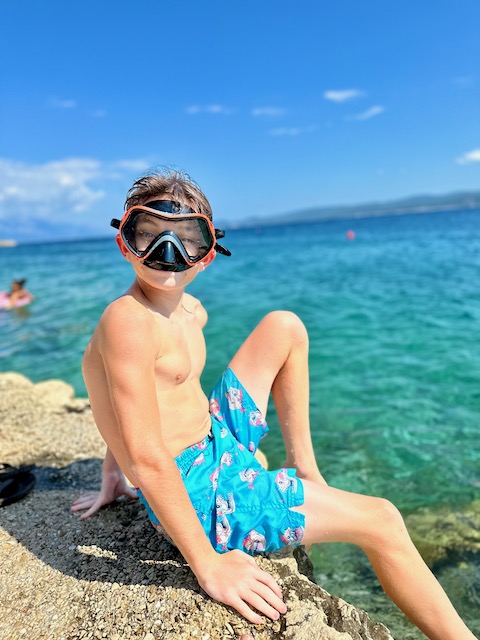
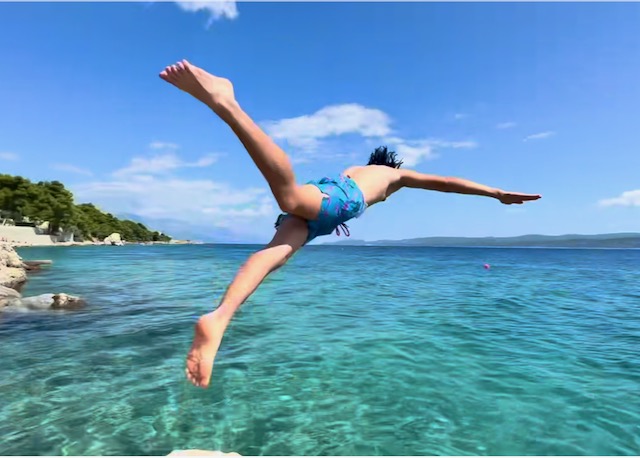
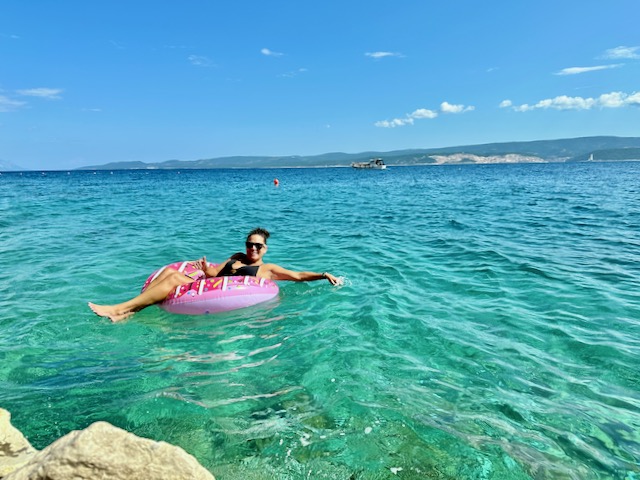
After the lobster fiasco, we picked up the boys and headed down to the beach for another afternoon in the water. The Adriatic was a deep turquoise, the sky was nearly cloudless, and nobody was in any hurry to leave. We’d stopped at a roadside stand near town and picked up some cheap beach accessories. The boys snorkeled and launched themselves off the rocks. I delighted in the day, enjoying my brand-new hot-pink “Cody floaty”.
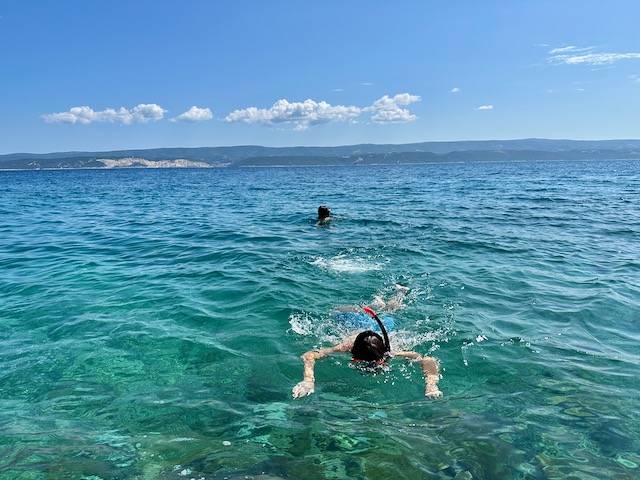
in the distance.
Final Thoughts on Omiš
I put Omiš on the map because Craig doesn’t like long drives. It earned its place for every other reason. It’s a town with a real history, real beaches, and enough to do over two days without feeling rushed or touristy. It’s not Dubrovnik — it doesn’t have that kind of polish or that kind of crowd. What it has is a canyon, a river, a pirate past, and a woman named Mila watching over all of it from a bluff above the sea. We’d go back. Ideally with a bib. For Craig.
Tomorrow, Dubrovnik — the final stop of Epic Europe 2.0.
 Lake Bled, Slovenia: 3 Day Itinerary — Family Favorite